Yongin Namgok Branch School Enrollment Total '8 Students'
Small Schools Facing Branch and Closure Crisis
Namgok Branch of Namgok Elementary School in Napsa-eup, Cheoin-gu, Yongin Special City, Gyeonggi Province, with a history of 77 years, is scheduled to close in February next year.
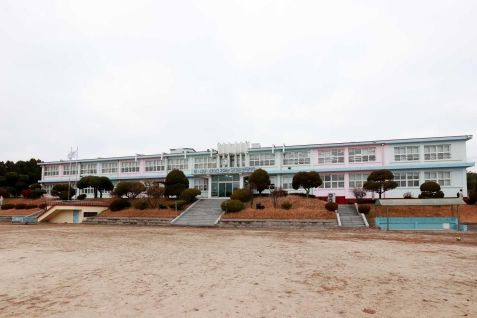 The exterior view of Namgok Elementary School Namgok Branch, which will be closed in February next year.
 [Photo by Yongin City]
Namgok Elementary School, which opened in September 1946, relocated its main campus to a nearby apartment complex in September 2018 due to an increase in the number of students. The existing school then became the branch campus, continuing its academic programs as the second campus.
Currently, the branch has one 6th-grade class with 8 students. These students will be the last graduates, with their graduation ceremony scheduled for January 5 next year.
On the 13th, Lee Sang-il, Mayor of Yongin, visited Namgok Branch and met with the 8 enrolled students. The mayor encouraged them, saying, "Graduation marks the completion of one chapter but also the beginning of a new journey. Although the school will be closed, I hope you cherish the good memories of this school and your friends, which are filled with precious moments."
He added, "As you enter middle school, you will start a new chapter. I hope you learn more, make many new friends, and have a wonderful start in your new environment."
Small Rural Schools Facing Branch and Closure Risks
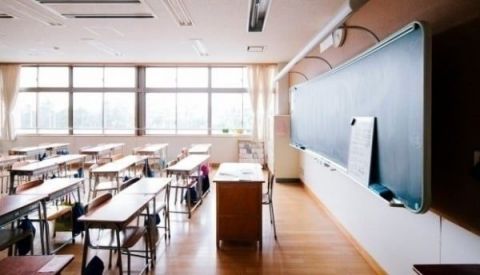
Meanwhile, small elementary schools in the rural areas of Cheoin-gu, Yongin, are facing the risk of branch closures and school shutdowns due to a low number of students within their school districts. Although the government, local authorities, and education offices actively support small schools by providing free after-school programs, these efforts are considered insufficient.
Currently, there are a total of 105 elementary schools in the Yongin area: 32 schools in Cheoin-gu, 32 in Suji-gu, and 41 in Giheung-gu. There is a significant urban-rural gap in elementary schools. Urban areas like Suji-gu and Giheung-gu have many large schools, whereas 11 schools in Cheoin-gu, accounting for 34.3% of the schools there, are small-scale schools with only six classes in total.
For example, Suji Elementary School in Suji-gu has 63 classes with about 1,820 students, and Seonong Elementary School in Giheung-gu has 52 classes with 1,371 students. In Cheoin-gu’s urban area, Hambak Elementary School in Yeokbuk District has 49 classes with 1,343 students, and Namgok Elementary School in Hansup City, a large apartment complex in Namsa-eup, has 66 classes with 1,816 students.
In contrast, small schools in Cheoin-gu have much fewer students: Baegam Elementary School in Baegam-myeon has 115 students, Baegam Elementary School Sujeong Branch has 11 students, Jangpyeong Elementary School has 30 students, and Baekbong Elementary School has 35 students, meaning all elementary schools in Baegam-myeon are small schools. Schools located in Wonsam-myeon include Duchang Elementary School with 45 students, Wonsam Elementary School with 67 students, and Jwahang Elementary School with 72 students. In Namsa-eup, there are Namchon Elementary School with 41 students, Namsa Elementary School with 115 students, and Namgok Elementary School’s second campus (Namgok Branch, scheduled to close in February next year, with one class of 8 students). In Dongbu-dong, there is Unhak Elementary School with 83 students.
Given this situation, it is analyzed that even a difference of one or two students can cause problems in teacher staffing and financial support, leading to difficulties in maintaining stable educational activities.
© The Asia Business Daily(www.asiae.co.kr). All rights reserved.


















