Standoff Continues Over Retransmission Fee Negotiations
Cable TV: "We Will Not Purchase Terrestrial FOD"
Calls for Establishing Standards for Retransmission Fee Setting
As the year comes to an end, terrestrial broadcasters and cable TV (SO·System Operators) are still at an impasse over retransmission fee negotiations. Although there are plans to conclude the negotiations by early next year, narrowing the gap in positions remains challenging.
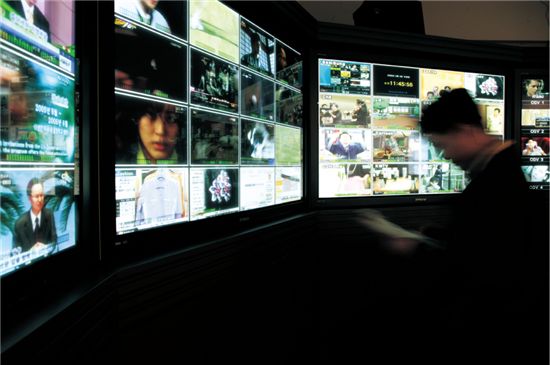 Reference photo
Retransmission fees refer to the portion of subscription fees that pay-TV providers distribute to terrestrial broadcasters as compensation for using their content. Terrestrial broadcasters argue that production costs rise every year and that their content significantly contributes to cable TV subscriber acquisition, so retransmission fees should be increased.
On the other hand, cable TV providers counter that terrestrial broadcasters’ viewership is steadily declining, and subscriber numbers are decreasing, so this must be taken into account. They claim that the fees demanded are excessive. A cable TV industry official said, "As the influence of terrestrial content weakens and the cable TV market shrinks, this should be reflected in the compensation."
According to the public disclosure of broadcasters’ financial status, terrestrial retransmission revenue, which was 125.5 billion KRW in 2013, rose to 408.9 billion KRW in 2022, increasing at an average annual rate of 14%. Meanwhile, program production costs increased only marginally, from 2.7156 trillion KRW in 2013 to 2.8613 trillion KRW in 2022, an average annual growth of 0.6%.
During the National Assembly audit last October, concerns about terrestrial retransmission fees were raised. Representative Ha Young-je of the Science, Technology, Information and Broadcasting and Communications Committee pointed out that although terrestrial channels have lower ratings than some comprehensive programming channels (Jongpyeon), they receive more than twice the content usage fees, emphasizing the need for a rational fee calculation principle. For example, TV Chosun’s three-year average rating is 1.97%, higher than MBC’s 1.67%, but MBC receives 2.6 times more in content usage fees than TV Chosun. SBS has the same average rating (1.97%) as TV Chosun, but SBS’s content usage fees are 2.5 times higher.
The conflict over retransmission fee negotiations between terrestrial broadcasters and pay-TV providers recurs every three years. In 2020, terrestrial broadcasters even threatened to suspend Video on Demand (VOD) supply.
However, this year, several cable TV companies have refused to purchase free VOD (FOD) from terrestrial broadcasters. Unlike VOD, where revenue is split 50-50, FOD requires cable TV providers to purchase terrestrial content, add advertisements, and offer it free to subscribers. But with the rapid growth of the Over-The-Top (OTT) market, VOD usage has plummeted, making FOD unprofitable. The cable TV industry claims that they have been forced to buy FOD reluctantly during retransmission fee negotiations.
Over the past decade, cable TV performance has steadily declined. Revenue dropped from 2.3792 trillion KRW in 2013 to 1.8037 trillion KRW last year, and operating profit shrank from 496.1 billion KRW to 130.9 billion KRW. Cable TV subscription fee revenue peaked at 1.1663 trillion KRW in 2013 and has since decreased by an average of 6.9% annually. Operators argue that a reduction of about 10-20% is necessary given these circumstances.
Earlier, the three Internet Protocol TV (IPTV) providers concluded negotiations with terrestrial broadcasters, reportedly agreeing to an 8-10% increase. Although specific figures have not yet been exchanged between the parties, the industry expects similar demands to be made to cable TV providers. However, cable TV providers insist that IPTV negotiation results should not be applied to them. A pay-TV industry official said, "The IPTV increase was based on a total amount concept, and when viewed on a per-subscriber fee basis, the increase corresponds only to the growth in subscribers, effectively freezing the fee." However, it is difficult for the relatively weaker cable TV industry to enforce such demands.
There are calls to establish objective criteria for calculating retransmission fees using measurable indicators. The pay-TV content usage fee guidelines, soon to be announced by the Ministry of Science and ICT, will require content fees to be calculated by reflecting revenue, production costs, and viewership.
A cable TV industry official said, "Just as pay-TV providers comprehensively consider the ratings and content investment of broadcasting channel operators (PP) like CJ ENM when calculating program usage fees, objective standards based on these criteria should be established for terrestrial retransmission fee calculation to balance the overall content market."
© The Asia Business Daily(www.asiae.co.kr). All rights reserved.
![Clutching a Stolen Dior Bag, Saying "I Hate Being Poor but Real"... The Grotesque Con of a "Human Knockoff" [Slate]](https://cwcontent.asiae.co.kr/asiaresize/183/2026021902243444107_1771435474.jpg)










