The Supreme Court has ruled that a biological mother who learned belatedly that her son died in the Sewol ferry disaster cannot claim her own consolation damages against the state due to the expiration of the statute of limitations.
While the statute of limitations suspension applies to the portion of the deceased son's claim for consolation damages that the mother inherits as inheritance property, the mother's own claim for consolation damages arising from her son's death is subject to a five-year statute of limitations under the State Finance Act. The court reasoned that the claim was exercised after the statute of limitations had already expired.
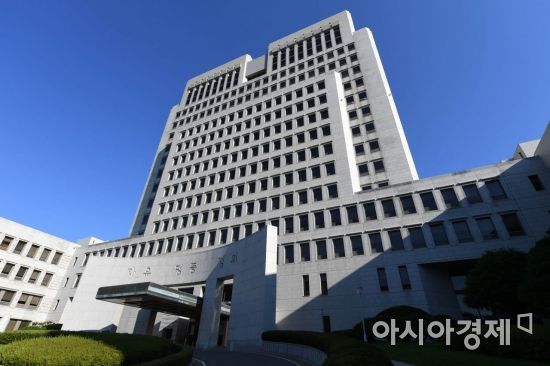
The Supreme Court's Third Panel (Presiding Justice Ahn Cheol-sang) on the 14th overturned the appellate court's partial ruling in favor of the plaintiff in the damages claim lawsuit filed by Ms. A against the state and remanded the case to the Seoul High Court.
Ms. A divorced her husband in August 2000 and designated her husband as the person with parental authority over their son. Since then, she had little contact with either her husband or her son.
Ms. A's son, who was a student at Ansan Danwon High School, died in the 2014 Sewol ferry disaster. Ms. A's husband applied for and received compensation for their son's death in May 2015, but Ms. A was completely unaware of this fact.
Ms. A learned of her son's death seven years after the incident, on January 25, 2021, when she was contacted by a representative of the Special Investigation Commission on Social Disasters to receive public donations.
Claiming that her son died due to the state's failure in rescue, Ms. A belatedly filed a lawsuit against the state on March 31, 2021, seeking damages of approximately 390 million KRW.
Since the responsibility of state officials had already been recognized in a criminal trial, there was little dispute over whether the deceased son or his mother had a claim for consolation damages against the state. However, the key issue was whether the statute of limitations for the damages claim had expired by the time the lawsuit was filed.
Article 766 of the Civil Act stipulates that the statute of limitations for claims for damages due to tort is "three years from the date the victim or their legal representative becomes aware of the damage and the tortfeasor," or "ten years from the date the tort was committed," whichever comes first.
Article 181 of the Civil Act provides that "rights belonging to inheritance property or rights against inheritance property do not expire within six months from the date the heir is confirmed, the administrator is appointed, or bankruptcy is declared," thus suspending the statute of limitations for six months from the confirmation of the heir or appointment of the administrator.
Meanwhile, Article 15-2 of the "Special Act on Relief and Support for Victims of the April 16 Sewol Ferry Disaster" (Sewol Victim Support Act) stipulates a special statute of limitations: claims for damages arising from the April 16 Sewol ferry disaster (referring to victims who were on board the Sewol ferry and were not recovered by November 11, 2014, when the government announced the end of the search) must be exercised within five years from the date the victim or their legal representative becomes aware of the damage and the tortfeasor, or the claim expires.
This provision ensures that for victims whose bodies have not been recovered, the statute of limitations for damages claims only completes five years after the bereaved family learns of the victim's death and the tortfeasor.
The first trial court ruled against the plaintiff, stating that the statute of limitations had already expired, and thus the state's liability for compensation could not be recognized.
In the trial, the state argued that the lawsuit was filed after the five-year statute of limitations under the Sewol Victim Support Act had passed. However, the court rejected this, reasoning that the provision applies to victims whose bodies were not recovered, whereas Ms. A's son's body was recovered and interred around April 20, 2014, so the special provision did not apply.
The court then applied the statute of limitations provisions under the Civil Act to Ms. A's claim for consolation damages.
Calculating from November 27, 2015, when the criminal trial of related parties was finalized, the court concluded that since the lawsuit was filed more than three years after the legal representative became aware of the damage and tortfeasor, Ms. A's claim for consolation damages had expired.
Ms. A also argued that since the state paid her husband approximately 270 million KRW in compensation and consolation funds under the special law, the state's assertion of the statute of limitations against her, who is an equal creditor under the same conditions, constituted an abuse of rights.
However, the court rejected this, stating, "The mere fact that the state has an obligation to protect its citizens does not mean that the state's assertion of the statute of limitations completion itself violates the principle of good faith and constitutes an abuse of rights."
However, the second trial court's judgment differed.
The court held that the "date the damage and tortfeasor were known" should be considered as January 2021, when Ms. A learned of her son's death, and thus she could claim damages. This applied not only to her own consolation damages but also to the inherited claims for lost earnings and consolation damages of her son.
Accordingly, the court ordered the state to pay Ms. A 30 million KRW for her own consolation damages and 370 million KRW for her deceased son's lost earnings (income he would have earned but could not due to death) and consolation damages.
The Supreme Court found no issue with the second trial's ruling on the son's lost earnings portion but held that the mother's own consolation damages claim was filed after the statute of limitations had expired.
The court ruled that the statute of limitations under the State Finance Act should apply to Ms. A's own consolation damages claim.
Article 96 of the State Finance Act stipulates that for rights against the state involving monetary claims, if no other law specifies the statute of limitations, a five-year statute of limitations applies.
Following the government's argument, since five years had passed from November 27, 2015, when former Mokpo Coast Guard 123rd Patrol Captain Kim Kyung-il was found guilty of professional negligence resulting in death, the claim had expired.
The court first cited Supreme Court precedents, stating, "Claims regarding the length of a statute of limitations are purely legal claims and are not subject to the principle of party disposition; thus, the court may determine them ex officio."
It continued, "The appellate court should have examined the appropriate statute of limitations period ex officio and assessed the defendant's claim regarding the completion of the statute of limitations. By only considering the completion of the short-term statute of limitations under the Civil Act and immediately rejecting the defendant (state)'s defense, the court erred in misunderstanding the law on the statute of limitations and failed to conduct necessary proceedings."
On the other hand, the court upheld the state's liability for approximately 370 million KRW in compensation for the son's lost earnings and consolation damages claims.
The court explained, "The 'confirmation of the heir' under Article 181 of the Civil Act concerning the suspension of the statute of limitations on inheritance property rights includes not only cases where the heir is confirmed while their existence, location, or life status is unknown but also cases where the effect of inheritance is confirmed through approval of inheritance."
Since the son's lost earnings and consolation damages claims are "rights belonging to inheritance property," the statute of limitations is suspended for six months from the confirmation of the heir. Ms. A filed the lawsuit on March 31, 2021, before the six-month suspension period from January 25, 2021, when she learned of her son's death, had elapsed, so the statute of limitations had not expired.
A Supreme Court official stated, "This ruling reaffirms that claims regarding the statute of limitations period are legal claims subject to ex officio judgment and is the first to confirm that 'confirmation of the heir' under Article 181 of the Civil Act includes cases where the effect of inheritance is confirmed through approval of inheritance."
© The Asia Business Daily(www.asiae.co.kr). All rights reserved.

















