Limited Ripple Effect on Housing Prices
Weakening Apartment Sale Prices in 1st Generation New Towns
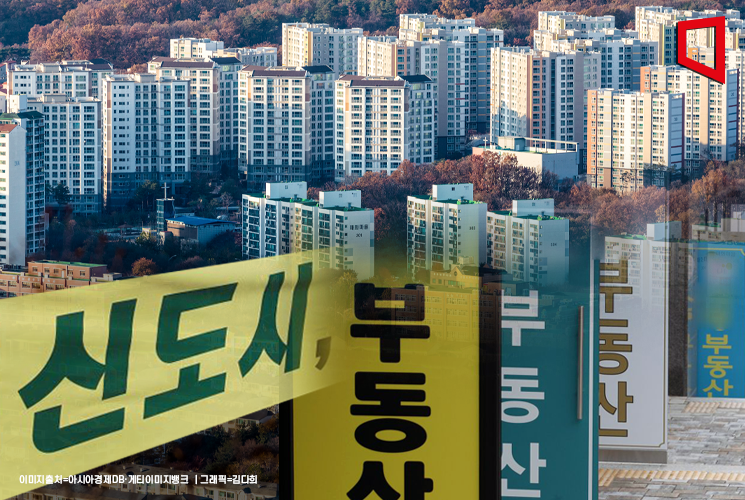
Although a special law aimed at renovating first-generation new towns such as Bundang, Ilsan, Jungdong, Pyeongchon, and Sanbon has passed the National Assembly, it has proven insufficient to defend against the downward trend in housing prices. Given the high interest rates and concerns about an economic downturn, it is difficult for reconstruction projects to gain momentum, so the ripple effect of the special law on the market appears limited. Moreover, since the law will actually be enforced in April next year, market sentiment is expected to be determined by what follow-up measures emerge in conjunction with the general election.
According to the Ministry of Land, Infrastructure and Transport on the 12th, the Special Act on the Renovation and Support of Aging Planned Cities is expected to be promulgated by the president within this year and enforced in April next year. The core of the special law is to ease safety inspection regulations and provide floor area ratio exemptions for aging areas over 1 million square meters that have passed 20 years since land development. The Ministry plans to announce the draft enforcement ordinance necessary for the law’s implementation within this year. The draft enforcement ordinance will include detailed criteria for aging planned cities, public contribution ratios, and standards for easing or exempting safety inspections.
However, despite the positive development of the special law passage that could accelerate reconstruction and redevelopment in first-generation new towns, the market’s response has been lukewarm. In fact, from the end of last month to early this month, when discussions on the first-generation new town special law were in full swing, the rate of price increases narrowed or the decline widened.
According to the Korea Real Estate Board, the weekly change rate of apartment sale prices in Bundang-gu, Seongnam-si, one of the beneficiaries of the special law, has narrowed for five consecutive weeks from the last week of October (0.18%) to the first week of December (0.02%). Apartment prices in Goyang-si, which includes Ilsan New Town, turned negative in the first week of November (-0.02%), then remained flat in the third week, and declined again, recording two consecutive weeks of negative growth through the first week of December. Apartment prices in Anyang-si, which includes Pyeongchon, have also been narrowing their rate of increase for seven consecutive weeks since the third week of October.
Apartment prices in Gunpo-si, which encompasses Sanbon, have shown a declining trend for four consecutive weeks after remaining flat in the first week of November. Similarly, Bucheon-si, which includes Jungdong, returned to a decline in the last week of November (-0.01%) as the special law’s passage approached, and the decline widened to -0.03% in the first week of December.
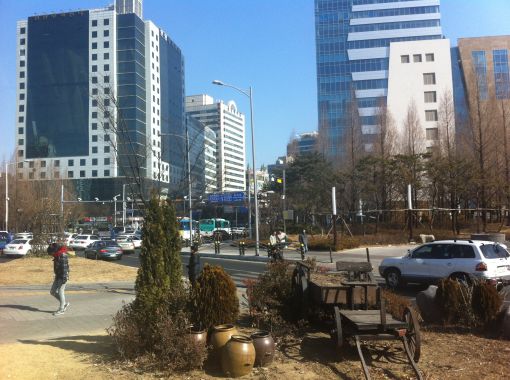
Private statistics also show a clear downward trend in apartment prices. According to Real Estate R114, apartment sale prices in first-generation new towns have been declining weekly from August 25 to December 8, maintaining a weak trend. In particular, Sanbon New Town and Ilsan New Town recorded declines of 0.14% and 0.11%, respectively, over the past month, ranking first and second in terms of the largest drops.
However, some opinions suggest it is still difficult to definitively assess market sentiment. Since the law will be enforced in April next year, it could act as a positive factor for housing prices depending on the atmosphere and market conditions after enforcement. Nevertheless, given the likelihood that the high interest rate environment will continue into next year and the real estate market downturn makes it difficult for reconstruction projects to gain momentum, it is expected that buyer sentiment will not be stimulated.
Ye Kyung-hee, senior researcher of the Real Estate R114 research team, said, "Due to the increased loan interest burden caused by high interest rates, it is difficult for buying demand to pick up, so the immediate passage of the special law will not affect the market." She added, "Expectations for reconstruction and redevelopment benefits have diminished, and it is a period when demand for investment assets is hard to gather, so rather than seeing policy effects, housing prices are expected to continue adjusting."
© The Asia Business Daily(www.asiae.co.kr). All rights reserved.

















