Announcement of Follow-up Measures for the Basic Supply Chain Act
Establishment of Supply Chain Control Tower in the First Half of Next Year
Designation and Management of Key Materials and Raw Materials as Economic Security Items
Extension of Elemental Allocation Tariffs until Next Year, Release of 1930t
Review of Plans to Establish Domestic Elemental Production Facilities
The government will establish a supply chain management control tower in the first half of next year to focus on managing key items that may raise economic security concerns, such as the 'urea solution crisis.' Starting from the second half of next year, it will actively support domestic and overseas facility investments for private companies diversifying import sources by creating a Supply Chain Stabilization Fund.
On the morning of the 11th, the Ministry of Economy and Finance held an Economic Security Supply Chain Ministerial Meeting at the Government Seoul Office and announced the "Follow-up Measures Implementation Plan for the Supply Chain Basic Act." This disclosed the future response plan following the passage of the "Basic Act on Supply Chain Stabilization Support for Economic Security (Supply Chain Basic Act)" in the National Assembly plenary session on the 8th.
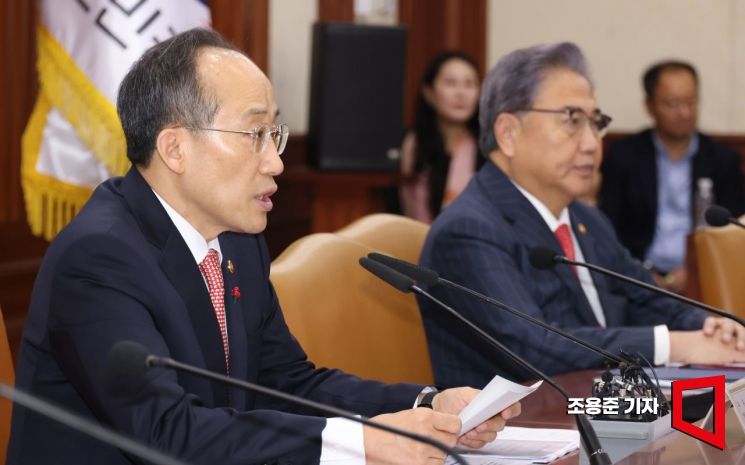 Deputy Prime Minister and Minister of Economy and Finance Choo Kyung-ho is speaking about urea water at the Economic Security Supply Chain Ministerial Meeting held at the Government Seoul Office in Jongno-gu, Seoul on the 11th. Photo by Jo Yong-jun jun21@
The Supply Chain Basic Act was enacted to ensure the stable supply of essential goods and services critical to the industrial ecosystem. It was proposed last year after the supply chain crisis caused by China's export control of urea in 2021. The bill's processing was delayed for 1 year and 2 months but gained momentum for passage in the National Assembly recently as China extended export controls from industrial urea to ammonium phosphate, a raw material for chemical fertilizers.
Following the enactment of the law, the government will first form the "Supply Chain Stabilization Committee," a supply chain control tower, by June next year. The committee will be composed of heads of central administrative agencies as well as economic and security experts. Once the committee finalizes the basic plan for supply chain stabilization policies and support by the second half of next year, the relevant ministries will establish annual implementation plans starting in 2025. The Ministry of Economy and Finance will play the role of compiling sectoral plans prepared by the relevant ministries and establishing a basic plan every three years.
From the second half of next year, essential goods and raw materials indispensable for the stable operation of the national and people's economy will be designated and managed as economic security items. About 200 key items selected and managed through the Economic Security Task Force (TF) will be targeted. The relevant ministries will select and support leading businesses that contribute to the smooth introduction, production, and provision of economic security items.
An early warning system will also be established. The Ministry of Foreign Affairs, Korea Customs Service, and Public Procurement Service will collaborate to detect supply chain risks early for economic security items highly dependent on specific countries and enhance the efficiency of early warning systems operated by each ministry. A crisis response manual will also be introduced. When the Ministry of Economy and Finance notifies a standard crisis response manual for managing economic security items, the relevant ministries must prepare and operate sector-specific manuals.
A Supply Chain Stabilization Fund will be established at the Korea Eximbank to support supply chain stabilization projects of private companies such as leading supply chain businesses. The fund will be raised by issuing government-guaranteed supply chain fund bonds, with the fund size to be determined later. Companies contributing to supply chain stabilization can receive support such as loans, guarantees, and investments to secure economic security items or invest in domestic and overseas facilities. The government plans to complete National Assembly approval for guarantees by the first quarter of next year, establish a dedicated organization and a fund review committee at the Eximbank by the first half, and commence fund operations from the second half of next year.
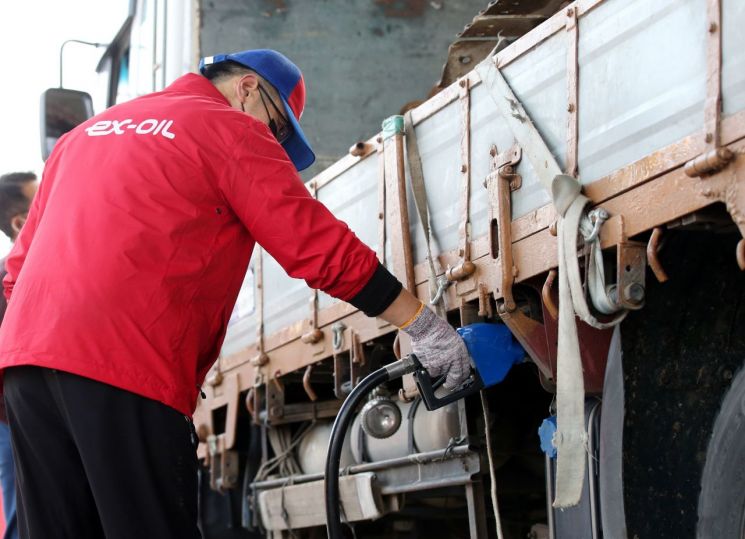
The government expects that the implementation of the Supply Chain Basic Act will overcome the limitations of a supply chain management system focused on item management and enable broader supply chain management including services and logistics. Regarding China's recent urea controls, the government will maintain an inter-ministerial response system until the market stabilizes by monitoring supply and demand daily. According to the government, as of the 8th, the domestic stock of vehicle-use urea solution is 4.3 months, an increase of 1.3 months from 3 months on the 30th of last month. For ammonium phosphate, it is judged that supply is possible until May next year with 10,000 tons of finished products and 30,000 tons of raw materials secured.
At the meeting, Deputy Prime Minister and Minister of Economy and Finance Choo Kyung-ho said, "The urea solution tariff quota, scheduled to end this year, will be extended until next year, and ammonium phosphate until the first half of next year. Partial financial support for maritime transportation costs of domestically imported urea solution will be temporarily provided until April next year." He added, "The Public Procurement Service will release 1,930 tons of urea solution stockpiles within this month, and plans to review the establishment of domestic urea solution production facilities."
© The Asia Business Daily(www.asiae.co.kr). All rights reserved.

![Clutching a Stolen Dior Bag, Saying "I Hate Being Poor but Real"... The Grotesque Con of a "Human Knockoff" [Slate]](https://cwcontent.asiae.co.kr/asiaresize/183/2026021902243444107_1771435474.jpg)
















