Rejected Despite City Council Recommendation
"No Intention to Change Historical Awareness"
A Japanese city councilor who repeatedly used hateful expressions, referring to Korea as a 'begging group' and Japanese military comfort women during the Japanese colonial period as 'prostitutes,' was recommended to resign by the city council but refused to do so.
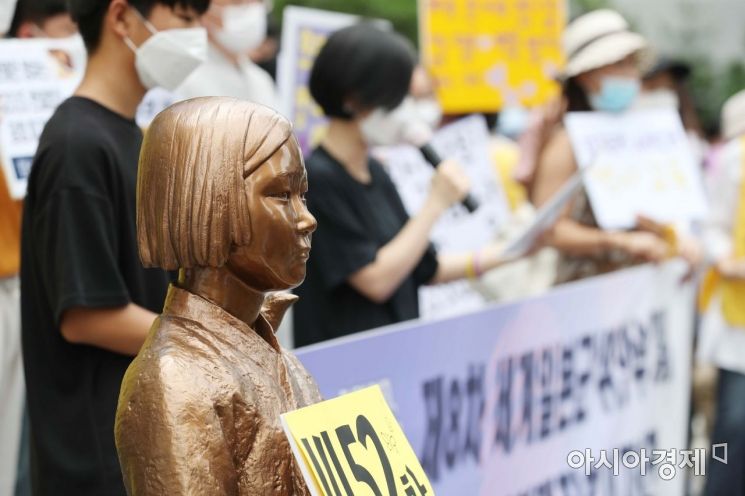
According to local foreign media including Kyodo News on the 7th, the city council of Kanonji, a small city in Kagawa Prefecture on Shikoku Island, Japan, passed a resolution recommending the resignation of councilor Kishiue Masanori, who made hateful remarks, with a majority vote.
Earlier, Kishiue Masanori, a member of the ruling Liberal Democratic Party, posted on X (formerly Twitter) about historical issues between Korea and Japan, claiming that comfort women "earned a lot of money even as prostitutes." He also disparaged Korea as "a group that can only beg."
After seeing this post, a fellow councilor pointed out, "Isn't this hate speech?" causing a stir even within Japan. The city council also responded immediately. On the 29th of last month, then-chairman Shinohara Kazuyo gave Kishiue a stern verbal warning, saying, "This cannot be overlooked." He stated, "Discriminatory remarks are not allowed," and "There is a lack of awareness as a city councilor." Shinohara resigned from the chairmanship on the 30th of last month.
Despite these opinions, Councilor Kishiue said, "I knew it was hate speech when I used it," and "I have no intention of changing my historical awareness."
After the city council passed the resolution recommending his resignation, Councilor Kishiue held a press conference, saying, "I reflect on it," but added, "(The resignation recommendation) has no legal binding," and "I want to fulfill the duties entrusted to me," thus refusing to resign. He also said about his anti-Korean posts, "Individual opinions and assertions are free."
'Seven Years After the Hate Speech Elimination Act... Anti-Korean Sentiments Persist Among Current Councilors'
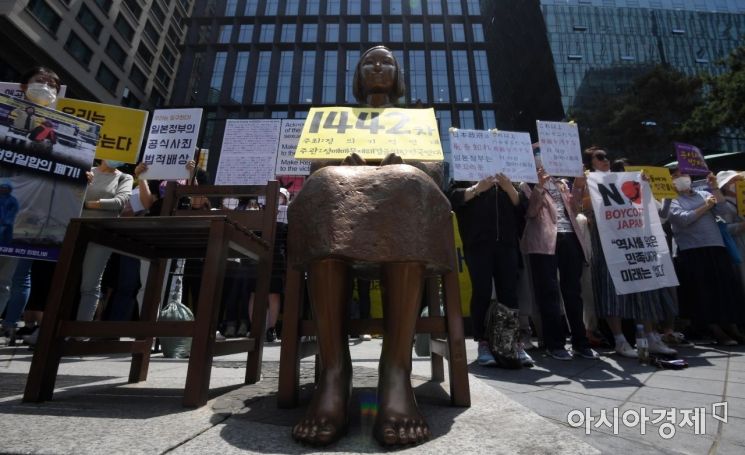
There is another Japanese councilor who made anti-Korean remarks. Last month, LDP councilor Sugita Mio wrote on X, "'Special privileges for Zainichi Koreans' actually exist." The 'special privileges for Zainichi' is a claim that Koreans residing in Japan, who migrated during the Japanese colonial period and faced various discriminations, actually enjoyed privileges in Japan.
Japan passed the Hate Speech Elimination Act, a law with the character of anti-discrimination legislation, in 2016. The Hate Speech Elimination Act was created as anti-Korean demonstrations emerged as a serious social problem in Japan in the early 2010s. It mainly prohibits discriminatory language and behavior against not only Koreans but also foreigners residing in Japan and their children.
However, even seven years after the legislation, it is pointed out that current councilors continue to attempt to publicize anti-Korean sentiments. At that time, despite pouring criticism, councilor Sugita Mio responded, "Hate is also an opinion, so respect it."
© The Asia Business Daily(www.asiae.co.kr). All rights reserved.


















