Direct Rebuttal to Medical Association's Statement: "Completely Untrue"
Woo Bong-sik, head of the Medical Policy Research Institute of the Korea Medical Association (KMA), opposed the government's essential medical innovation plan, claiming that "firefighters only send emergency patients to large hospitals, causing an 'emergency room merry-go-round'." In response, the National Fire Agency (NFA) strongly denied this, stating it is "not true."
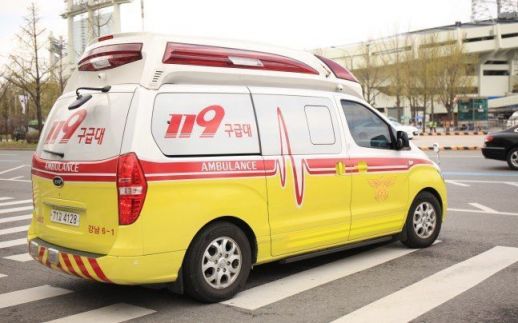
On the 7th, the NFA stated in a press release, "The claim by Director Woo that mild patients account for 90% of emergency room patients because firefighters only send emergency patients to large hospitals is not true."
Earlier, Director Woo argued in a recent editorial titled "The Crisis of Essential Medical Care and Medical School Quotas" published in the KMA's quarterly 'Medical Policy Forum' that "the emergency room merry-go-round occurred after the '1339 Emergency Call,' which was responsible for classifying and transporting emergency patients in Korea, was merged into 119 due to a legal amendment."
He further stated, "After the legal amendment, firefighters without expertise only sent emergency patients to large hospitals, causing mild patients to make up nearly 90% of emergency room visits, which led to the 'merry-go-round' where severe patients could not receive timely treatment." The emergency medical consultation service via the 1339 phone number was abolished in June 2013 when it was integrated into the widely recognized 119 for public convenience.
Regarding Director Woo's claims, the NFA emphasized, "The integration of 119 and 1339 was decided to prevent confusion caused by dual emergency medical reporting numbers and to enable prompt response. The 119 ambulance team consists of qualified and licensed professional paramedics who classify emergency patients into five levels and transport them to appropriate hospitals capable of treatment."
They added, "Only 16.4% of patients visiting emergency rooms use the 119 ambulance service. To alleviate emergency room overcrowding, measures to reduce the use by 'walk-in patients' who come directly are necessary."
Controversy over remarks: "Young mothers flock at opening time to enjoy brunch time"
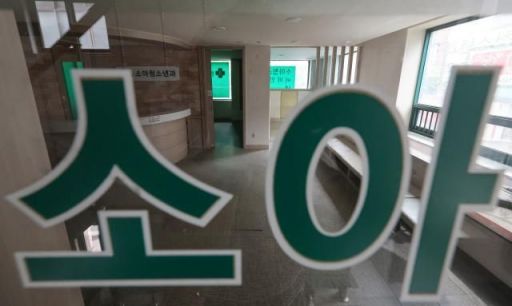
Meanwhile, Director Woo sparked controversy by describing a typical phenomenon of essential medical care gaps such as the 'pediatric open run,' saying, "Young mothers sometimes finish their appointments early, send their children to daycare centers, and then flock to pediatric clinics at opening time to enjoy 'brunch time' with friends."
Additionally, the KMA launched the 'Pan-Medical Community Special Committee' in opposition to the expansion of medical school quotas. The day before, the committee held an overnight protest in tents set up in front of the Yongsan Presidential Office and the KMA headquarters. The head of the protest committee is former KMA President Choi Dae-jip, who led the general strike in 2020. The committee plans to block the medical school quota expansion through strikes and mass rallies following a vote.
© The Asia Business Daily(www.asiae.co.kr). All rights reserved.


















