2023 Competitive Restrictive Regulation Improvement Plan
"Gas Network Managed and Supervised by Neutral Committee"
The government is overhauling the damages caused by Korea Gas Corporation's monopoly on pipeline networks. Private power generation companies, which had difficulties operating their businesses due to restricted access to the pipeline network, are expected to benefit.
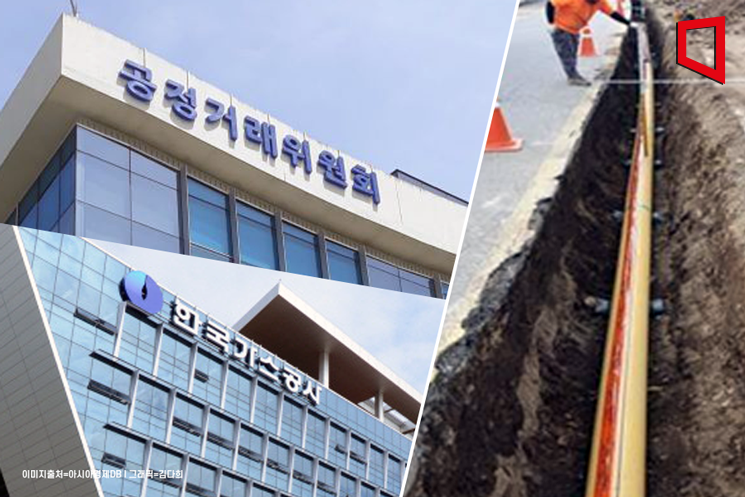
On the 7th, the Fair Trade Commission announced the ‘2023 Regulatory Improvement Plan to Reduce Competition Restrictions,’ which includes this content, at the National Policy-Related Ministers' Meeting chaired by Prime Minister Han Duck-soo. The plan contains improvements to 22 regulations closely related to improving citizens' lives and promoting corporate activities.
The government decided to change the operation method of the natural gas pipeline network monopolized by the Korea Gas Corporation. The private LNG power generation industry has long complained about difficulties in transporting imported natural gas from ports to power plants. According to current law, private companies must use only the Korea Gas Corporation's pipeline network, but since the Gas Corporation itself is also a user of the pipeline network, it can operate it to its own advantage. Moreover, most information related to the pipeline network is kept confidential, making it difficult for private companies to know when and how much they can use.
In response, the Ministry of Trade, Industry and Energy will establish a ‘Pipeline Facility Usage Deliberation Committee’ involving external experts within this year. The committee will serve as a supervisory body reviewing the Korea Gas Corporation’s pipeline network operations. If an operator is dissatisfied with the Gas Corporation’s pipeline network operation, they can request improvements from the committee, and if deemed reasonable after deliberation, the Gas Corporation will be ordered to correct the issue. To ensure the committee’s independence, it will be composed solely of six external experts, and the chairperson will be selected from the private sector by the Minister of Trade, Industry and Energy.
The Fair Trade Commission explained that while recognizing the Korea Gas Corporation’s monopoly rights over the pipeline network for public interest, it has taken measures to ensure that public enterprises also compete fairly with private companies on an even playing field. Shim Jae-sik, head of the Market Structure Improvement Policy Division at the Fair Trade Commission, said, “Companies primarily engaged in LNG power generation face significant restrictions in using the gas network,” and added, “The gas network will be managed and supervised not by the corporation but by a neutral committee.”
Next year, disclosure of information necessary for pipeline facility usage will also be expanded to improve convenience and predictability for private companies. Information such as hourly pipeline pressure and flow rates at key points in the pipeline network, as well as pipeline expansion plans, will be subject to public review. The Fair Trade Commission expects that these measures will reduce costs for private operators. In the long term, it is judged that this will lead to a reduction in gas supply costs and ultimately lower power generation costs.
The plan also includes deregulation policies to promote innovative growth and new industries. First, the regulation on concurrent operation in the telecommunications device manufacturing industry will be abolished. Currently, non-telecommunications companies must register as ‘licensed telecommunications operators’ when selling products equipped with telecommunications functions. Because concurrent operation regulations apply in this case, companies have pointed out that they cannot provide creative convergence services. The Fair Trade Commission analyzed that, given the rapid growth of new industries such as the Internet of Things, abolishing this regulation will accelerate the growth of related new industries.
Additionally, consumers will be able to post and share reviews of medical institutions they have experienced more freely. Until now, if a non-medical professional publicized information about a medical institution, it was considered illegal advertising, but going forward, as long as guidelines such as not receiving compensation or not specifying particular medical professionals are followed, it will be allowed.
© The Asia Business Daily(www.asiae.co.kr). All rights reserved.
![Clutching a Stolen Dior Bag, Saying "I Hate Being Poor but Real"... The Grotesque Con of a "Human Knockoff" [Slate]](https://cwcontent.asiae.co.kr/asiaresize/183/2026021902243444107_1771435474.jpg)
















