Thumbnail hidden photo cannot be viewed
1.5 million views on video exposing major body parts
"Prevention is difficult, government-level response needed"
Sex crimes involving the indiscriminate distribution of obscene materials cleverly hidden in videos during the popular 'Pause Challenge' on social networking services (SNS) such as YouTube and TikTok are rampant. The challenge involves pausing a playing video to check what hidden images are present, and obscene photos have been inserted into these videos. Experts point out that adolescents who intended to enjoy the Pause Challenge as a simple latest trend are suffering serious mental health damage.
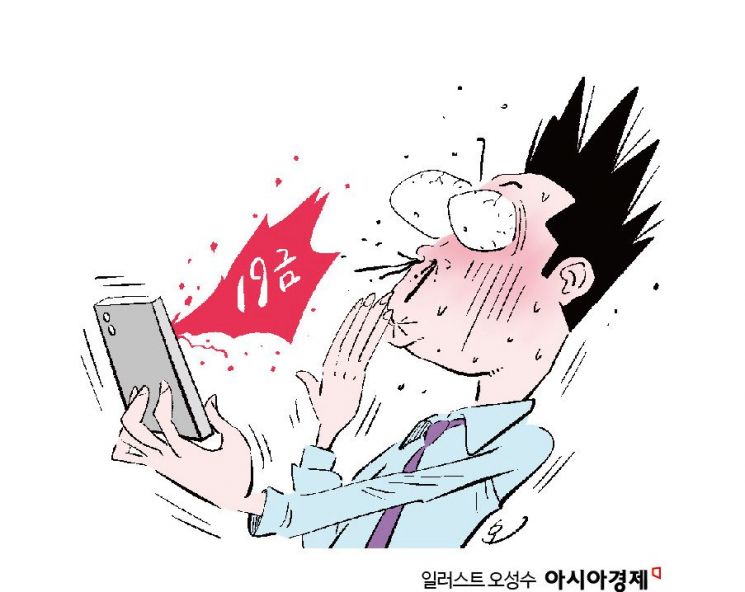
On the 6th, searching for a specific keyword on a popular SNS yielded about 928,000 short-form videos. These videos are part of an SNS game called the 'Pause Challenge.' The challenge is to identify a specific photo briefly inserted in the middle of the video, which is difficult to recognize with the naked eye. Viewers pause the video at the right moment to check the hidden image. Initially, the hidden images were mainly body profile photos, but as the challenge spread, videos containing photos exposing major body parts or depicting obscene acts have circulated. In South Korea, a challenge video featuring a male student exposing his genitals recorded 1.47 million views.
Users who encounter this challenge, thinking it is a light SNS game, are exposed to obscene materials without protection. Due to the nature of the challenge, it is impossible to know what photo is hidden before actually checking. No adult verification or other procedures are required to view the videos. Ms. Choi (25, female) said, "I was very uncomfortable when obscene material suddenly appeared while participating in the challenge. Since then, I no longer participate in the challenge," adding, "Until you actually check whether the target photo is obscene, it cannot be distinguished from a normal video, so you cannot avoid it."
 Hidden pornography disguised as the 'Pause Challenge.' This challenge involves pausing a playing video to check what hidden images are present, but pornographic photos and others have been inserted. [Image source= SNS capture]
Under current law, videos containing obscene materials are illegal regardless of how brief they are. According to Article 44 of the Information and Communications Network Act, it is prohibited to distribute, sell, or display obscene content through information and communication networks. If the obscene photos are illegally filmed, it constitutes a violation of the Sexual Violence Punishment Act. Seo Hye-jin, lead attorney at The Lighthouse Law Office, stated, "Posting videos containing obscene content on public SNS platforms accessible to third parties constitutes distribution of obscene materials under the Information and Communications Network Act," adding, "If the photos were distributed without the subject's consent, it also constitutes a sexual violence crime."
There are also concerns about negative 'subliminal' effects. Subliminal effects refer to influencing the subconscious by presenting unconscious stimuli. Due to its brainwashing-like effect, many countries including South Korea, the United States, and Canada prohibit advertisements aimed at subliminal effects. Professor Kwak Geum-ju of Seoul National University's Department of Psychology explained, "Even if the exposure to obscene materials is very brief, the ignition effect can lead to thoughts of seeking more obscene content," adding, "This can have a greater negative impact especially on young people sensitive to obscene materials, such as adolescents."
Enforcement and punishment are not easy. Since these platforms operate overseas, domestic agencies' requests for cooperation lack enforceability. Attorney Seo said, "It is difficult for the Korean government or police to obtain cooperation from overseas SNS companies." Professor Lee Yun-ho, Chair Professor of Police Science at Korea Cyber University, also explained, "Even through Interpol, there is no mandatory obligation for the other country to comply."
Since realistic prevention is difficult, voices are calling for measures to minimize access to such obscene materials on SNS. Professor Kim Yong-chul of Pusan National University's Department of Public Administration said, "Perfect prevention is realistically impossible," adding, "The government could consider establishing a dedicated reporting center for obscene materials on SNS, and if a particular SNS receives frequent reports, temporarily blocking access to that SNS until the issue is resolved before allowing access again." Professor Kim Jun-mo of Konkuk University's Department of Public Administration said, "Using AI technology could improve the monitoring efficiency of bodies like the Korea Communications Standards Commission," adding, "In the long term, regulatory measures and countermeasures should be discussed through consultations between SNS companies and the government."
© The Asia Business Daily(www.asiae.co.kr). All rights reserved.

















