The 2nd Truth and Reconciliation Commission for Past Affairs (Truth and Reconciliation Commission), which marked its 3rd anniversary since its launch, has closed 49% of the cases under its jurisdiction. The Truth and Reconciliation Commission, whose activities will end in May next year, is planning to extend the investigation period by one year to handle the remaining cases.
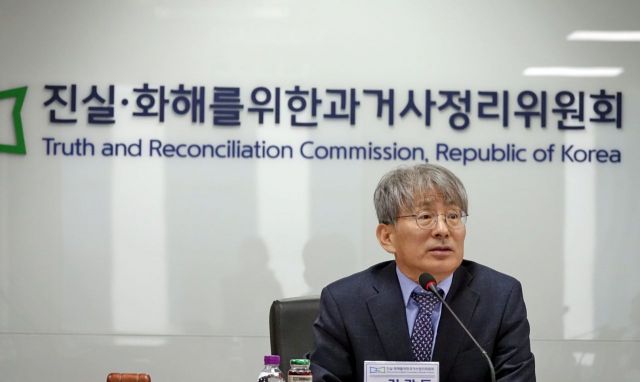
On the 6th, the Truth and Reconciliation Commission held a 3rd anniversary meeting and announced that out of a total of 20,323 cases received and classified over two years since December 2020, including cases investigated ex officio, it has closed 10,019 cases (49.3%). Among these, 3,812 cases were determined to have been clarified, and 478 cases were confirmed. Currently, 10,213 cases are under investigation.
Among the submitted cases, the type 'Mass civilian sacrifice' accounted for the largest number with 9,957 cases (49.19%). This was followed by hostile forces cases with 3,986 cases (19.61%), confirmed verdict cases involving human rights violation fabrication suspicions with 3,086 cases (15.18%), the March 15 Uprising cases with 340 cases, historically significant cases with 207 cases, and anti-Japanese independence movement and overseas compatriot cases with 130 cases. Cases classified as others totaled 2,577.
The Truth and Reconciliation Commission holds the position that a one-year extension of the investigation period is necessary to process the cases. According to the Act on the Establishment and Operation of the Truth and Reconciliation Commission for Past Affairs (Past Affairs Act), the expiration date of the Commission’s investigation period is May 26 next year. However, since the number of submitted and received cases has increased by 80% compared to the 1st term (10,860 cases), and the content and types of cases have diversified, the Commission expects the case processing rate to reach only 61.4% by the expiration date. The Truth and Reconciliation Commission plans to consult with related institutions such as the Presidential Office and the National Assembly at the end of last month and to deliberate and decide on the establishment of a committee to promote the extension of the investigation period.
The Truth and Reconciliation Commission also added that since there are currently no provisions regarding compensation and reparation under the Past Affairs Act, victims and bereaved families are receiving compensation through individual lawsuits, and it will strive for the passage of a legislative amendment to improve this. It will also promote the excavation project of civilian victims’ remains, the establishment of reconciliation models, and the foundation for past affairs research.
The Truth and Reconciliation Commission was established under the Past Affairs Act as an independent national institution that investigates cases requiring historical truth clarification and determines the truth. Professor Jeong Geun-sik of Seoul National University was inaugurated as the 1st chairman of the 2nd Truth and Reconciliation Commission on December 10, 2020, and former standing commissioner Kim Gwang-dong was inaugurated as the 2nd chairman last December.
© The Asia Business Daily(www.asiae.co.kr). All rights reserved.
!["The Woman Who Threw Herself into the Water Clutching a Stolen Dior Bag"...A Grotesque Success Story That Shakes the Korean Psyche [Slate]](https://cwcontent.asiae.co.kr/asiaresize/183/2026021902243444107_1771435474.jpg)
















