Trend Toward Unifying Hospitals with Apps Following Taxis and Restaurants
Potential Medical Law Violation if Only App Reservations Accepted
"Non-Users Face Longer Wait Times" Complaints Arise
As more local clinics and hospitals accept appointments through applications (apps), the inconvenience for digitally marginalized groups such as the elderly is increasing. In particular, there are numerous complaints from patients that it is difficult to receive medical treatment without paid hospital reservation apps. Amid this, concerns have been raised that the 'right to receive treatment' of vulnerable groups, especially the elderly who have difficulty accessing these services, may be infringed.
 A post was made about a taxi driver who stopped using taxi apps after seeing an elderly grandmother crying on the main road because she couldn't catch a taxi. The photo is not directly related. [Image source=Getty Images]
Recently, on X (formerly Twitter), a photo of the pediatric outpatient waiting list on a Sunday was shared with the comment, "A child who arrived at 1:52 PM is still waiting because they did not use the app, but a child who arrived at 3:05 PM entered first through the app. What are they doing with sick kids?" Opinions among netizens were divided on this post.
One netizen cheered, saying, "The app has reduced hospital waiting times," but some expressed resentment, stating, "Elderly people who find it difficult to use the app wait early in the morning at the hospital but end up waiting endlessly due to reservations."
Increase in hospitals accepting patients only through specific reservation methods
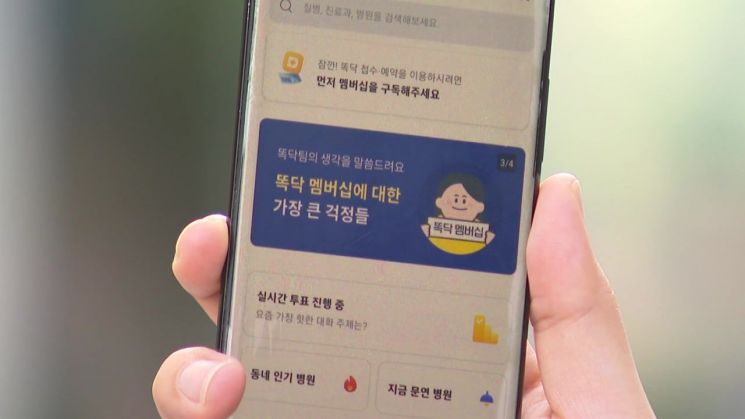 When the 'Ddokdak' app was first released, it received great response on-site by dramatically improving the pediatric outpatient waiting lines that repeated every change of season. It is known that the app has accumulated 10 million users through word of mouth, and about 10,000 affiliated hospitals are using it.
 [Photo by YTN]
The reason for this issue is the app called 'Ttokdak.' This app is operated by the private company Vibros and provides non-face-to-face medical consultations, hospital reception, and reservation services.
When the 'Ttokdak' app was first introduced, it received great acclaim on-site by dramatically improving the recurring pediatric outpatient waiting lines during seasonal changes. It is known to have accumulated 10 million users through word of mouth, with about 10,000 affiliated hospitals using it.
Hospitals that had been accepting reservations both via phone and Ttokdak are increasingly consolidating to accept reservations exclusively through Ttokdak. Meanwhile, Vibros has switched to a paid model since last September due to deteriorating profitability, encouraging users to pay 1,000 KRW per month or 10,000 KRW annually.
Users explain that those who visit pediatric outpatient clinics, where reservations fill up instantly, have no choice but to subscribe.
The problem is that more hospitals are accepting patients only through Ttokdak. Hospitals, which should be accessible to anyone who is ill, are denying medical opportunities to those who do not use this specific paid service.
In this regard, a Ministry of Health and Welfare official pointed out, "If a hospital induces only a specific reservation method despite being able to provide treatment, it may constitute refusal of medical care." Refusal of medical care can result in administrative sanctions such as a one-month suspension of qualifications or criminal penalties including imprisonment of up to one year or fines up to 10 million KRW.
Concerns are emerging that the 'right to receive treatment' may be violated as some hospitals make it impossible to receive treatment without using the paid app.
Jeon Jin-han, Policy Director of the Health and Medical Organizations Alliance for the Realization of the Right to Health, stated, "Although it is 1,000 KRW per month now, if a monopoly structure forms in the future, prices may rise, creating disparities in access to medical services."
A bigger problem is that elderly people unfamiliar with app usage sometimes just watch 'reservations' made by those who arrived later without understanding why.
As the controversy spread, Ttokdak responded, "It is not a priority system like a theme park 'fast track,' but merely a service that replaces 'waiting in line,'" and added, "We are advising hospitals to operate both on-site and mobile reception."
45% kiosk usage rate among those aged 55 and older
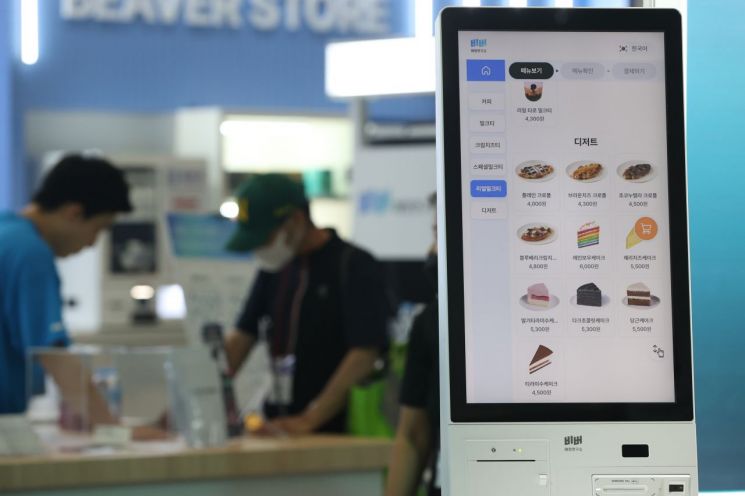 According to the Ministry of Science and ICT, the number of kiosks installed domestically increased more than twofold in three years, from 189,951 units in 2019 to 454,741 units in 2022. On the other hand, the kiosk usage rate among the elderly is less than half.
 [Photo by Yonhap News]
Concerns are also rising that the 'digital divide' phenomenon is worsening as apps like Ttokdak, taxi reservation apps, and in-store kiosks become widespread. Especially, the elderly still complain about daily inconveniences when using public transportation apps or kiosks.
Recently, a story was posted on an online community about a taxi driver who deliberately does not use taxi apps in crowded places.
The reason this taxi driver stopped using taxi apps was after noticing an elderly woman crying on the street because she could not catch a taxi. As a result, the driver does not use taxi apps in crowded places such as hospitals, markets, and terminals to help elderly people who cannot make mobile taxi reservations.
Not only taxi apps but also kiosks, which have been increasing mainly in restaurants and cafes recently, pose high barriers for the elderly and other digitally vulnerable groups.
According to the Ministry of Science and ICT, the number of kiosks installed domestically more than doubled in three years, from 189,951 units in 2019 to 454,741 units in 2022. On the other hand, the kiosk usage rate among the elderly is less than half. According to the '2021 Seoul Citizens Digital Competency Survey' by the Seoul Digital Foundation, the kiosk usage rate among those aged 55 and older was only 45.8%.
© The Asia Business Daily(www.asiae.co.kr). All rights reserved.



















