Russian Lower House Member Advocates 'Childless Tax' Introduction
Soviet Era Childless Couples Taxed 6% of Wages
"Tax Is Not Punishment... It's a Solution to the Problem"
In Russia, the introduction of a 'childless tax' is being discussed as a measure to promote the birth rate.
"Let's introduce a childless tax like the Soviet Union" proposal

On the 4th (local time), Yevgeny Fedorov, a member of the Russian State Duma, appeared on the radio and discussed measures to promote the birth rate, saying, "Introducing a tax on childlessness like in the (former) Soviet Union is also a good idea," according to the Russian daily Kommersant on the same day.
Fedorov said, "If there is not enough capital to promote the birth rate, a tax should be introduced," adding, "Tax is not a punishment but a way to solve the problem."
In the past, during World War II, the Soviet Union experienced a sharp population decline, and under Stalin's leadership, a childless tax was introduced in 1941. Childless men aged 20 to 50 and married women aged 20 to 45 were required to pay 6% of their wages as tax. However, infertile couples and low-income individuals were exempted.
Russia's declining birth rate trend... lowest number of births since 1999
This discussion on introducing a childless tax is linked to Russia's declining birth rate. According to the World Bank, Russia's total fertility rate (the average number of children a woman is expected to have during her reproductive years) decreased from 1.8 in 2016 to 1.5 in 2021.
Russia's annual number of births is expected to be 1,245,000 this year, the lowest since 1999 (1,215,000). The Russian government forecasts that the number of births will gradually decrease to 1,172,000 in 2024, 1,153,000 in 2025, and 1,143,000 in 2026.
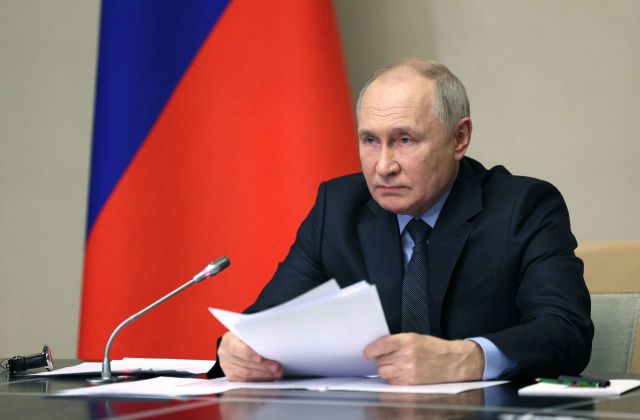
In response, President Vladimir Putin said in August, "Large families should become the standard of life for the Russian people," adding, "The birth situation in Russia continues to be difficult."
Japan also attempted introduction in the past... "Human rights violation" vs "Birth benefits"
Previously, reports emerged that Japan was also considering introducing a childless tax. In 2017, the Abe administration showed movements to introduce a childless tax for high-income earners with an annual income of 8 to 9 million yen (approximately 79 to 88 million won at the time) during the process of preparing the New Year tax reform plan.
In response, Japanese society strongly opposed the punitive nature of taxation on childless households, calling it a human rights violation. On the other hand, public opinion also formed that "childbirth is an act that contributes to society, so it is natural to provide more benefits."
© The Asia Business Daily(www.asiae.co.kr). All rights reserved.