As theft incidents surge in the Seoul subway, the organization of fences who monetize stolen goods is being pointed out as the cause. Thieves are only the front end of the entire theft organization, and since there is a sophisticated fence network behind them, the police believe that eradicating these groups is essential to reducing theft crimes.
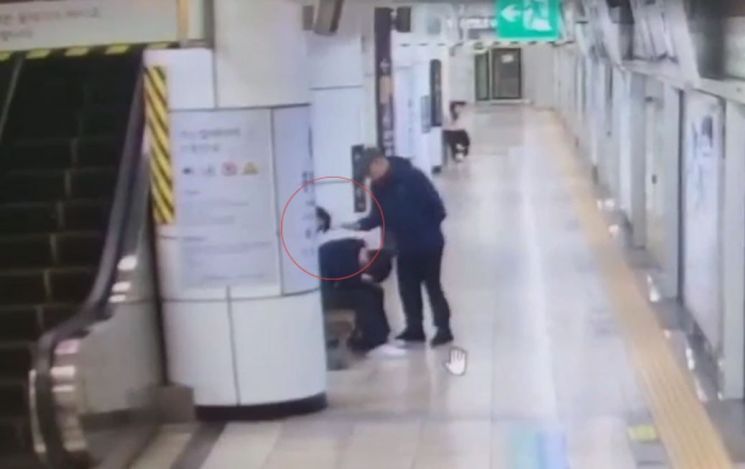 On October 9th, a man in his 60s, Mr. A, was stealing a victim's cellphone at the platform of Hongdaeipgu Station on Seoul Subway Line 2. / Photo by Seoul Metropolitan Police Agency
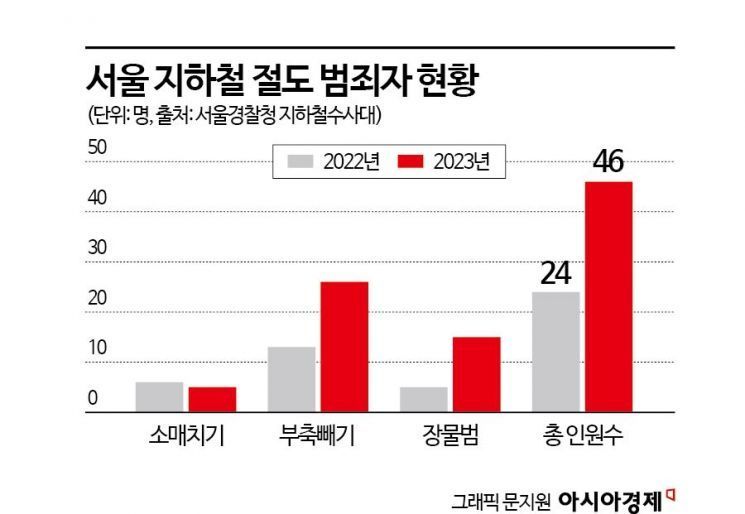
According to the Seoul Metropolitan Police Agency's Subway Investigation Unit on the 5th, a total of 46 theft offenders were apprehended this year in the Seoul subway, including 5 pickpockets, 26 cases of "buchukppaegi" (stealing from intoxicated individuals), and 15 fences. Compared to last year’s total of 24 offenders?6 pickpockets, 13 buchukppaegi, and 5 fences?the number has nearly doubled in one year. With December still remaining, theft crimes in the subway could increase further.
The police are focusing their investigations on fences related to subway theft crimes. Mobile phones are the most common target in subway thefts. The method of buchukppaegi, which involves taking items from intoxicated individuals or picking up dropped items without returning them, is easy to carry out. Additionally, high-end mobile phones can fetch over 1 million KRW when resold. However, stolen phones cannot be used domestically once reported stolen, effectively eliminating domestic demand for such phones. Therefore, thieves are connected with fence organizations that make money by smuggling these phones overseas, effectively forming a single syndicate. A police official explained, "Fences usually hand over stolen goods like mobile phones to countries where they can be used, such as the Philippines and China."
Fences operate through multi-level organizations to conceal the purchase and overseas smuggling of stolen goods. According to the police, fences who receive stolen goods like mobile phones from thieves do not immediately send them overseas but pass them through several other fences. When fences meet, they avoid police tracking by meeting in CCTV blind spots or conducting transactions at residences. A former professor at the Police Investigation Training Institute said, "High-value stolen goods are sometimes stored in nominee personal safes, making it nearly impossible for investigative agencies to track them." Additionally, they use a method called "throwing," similar to drug transactions. The "throwing" method is a non-face-to-face transaction where the seller leaves the goods at an agreed location for the buyer to pick up. Through these processes, stolen goods ultimately reach overseas smuggling operators. Professor Kim Do-woo of the Department of Police Science at Gyeongnam National University said, "As fence operators who used to trade domestically have expanded to overseas smuggling, international cooperation is now necessary for investigations."
Until last year, the police could not accelerate fence investigations due to these difficulties. However, this year, by delving into the fence distribution structure, they have apprehended 10 more fences than last year. In fact, on October 8, the police arrested a total of 13 people, including mobile phone fences, intermediaries, and thieves who handed over stolen phones to them. While investigating a thief arrested on July 23, the police identified the fence who received the goods and also uncovered fence operators and intermediaries connected to overseas fence organizations. A police official said, "Tracking fences who help thieves realize profits is essential to eradicating subway theft crimes." Professor Kim added, "Fences tend to repeatedly commit crimes within the same organization rather than entering new ones. Strengthening recidivist management is necessary to suppress fence crimes."
© The Asia Business Daily(www.asiae.co.kr). All rights reserved.
![Clutching a Stolen Dior Bag, Saying "I Hate Being Poor but Real"... The Grotesque Con of a "Human Knockoff" [Slate]](https://cwcontent.asiae.co.kr/asiaresize/183/2026021902243444107_1771435474.jpg)

















