Expansion of Daikoku and Palace Hotel Outlets
Increasing Demand from Wealthy 'Big-Spender' Tourists
In Japan, where budget accommodations such as 'capsule hotels' and 'dormitory hotels' catering to travelers have been the focus, recent consecutive openings of new luxury hotels have drawn attention. In response to the surge in demand from wealthy tourists due to the weak yen, the number of luxury hotel chains has rapidly increased for the first time in 30 years, raising expectations for revitalizing tourism.
On the 4th, Nihon Keizai Shimbun (Nikkei) reported that high-end hotel chains in Japan have entered a 'new establishment rush,' increasing new locations targeting affluent tourists.
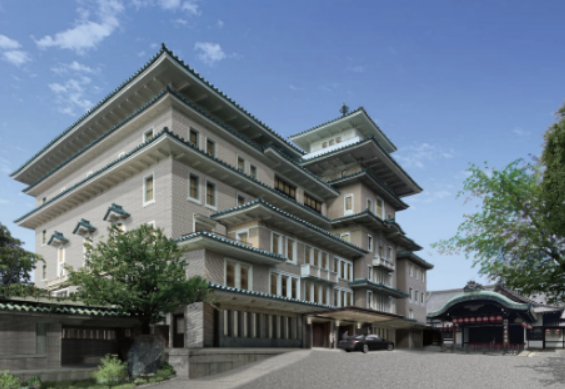
According to Nikkei, at the 5-star Palace Hotel Tokyo, about 75% of guests in October were foreign visitors to Japan, and at the Imperial Hotel Tokyo, the figure exceeded 60%. This proves that most of the high-spending affluent customers staying at luxury hotels are foreign visitors to Japan.
According to the Japan National Tourism Organization, the number of foreign visitors to Japan in October was 2,516,500, an increase of 0.8% compared to the same month in 2019. Nikkei analyzed, "Especially notable is the growth of European and Anglo-American tourists who stay long-term and spend a lot of money."
In fact, as these tourists flocked to luxury hotels, the room rates also rose. For example, at the Palace Hotel, the price per night increased from around 60,000 yen (530,000 KRW) before COVID-19 to 100,000 yen (880,000 KRW).
In response, luxury hotels are expanding new locations to capitalize on the 'weak yen boom.' First, the Imperial Hotel, well known as the 'Teikoku Hotel,' will open a new hotel for the first time in 30 years. The Imperial Hotel plans to open a new building in Kyoto in 2026 and begin reconstruction of the Tokyo main building in 2030. The Palace Hotel plans to open new hotels in major cities outside Tokyo, increasing the number of hotels from the current four to ten by 2030.
Hotel chain Hulic, which operates the luxury ryokan 'Fufu,' has allocated a budget of several billion yen and plans to double the number of domestic hotels and ryokans to 38 by 2030. Among these, the ryokan Fufu, with room rates ranging from 100,000 to 300,000 yen (880,000 to 2,660,000 KRW) per night, will expand from the current nine locations to 17.
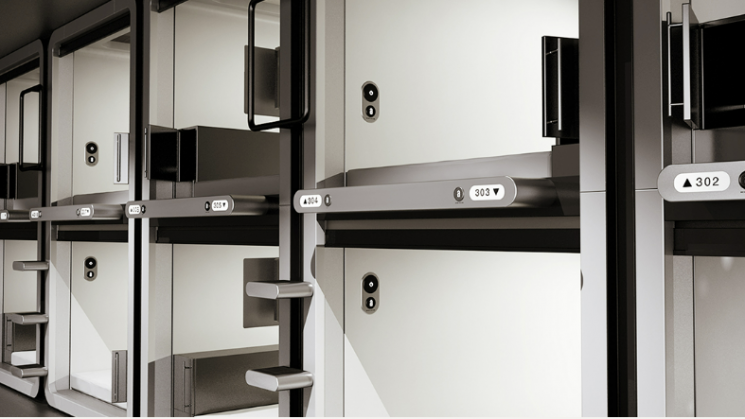
This movement contrasts with the previous trend of increasing 3-star or capsule hotels. It is also influenced by Japan’s characteristic of having relatively fewer hotels for 'big spenders' compared to other countries. Focusing mainly on mid-range and budget hotels has resulted in a significantly smaller number of 5-star hotels compared to other countries. According to tourism agency data, as of June 2020, Japan had 34 five-star hotels, far fewer than the United States with 801, and also lagging behind Asian countries such as China (137), Thailand (112), and Indonesia (58).
Nikkei explained, "Until now, new hotels targeting visitors to Japan have mainly been affordable options aimed at group tourists," adding, "With the increase in affluent visitors to Japan, the movement to establish high-end accommodations has become active."
Japanese luxury hotels have devised a strategy to first increase the number of hotels to raise brand awareness and then use this as a foothold for overseas business expansion. Daisuke Yoshihara, president of the Palace Hotel, told Nikkei, "As we build a brand exclusively for visitors to Japan, proposals to operate hotels overseas will come."
© The Asia Business Daily(www.asiae.co.kr). All rights reserved.


















