US Research Team Announces 8-Week Clinical Trial Results
LDL-C, Insulin Levels, and Body Weight Also Decreased
An experiment comparing a vegan diet and an omnivore diet found that the vegan diet significantly improved overall cardiovascular health.
On the 2nd, Professor Christopher Gardner's team at Stanford University in the United States published the results of a clinical trial involving 22 pairs of identical twins in the American Medical Association (AMA) journal 'JAMA Network Open.' When the twins were each assigned to consume either a vegan or an omnivore diet, the vegan diet was found to be more effective in improving cardiovascular health than the omnivore diet.
Many studies have previously reported that vegetarianism has a positive impact on health. It is also well known that eating less meat is beneficial for cardiovascular health, but it has been difficult to prove this through dietary studies due to factors such as genetic differences, upbringing environment, and lifestyle habits.
The research team explained that identical twins, having grown up in the same household and with similar lifestyles, allow for control of genetic factors and limitation of other variables, which is the background for the twin study.
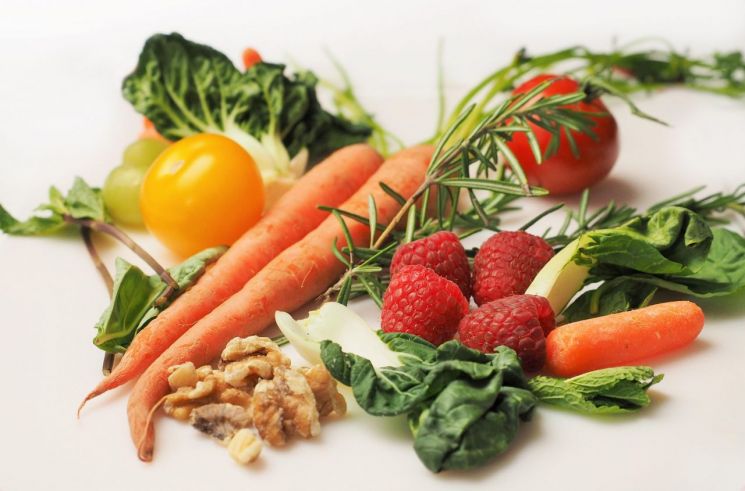
The team conducted the experiment on 22 pairs of identical twins, totaling 44 individuals. They were healthy with no cardiovascular disease from May to July 2022. Both diets consisted of foods rich in vegetables, legumes, fruits, and whole grains, with no sugar or refined starch.
However, the vegan diet excluded animal products such as meat, eggs, and milk, while the omnivore diet included chicken, fish, eggs, cheese, and dairy products.
Fasting insulin levels decreased... significant health improvements in vegan participants
For the first 4 weeks, the identical twins were provided with meals three times a day?breakfast, lunch, and dinner?for a total of 21 meals. For the remaining 4 weeks, participants prepared their own meals following guidance.
Weight was measured and blood samples were taken at the start of the clinical trial, at 4 weeks, and at 8 weeks. Forty-three participants completed the clinical trial.
The results of the health assessments were remarkable. Participants who followed the vegan diet for the first 4 weeks showed significant health improvements. Their levels of low-density lipoprotein cholesterol (LDL-C), a harmful cholesterol for cardiovascular health, insulin, and body weight were all significantly lower than those of the omnivore diet participants.
At the start of the clinical trial, the average LDL-C level was 110.7 mg/dL in the vegan group and 118.5 mg/dL in the omnivore group, but by the end, the vegan group’s level had improved significantly to 95.5 mg/dL, while the omnivore group’s was 116.1 mg/dL.
Participants on the vegan diet also experienced about a 20% reduction in fasting insulin levels. Their body weight decreased by an average of 1.9 kg compared to the omnivore group.
Professor Gardner stated, "Most participants already had healthy LDL-C levels at the start, so there was limited room for improvement," but added, "Those with higher initial levels are likely to see greater improvements."
He continued, "This study involving twins provides a groundbreaking method to demonstrate that a vegan diet is healthier than a conventional omnivore diet," and added, "These results show that consuming more plant-based foods benefits most aspects of health and longevity."
In addition to these results, veganism has been recognized as a low-carbon diet. The greatest advantage of veganism is that it does not require feed, water, energy, or land used in animal farming. According to the Seoul Environmental Federation, producing 1 kg of beef requires about 16 kg of corn used as animal feed and approximately 15,500 liters of water.
Major global organizations have highlighted the importance of veganism as a means to address the climate crisis. According to the Ministry of Environment’s 'Study on Energy Consumption and Greenhouse Gas Emissions of Food,' switching to one vegan meal per day can reduce carbon emissions by about 3.25 kg.
© The Asia Business Daily(www.asiae.co.kr). All rights reserved.


















