Analysis of Dispatch Cases in 2022...Current Status and Issues Identified
Expansion of CPR Training for Residents and Cooperation Systems
Jeonnam Fire Headquarters (Chief Hong Young-geun) is focusing on establishing measures to improve the survival rate of cardiac arrest patients.
Jeonnam Fire analyzed the number of cardiac arrest patient dispatches in the province in 2022 (1,445 cases) to identify the current status and issues, and proposed countermeasures for each city and county fire station to improve the survival rate.
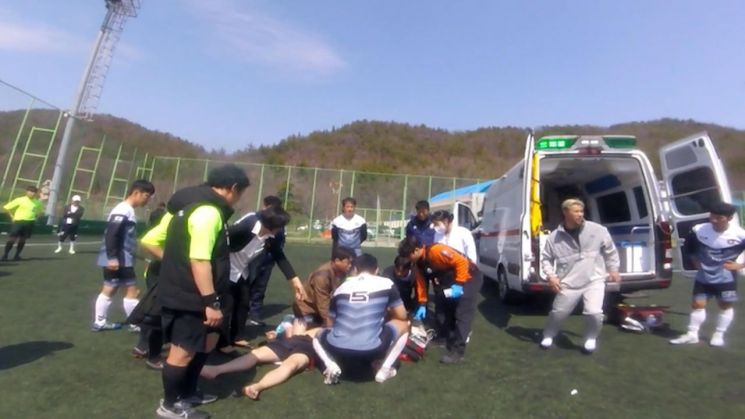
In the past three years, Jeonnam paramedics have transported 4,005 cardiac arrest patients, with an average age of 71.3 years.
Jeonnam, where the proportion of elderly population aged 65 and over is 25.5%, the highest in the country, faces vulnerabilities regarding cardiac arrest patients.
Also, the number of emergency medicine specialists per 100,000 people in Jeonnam is 1.5, which is absolutely insufficient compared to the national average of 4.5, making the role of witnesses even more important.
However, as of the first half of 2022 (based on data from the Korea Disease Control and Prevention Agency), the rate of cardiopulmonary resuscitation (CPR) performed by first witnesses in Jeonnam was 11.6%, lower than the national average of 29.2%.
When a witness performs CPR before the paramedics arrive, it can greatly increase the patient’s chance of survival and provide a vital link to life for the patient.
Jeonnam Fire designates the third Wednesday of every month as CPR Education Day to enable more witnesses to learn and utilize CPR, and expands CPR education for residents.
Additionally, through public-private cooperation, they strive to distribute automated external defibrillators (AEDs) in public places within the region to create an environment where anyone can easily use them in emergencies.
They also implement various policies such as expanding paramedic deployment in vulnerable emergency medical areas like island regions to reduce dispatch times and prioritizing customized CPR education for the elderly.
Another very important factor in improving the survival rate of cardiac arrest patients is the linkage system with hospitals after paramedic emergency treatment.
In Jeonnam, 17 out of 22 cities and counties (77%) are classified as emergency medical center vulnerable areas*, which is far below the national average of 39.2%.
They also pointed out the urgent need to build emergency medical infrastructure and expand medical personnel through the establishment of medical schools within the region.
Chief Hong Young-geun said, “We will strengthen publicity emphasizing the importance of CPR and the role of witnesses, and establish an emergency medical cooperation system for rapid response to emergency patients.”
© The Asia Business Daily(www.asiae.co.kr). All rights reserved.
![Clutching a Stolen Dior Bag, Saying "I Hate Being Poor but Real"... The Grotesque Con of a "Human Knockoff" [Slate]](https://cwcontent.asiae.co.kr/asiaresize/183/2026021902243444107_1771435474.jpg)
















