The inflation indicator preferred by the U.S. Federal Reserve (Fed) continued its slowing trend in November. Consumer spending, which has supported the U.S. economy and shown solid levels, also showed signs of slowing down. This further strengthens market expectations that the Fed will end its tightening cycle and begin cutting interest rates next year.
According to the U.S. Department of Commerce on the 30th (local time), the core PCE price index, which excludes energy and food, rose 3.5% year-on-year in October. This figure matched the expert forecasts compiled by The Wall Street Journal (WSJ). Compared to the previous month, it increased by 0.2%, also in line with expert expectations (0.2%).
The overall PCE, including energy and food, rose 3.0% year-on-year. Month-on-month, it remained flat. Jay Woods, Global Chief Strategist at Freedom Capital Markets, told CNBC, "The price movements are positive," adding, "Economic indicators provide a tremendous tailwind supporting the possibility that the Fed will curb rate hikes and move toward rate cuts."
The core PCE is the main inflation indicator the Fed uses as a benchmark for monetary policy decisions. The fact that this indicator continued its slowing trend as expected suggests that the current monetary policy is sufficiently tight to not require additional rate hikes. Recently, Fed Governor Christopher Waller also stated, "Confidence is growing that the current monetary policy is appropriate for achieving the 2% inflation target."
Also released was October's personal consumption expenditure, which increased by 0.2% month-on-month, meeting expectations. Considering that personal consumption expenditure rose 0.7% in September, this suggests a slowdown in consumption. Personal income in October increased by 0.2%, a smaller rise compared to 0.4% in the previous month. The Fed's Beige Book, released the previous afternoon, also included an analysis that overall economic activity, including consumer spending which accounts for two-thirds of the U.S. economy, has slowed. Robert Pavlic, Senior Portfolio Manager at Dakota Wealth, evaluated, "The indicators are moving in the direction the Fed wants."
Additionally, the October existing home sales index, released the same day, fell 1.5% month-on-month and 8.5% year-on-year, marking the lowest level since statistics began. Last week, initial jobless claims increased by 7,000 from the previous week to 218,000, and continuing jobless claims, which represent those claiming unemployment benefits for two weeks or more, rose by 86,000 to 1,927,000.
Market expectations for rate cuts next year continue. According to the CME FedWatch tool at the Chicago Mercantile Exchange (CME), the federal funds futures market on that day reflected more than a 75% probability that the Fed will cut rates by at least 0.25 percentage points in May next year.

Sonu Varghese, Global Macro Strategist at Carson Group, analyzed, "These indicators will solidify expectations that the Fed will implement at least one rate cut in the first half of 2024," adding, "Fed officials have already acknowledged the easing inflation trend, fundamentally laying the groundwork for rate cuts." Joe Salucci, Manager at Themis Trading, said, "It’s a good indicator in that it met expectations," and added, "The market believes the Fed will no longer raise rates."
However, cautionary voices regarding inflation continue from Fed officials. Earlier, Governor Waller raised market hopes for a pivot by stating that if the inflation easing trend continues, rate cuts could be possible within a few months. Yet, hawkish comments indicating that the rate hike option is still on the table have followed.
John Williams, President of the Federal Reserve Bank of New York and considered the Fed’s third-ranking official, said in his opening remarks during a speech that "It is appropriate to maintain a restrictive stance for a considerable period to bring inflation back to the 2% price stability target." However, he also added that current rates are at a high level and inflation is expected to decline going forward.
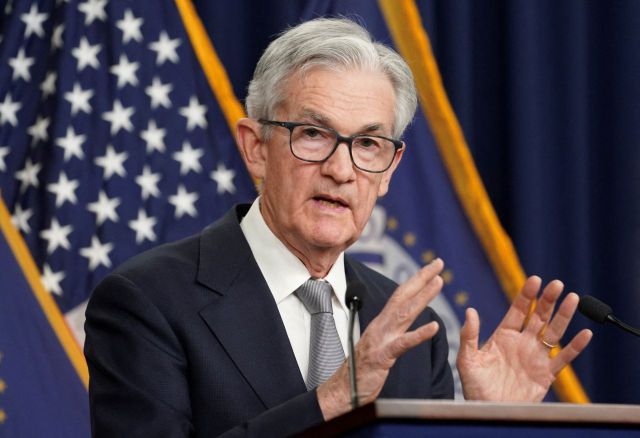
Accordingly, investors’ attention is focused on the remarks of Fed Chair Jerome Powell scheduled for the next day. He will participate in a conversation and panel discussion in Atlanta. Quincy Crosby, Strategist at LPL Financial, noted, "The PCE shows easing inflationary pressures," but also pointed out, "It remains uncertain whether the Fed has enough to declare victory."
© The Asia Business Daily(www.asiae.co.kr). All rights reserved.
![Clutching a Stolen Dior Bag, Saying "I Hate Being Poor but Real"... The Grotesque Con of a "Human Knockoff" [Slate]](https://cwcontent.asiae.co.kr/asiaresize/183/2026021902243444107_1771435474.jpg)











