From 'Practical Verification of Private Contracts' to Securing the New Yeomni-dong Community Center Building, Saving Hundreds of Billions
Reusing Old Sidewalk Blocks, Establishing an Administrative Property Sharing System... Budget Savings Through Unique Ideas
Typically, regional development and the enhancement of residents' welfare increase in proportion to fiscal expenditures.
Therefore, local governments with limited budgets are constantly pondering “how to revitalize the local economy with limited resources” and “how to prevent budget waste and efficiently utilize funds to improve residents' welfare.”
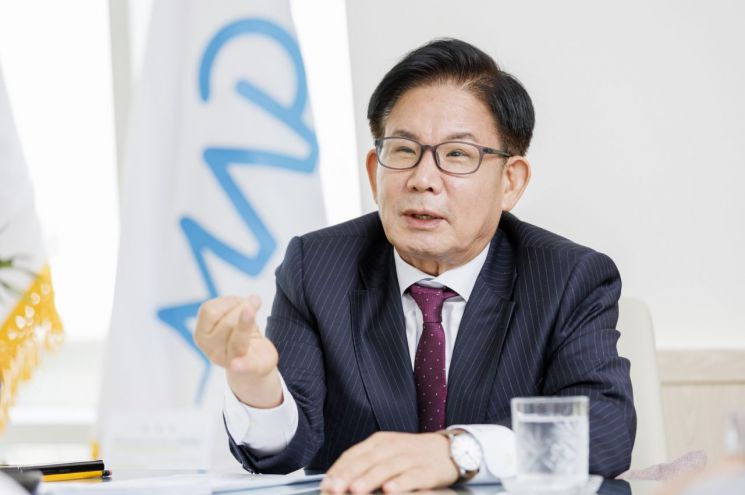
In this context, Mapo-gu (Mayor Park Gang-su) has been recognized for not settling for the status quo or turning a blind eye, but rather for using “ideas and drive” to prevent budget waste and maximize “budget operation efficiency,” thereby achieving both regional development and the enhancement of residents' welfare.
This is particularly notable as Mayor Park Gang-su, a former entrepreneur with a frugal mindset, is driven by the conviction to save every won of the residents' budget.
First, Mapo-gu improved the operation of negotiated contracts, which were previously conducted freely by individual departments, and established a dedicated team for practical verification of negotiated contracts.
The dedicated team for practical verification of negotiated contracts is one of the new systems introduced to improve past practices. It is responsible for fundamentally blocking unnecessary budget expenditures by verifying the amount validity, contract appropriateness, and vendor eligibility for all negotiated contracts related to construction, goods, and services requested for contract review.
Mayor Park said, “By preemptively verifying and decisively eliminating budget waste factors caused by improper practices and unnecessary financial inputs unrelated to improving residents' lives, we were able to save tens of billions of won in the budget.”
Furthermore, Mapo-gu incorporated residents' opinions and fresh ideas into the construction of the Dangin-dong residents' convenience facility.
According to the administrative demands of local residents, an underground parking lot and convenience facilities, which were not included in the original design, were added. By applying the “fast track method,” which simultaneously proceeds with design and construction, the district saved 8.4 billion won in construction costs and shortened the construction period by nine months, according to the district’s explanation.
In particular, securing a new building for the Yeomni-dong Residents' Center without incurring massive budget costs highlights Mapo-gu’s exceptional insight and drive.
The Yeomni-dong Residents' Center, which was completed 30 years ago, had outdated facilities and limited space, causing significant inconvenience to residents. However, the construction of a new building faced difficulties due to the large budget required.
Then, while carrying out administrative procedures for the Seoul Metropolitan Government’s station-area youth safety housing project near the Yeomni-dong Residents' Center (on the site of the former KT Mapo Solution Building), a breakthrough was found.
After confirming the public contribution rate criteria for the Yeomni-dong Youth Safety Housing Project, Mapo-gu negotiated with Seoul City to receive a donation of part of the public contribution facilities on the second floor for use as a residents' center from the project implementer.
However, concerned that the donated residents' center located on the second floor above ground might reduce convenience for residents, Mapo-gu continued additional consultations with the project implementer, Master Investment Management Co., Ltd., to derive improvement plans. As a result, the district secured additional space for the residents' center on the first floor above ground and devised a “resident-friendly improvement plan” allowing the residents' center to exclusively use some outdoor space on the second floor and handle interior construction inside the center.
Among the projects where ideas and efficient budget use stand out are the “reuse of old sidewalk blocks” and the “establishment of the first administrative property sharing system among autonomous districts.”
Indiscriminate sidewalk block replacement projects have been pointed out as typical budget-wasting projects. While Mapo-gu only conducts maintenance projects on sidewalks that are truly necessary, it improved the system so that even old sidewalk blocks can be reused where needed instead of being discarded.
Accordingly, Mapo-gu recently conducted a demand survey for curb stones and sidewalk blocks generated after the maintenance work on the old sidewalks of Seongsan-ro, enabling the reuse of old sidewalk blocks.
Also, in line with the current trend of borrowing and using shared parking lots and shared cars when needed, administrative properties that were previously purchased and used separately by departments and institutions were made available for shared use.
This is the “Administrative Goods Sharing System,” which introduced the concept of “sharing” to administrative properties for the first time among autonomous districts.
The items registered in the Mapo-gu administrative property sharing system total 83 categories, ranging from administrative vehicles such as trucks and forklifts to wheelchairs, large shredders, and audiovisual equipment, totaling 2,931 items. This revolutionary improvement in the previous item management method, where each department had to purchase and hold items individually, is expected to significantly reduce redundant budget waste.
Additionally, the Red Road, which won the “2023 Asia Urban Landscape Award,” features recycled flower pots and about 4,800 flower panels painted by residents, creating a Red Road specialized street. The district also carefully reviewed overlapping expenditure items in its representative festival, the “Mapo Naru Salted Shrimp Festival,” reducing the festival budget by 15%, thoroughly scrutinizing wasteful financial expenditures.
Mayor Park Gang-su said, “As the steward and honest mayor responsible for the lives of 370,000 Mapo-gu residents, I will lead efficient district administration with a limited budget to create a Mapo-gu where everyone?from young children to people with disabilities and the elderly?enjoys sufficient welfare benefits.”
© The Asia Business Daily(www.asiae.co.kr). All rights reserved.

















