Speeding Up Technology Development Instead of Rare Metal Lithium
Swedish Company Moves Closer to Commercialization
Expectations to Check China Controlling 80% of Lithium Supply Chain
As the development of sodium battery technology, which uses sodium easily obtained from seawater as a core material for electric vehicle batteries, accelerates, attention is focused on whether it will eventually replace lithium batteries, which China has virtually dominated in the raw materials market. With many Chinese companies also jumping into technology development for the commercialization of sodium batteries, competition in technology development among countries and companies is expected to intensify further.
Development of Commercial Sodium Battery Technology in Sweden
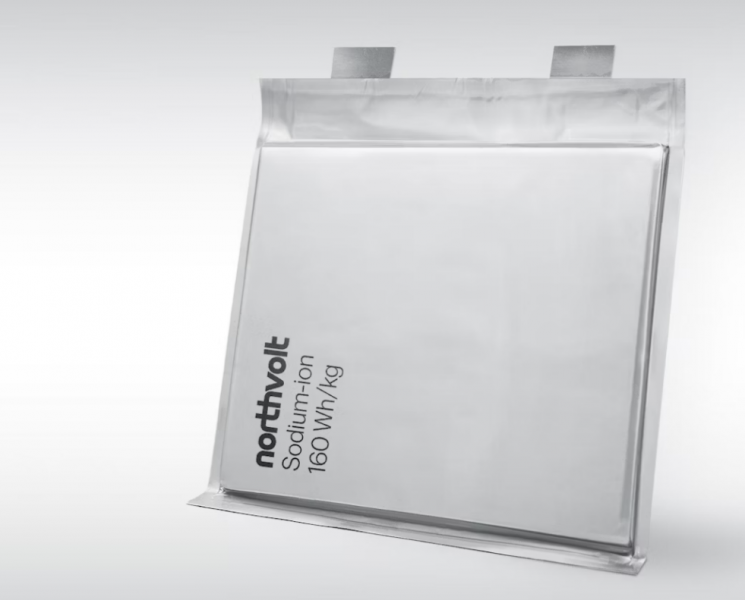
Recently, expectations for sodium batteries have grown significantly after Swedish battery company Northvolt announced on the 21st (local time) that it had raised the energy density of sodium-ion batteries to a commercially viable level. Northvolt announced the development of a sodium-ion battery with an energy density of 160Wh/Kg that does not use lithium, cobalt, or nickel.
Northvolt has received pre-orders worth $55 billion (approximately 71.4 trillion KRW) related to sodium batteries and plans to produce the first prototypes next year to deliver to customers. They emphasized that sodium batteries can be manufactured without relying on the battery supply chain established by China. Northvolt plans to initially design the first-generation sodium-ion batteries primarily for energy storage and gradually increase energy density to produce products with mobility.
Peter Carlsson, founder and CEO of Northvolt, said, "The world has high expectations for sodium-ion," adding, "This battery technology is important for making electrification worldwide more cost-effective, sustainable, and accessible, which is crucial for achieving global sustainability goals."
Sodium Batteries 40% Cheaper than Lithium Batteries
The sodium battery, which has stirred the battery market this year, is an energy storage device made using sodium. Although technology development began in the 1970s, interest waned somewhat in the 1990s as lithium-ion batteries gained more attention in the market. However, as lithium supply issues grew, sodium batteries began to regain interest from the 2010s onward.
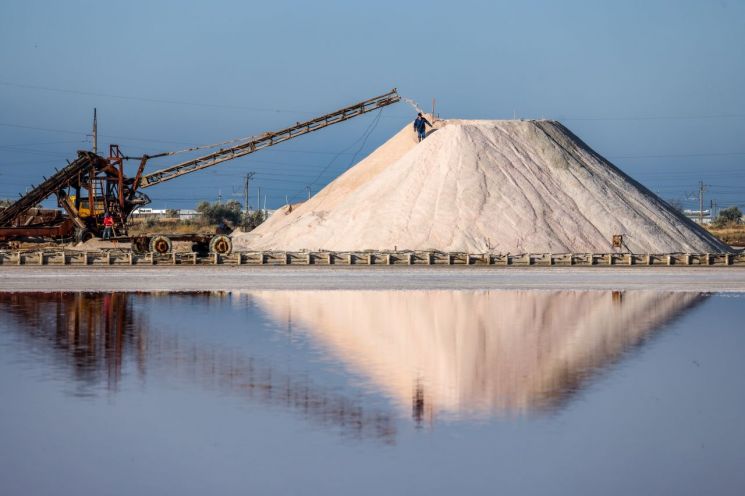
Sodium, which can be sourced from rock salt or saltwater worldwide, is cheaper and more abundant than the rare mineral lithium. On average, sodium batteries are about 30-40% less expensive than lithium batteries. Since batteries largely determine the price of electric vehicles, the adoption of sodium batteries could significantly lower electric vehicle prices.
Like lithium, sodium is an alkali metal belonging to Group 1 of the periodic table, so their chemical structures are similar. However, sodium atoms are larger and heavier than lithium atoms. The energy density of sodium batteries is about 40% that of lithium batteries, so their performance is somewhat lower. Therefore, increasing energy density is the core focus of sodium battery technology development.
Bloomberg has noted that currently, sodium batteries are unsuitable for large electric vehicles due to their low density but could replace lithium in lower-spec transportation. The Economist of the UK evaluated that while sodium batteries are not immediately applicable to devices where battery size and weight are critical, such as smartphones, they could be used in large trucks, ships, grid-scale storage, and home storage.
Another issue is battery lifespan. According to Bloomberg, lithium batteries have a cycle life of about 7,500 charge or discharge cycles before replacement, whereas sodium batteries currently average about 5,000 cycles. Duo Fu, an analyst at consulting firm Rystad Energy, said the biggest question is whether this issue can be resolved, and if so, demand in the energy storage sector is expected to increase.
If sodium batteries become widespread and replace lithium batteries, demand for the rare mineral lithium is expected to decrease.
Research firm BloombergNEF estimated in a June report that sodium battery adoption could replace 272,000 tons of lithium demand by 2035, accounting for about 7% of the total market annually. However, in an extreme scenario where lithium supply is not smooth and sodium battery demand expands rapidly, it could replace 1.4 million tons, or 37% of total lithium demand.
This could change the current situation where electric vehicle prices fluctuate depending on raw material prices such as lithium. Sam Adham, head of batteries at consulting firm CRU, predicted, "Sodium-ion will play an important role in improving the lithium supply-demand balance," adding, "It will help mitigate large fluctuations in lithium prices."
Expected to Curb China... But China Leads Sodium Battery Development
It has been analyzed that the development of sodium batteries could reduce dependence on China, which accounts for 80% of the global lithium supply chain. This is why Northvolt's technological development has attracted significant attention. The news came at a time when the European Union (EU) is creating laws to reduce dependence on China for raw materials used in strategic industries such as renewable energy, making it even more noteworthy.
However, Chinese companies have taken the lead in large-scale investments and are focusing on improving technology development for sodium batteries.
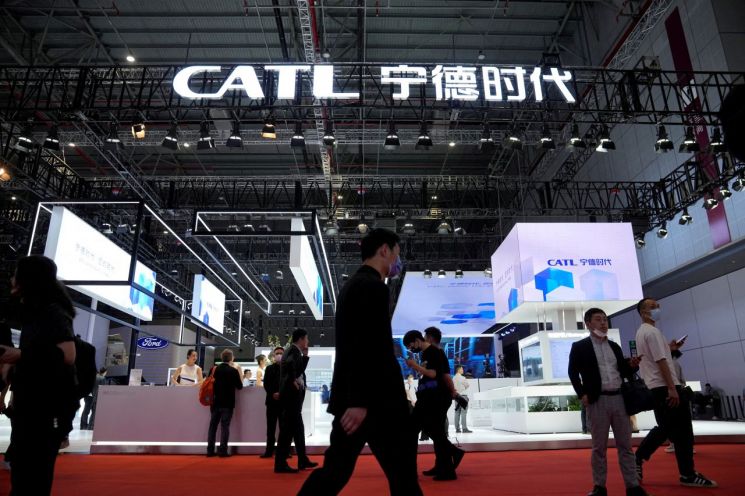
China's CATL, the world's largest electric vehicle battery company, unveiled the world's first sodium-ion battery with an energy density of 160Wh/Kg in 2021 and announced in April that it would supply sodium-ion batteries to Chinese automaker Chery Automobile. BYD, China's largest electric vehicle manufacturer, announced on the 18th that it would invest 10 billion yuan (approximately 1.8 trillion KRW) to build a sodium-ion battery factory in Xuzhou, Jiangsu Province, eastern China.
Lori McNulty, senior research analyst at Benchmark Mineral Intelligence, a provider of specialized information on battery and electric vehicle supply chains, described it as an "enormous investment," explaining, "They are building confidence by saying, 'We are here to continue expanding production capacity to commercialize this technology (sodium batteries).'"
© The Asia Business Daily(www.asiae.co.kr). All rights reserved.



















