Observed movement since 2020... Recent acceleration
Scientists say "Natural phenomenon, not due to climate change"
The world's largest iceberg, Antarctica's 'A23a,' began moving in 2020, and its speed has been observed to increase in recent months.
A23a was formed when it broke off from the coast of the Antarctic continent in 1986. Since then, it remained anchored to the seabed of the Weddell Sea, holding its position for over 30 years and becoming a kind of ice island.
The iceberg covers an area of 4,000 km², which is six times the size of Seoul, and its thickness reaches about 400 meters, surpassing the height of most skyscrapers. For comparison, The Shard in London, the tallest skyscraper in Europe, is only 310 meters tall.
According to a report by the British BBC on the 24th (local time), the iceberg was first observed separating from the seabed and moving in 2020.
This is known to be a natural phenomenon occurring as the iceberg gradually melts over time. The BBC stated, "The movement of A23a shows that regardless of size, all icebergs are destined to eventually melt and drift away."
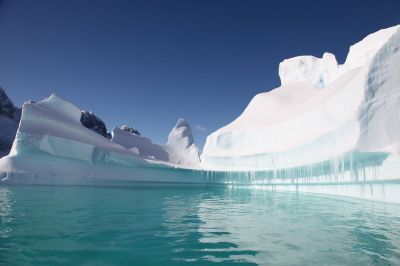
Dr. Andrew Fleming of the British Antarctic Survey (BAS) explained, "The iceberg, which was anchored to the seabed, has finally reduced in size enough to lose the strength to hold itself in place and has started to move." He added, "I asked some colleagues whether this movement was caused by changes in seawater temperature, but in the end, we concluded that it was simply time."
In recent months, A23a's movement speed has been increasing due to wind and currents, and it is currently passing the northern tip of the Antarctic continent. Like all other icebergs in the Weddell Sea, A23a is almost certain to be carried by the Antarctic Circumpolar Current. Icebergs riding the Antarctic Circumpolar Current flow into the South Atlantic through a route known as the "ice highway."
Scientists are closely tracking A23a's movement path because if the massive iceberg blocks the routes used by animals for hunting, it could disrupt their feeding activities.
If the iceberg settles near South Georgia Island, a British territory south of Argentina, there are concerns it could harm millions of seals, penguins, seabirds, and other wildlife inhabiting the area.
However, when the iceberg melts and mineral dust trapped in the ice enters the ocean, it can serve as food for organic organisms that form the base of the marine food chain. For this reason, experts believe that icebergs are not necessarily harmful to the surrounding ecosystem.
Dr. Catherine Walker of the Woods Hole Oceanographic Institution said, "Icebergs are, in many ways, life-giving entities that serve as the origin of much biological activity."
© The Asia Business Daily(www.asiae.co.kr). All rights reserved.
![Clutching a Stolen Dior Bag, Saying "I Hate Being Poor but Real"... The Grotesque Con of a "Human Knockoff" [Slate]](https://cwcontent.asiae.co.kr/asiaresize/183/2026021902243444107_1771435474.jpg)
















