Risk of Issues When Driving Without Winter Inspection
Comprehensive Check Needed for Filter, Engine, Antifreeze, etc.
Summary of Winter Preparation for Vehicles
2. Replace fuel filter if over 20,000 km... Caution needed for LPG vehicles as well
3. Beware of battery life reduction in cold weather... Should be measured at service centers
4. Antifreeze performance deteriorates when mixed with other products... Use dedicated antifreeze for electric vehicles
Driving a vehicle in summer condition without a winter inspection can cause safety and malfunction issues, so vehicles need to be checked when the severe cold of winter arrives. The period just before winter, known as the 'Kimjang season,' is considered an appropriate time for winter inspection.
On the 24th, the Automobile Citizens' Coalition announced that parts management and inspection are necessary to prepare vehicles for the harsh winter. Lim Gi-sang, the representative of the Automobile Citizens' Coalition, explained, "Engine failures increase in winter, so emission inspections are necessary, and especially for aging diesel vehicles, checks such as engine oil leaks and DPF cleaning are required."
Shorten the replacement cycle of in-car filters in winter... Essential filter and engine maintenance for diesel vehicles
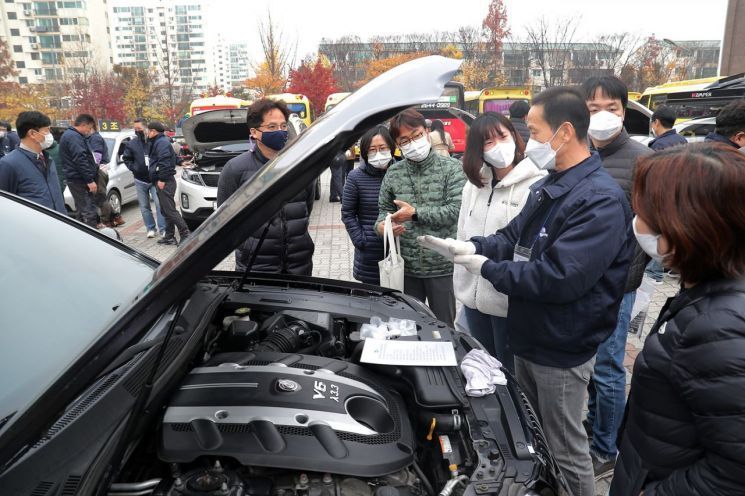
In winter, the concentration of fine dust often increases, resulting in a higher amount of harmful fine particles such as fine dust, pollen, asbestos particles, and road dust entering the vehicle cabin during driving.
The in-car filter that filters these harmful substances is an essential part in winter. When fine dust is severe or the heater is used in winter, the inspection and replacement cycle should be shortened due to contamination, and when replacing, antibacterial recommended parts or certified products should be used.
Additionally, diesel vehicles are equipped with an environmental part called DPF (Diesel Particulate Filter) that filters ultrafine dust, a Group 1 carcinogen. Cleaning the filter and engine maintenance about once a year is essential.
As the engine mileage increases, accumulated soot can cause DPF damage or engine performance deterioration. Neglecting engine wear or oil leaks can cause damage to the platinum filter and result in white smoke and black soot emissions.
Before winter, it is advisable to check for engine oil leaks and use DPF-specific engine oil that blocks substances interfering with combustion.
Replace the 'fuel filter' if over 20,000 km... Diesel and LPG vehicles also require caution in cold winter
The detoxification of vehicle fuel is done by the 'fuel filter.' The fuel filter removes various foreign substances and moisture, but in winter, it can freeze or clog, causing starting problems. Gasoline vehicles should have the filter replaced every 20,000 to 30,000 km.
Diesel vehicles experience intermittent starting failures when the temperature drops below minus 15 degrees Celsius due to wax formation in the fuel.
LPG fuel is very sensitive to temperature changes as a gas, and when the temperature falls below minus 15 degrees Celsius, vapor pressure decreases, causing starting failures. When visiting cold regions such as ski resorts, using local gas stations can help prevent starting problems.
Mixing different antifreeze products causes 'performance deterioration'... Use dedicated antifreeze for electric vehicles
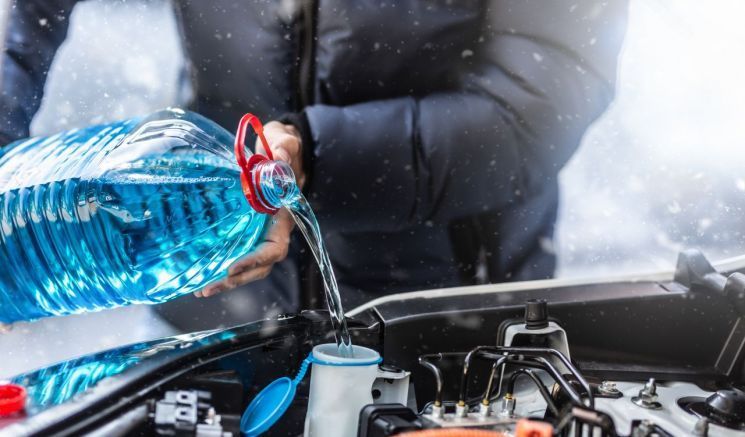
Vehicles can also suffer from frostbite. Therefore, checking antifreeze to prevent coolant from freezing is necessary.
Since the mixing ratios and chemical quality differ by manufacturer, the same product should be used, and mixing with other products causes performance deterioration, so manufacturers advise caution. When replacing, completely drain the existing coolant, fill with tap water, run the engine idle, drain again at least twice before refilling.
Electric vehicles also use antifreeze to cool the battery and motor from cold and heat.
Electric vehicles must use insulated dedicated antifreeze that does not conduct electricity. Using regular automotive antifreeze can cause fire risks due to overheating and malfunctions from mixing, potentially leading to warranty repair disadvantages.
If an electric vehicle battery fails and needs replacement, the cost including labor is about 20 million KRW, and for imported cars, it can be even higher.
Beware of battery life reduction on cold winter days... Should be measured at service centers
The battery is a consumable part whose lifespan depends on usage rather than a fixed replacement cycle.
Even a new battery’s life can be shortened if there is heavy electricity use or discharge due to charger malfunction.
In severe cold weather, rapid performance degradation of the battery can cause starting failures and other malfunctions. Accurate measurement with a dedicated battery capacity tester at a service center is recommended, and when replacing, always check the most recent manufacturing date.
© The Asia Business Daily(www.asiae.co.kr). All rights reserved.


















