The conflict between the government and the medical community over the expansion of medical school quotas continues. On the 22nd, the Ministry of Health and Welfare and the Korea Medical Association met for the first time since the government announced the demand survey for medical school quotas, but after confirming their differences, they quickly left the negotiation table.
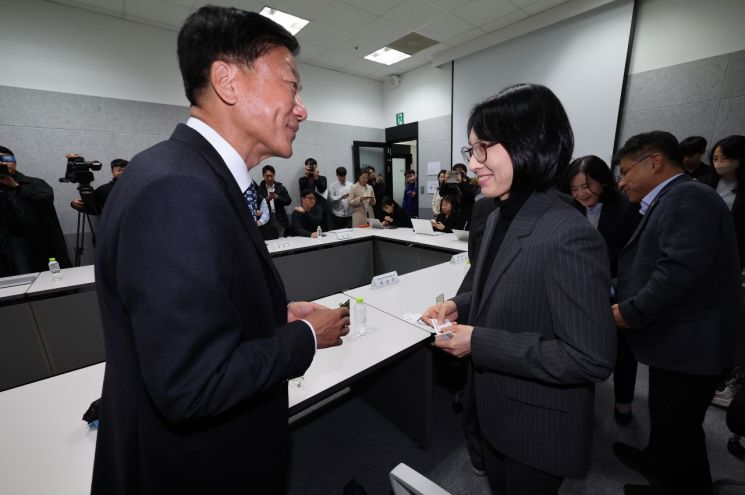
On that day, the Ministry of Health and Welfare and the Korea Medical Association held the 18th Medical Issues Consultative Body meeting at 4 p.m. at Conference House Dalgaebi in Jung-gu, Seoul. The consultative body is an official communication channel where the Ministry and the Medical Association discuss the issue of expanding medical school quotas. Participants from the Ministry included Jeong Gyeong-sil, Director of Health and Medical Policy, and from the Medical Association, Yang Dong-ho, Chair of the Gwangju Medical Association Delegates Council, among others.
This consultative body meeting was the first since the Ministry announced the results of the demand survey for expanding medical school quotas. The Ministry announced the previous day that 40 medical schools nationwide hoped to increase their current admission quotas by up to 93.1% starting from the 2025 admissions and by up to 129.3% by the 2030 admissions. The medical school quota has been fixed at 3,058 students for 18 years. The Medical Association strongly opposed the government’s survey results, stating they would not hesitate to engage in struggles surpassing the 2020 strike level.
At the meeting, Yang Dong-ho, head of the Medical Association’s negotiation team (Chair of the Gwangju Medical Association Delegates Council), described the Ministry’s announcement as a “nuclear bomb.” Yang said, “We agreed to have frank discussions after sufficiently discussing ways to normalize essential and regional medical care, but the survey results were announced prematurely,” adding, “This is like asking a cat how many fish it needs.”
The Ministry of Health and Welfare did not back down either. Jeong Gyeong-sil, Director of Health and Medical Policy at the Ministry, said, “We have just taken the first step toward increasing medical school quotas, but the medical community is already mentioning words like total strikes and hardline struggles, which is concerning.” She added, “We must break free from the contradiction of complaining about hospital staff shortages and difficulty recruiting doctors even with multi-million won salaries, while opposing the increase in medical school quotas.”
The consultative body meeting ended just 10 minutes after the opening remarks from both sides. Originally, the meeting was scheduled to discuss ways to improve fees for high-risk and complex medical procedures. A Medical Association official said, “Under these circumstances, it seems difficult to discuss the original agenda.”
The Medical Association plans to hold a nationwide doctors’ representatives and expanded inpatient joint meeting on the afternoon of the 26th to discuss countermeasures against the expansion of medical school quotas.
The Ministry of Health and Welfare reiterated its position to implement a package of regional and essential medical policies, including easing judicial risk burdens and reforming the fee system, in addition to expanding the physician workforce. A Ministry official stated, “The Medical Association must no longer ignore the voices from the field calling for an increase in medical personnel.”
© The Asia Business Daily(www.asiae.co.kr). All rights reserved.

![Clutching a Stolen Dior Bag, Saying "I Hate Being Poor but Real"... The Grotesque Con of a "Human Knockoff" [Slate]](https://cwcontent.asiae.co.kr/asiaresize/183/2026021902243444107_1771435474.jpg)














