Kim I-yeon, Spokesperson for the Korean Medical Association
"Universities' Competition to Recruit Freshmen, Doubts Raised by Survey Results"
Universities with medical schools have expressed a desire to nearly double the number of medical school admissions starting from the 2025 academic year, according to a government demand survey. Public opinion on increasing medical school quotas is also generally favorable, which is expected to give momentum to the government's initiative. However, the Korea Medical Association (KMA) has strongly opposed this, calling it a "hasty survey" and threatening a total strike.
Kim I-yeon, spokesperson for the KMA, stated in an interview on MBC Radio's "Kim Jong-bae's Focus" on the 22nd, "I had doubts from the beginning about whether the approach of a demand survey is appropriate," adding, "The issue of medical school quotas is being treated differently from other general departments."
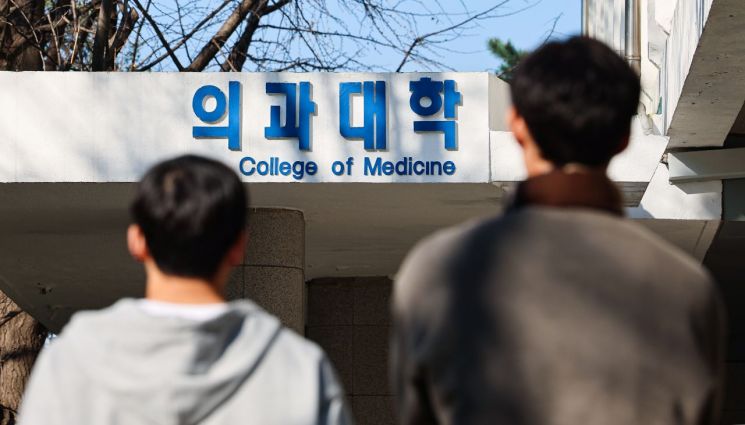
He said, "If you look at the private education market, you can clearly feel it," and added, "Rather than the development of the department or the quality of healthcare that the public should enjoy, a premium is being formed in the education market. If you conduct a demand survey on such a premium, like speculative stocks or real estate, would the results come out honestly?" He continued, "Because universities are facing a strong trend of low birth rates, there is competition to attract new students," suggesting that the demand survey results showing medical schools hoping to increase quotas include inflated figures.
Kim explained, "Currently, medical education is barely sustaining with the current quota of 3,000 students. But now there are plans to expand by more than double, from about 2,800 to 3,900 students," and added, "Where will the professors to teach these students come from, and the facilities and practical training capacity of the schools to supervise them cannot suddenly double as if inflated."
He emphasized, "More evidence is needed to justify increasing medical school quotas," and said, "The essential medical collapse that the public feels now is that skilled doctors trained in thoracic surgery or cardiovascular surgery are steadily needed, but the field is poor and there are many legal disputes, so doctors cannot endure and leave," suggesting that support for essential medical fields is more necessary than increasing medical school quotas.
Regarding the establishment of public medical schools, he said, "There is a question of whether doctors graduating from there can continuously work in the areas we want," and added, "We need to discuss whether this is an effective measure and whether the public and supporters will accept it."
On the 21st, the Ministry of Health and Welfare announced the results of a demand survey on expanding medical school quotas conducted with 40 medical schools nationwide. According to the survey, the demand for increased quotas for the 2025 academic year proposed by all medical schools ranged from a minimum of 2,151 to a maximum of 2,847 students. This represents a 70.3% to 93.1% increase compared to the current quota of 3,058 students. Additionally, each university is understood to want to continuously expand quotas, aiming to increase by at least 2,738 and up to 3,953 students by the 2030 academic year.
© The Asia Business Daily(www.asiae.co.kr). All rights reserved.
![Clutching a Stolen Dior Bag, Saying "I Hate Being Poor but Real"... The Grotesque Con of a "Human Knockoff" [Slate]](https://cwcontent.asiae.co.kr/asiaresize/183/2026021902243444107_1771435474.jpg)
















