Fire Agency "Will Correct Wrong Safety Myths"
Promotes Proper Butane Gas Usage Methods
How should butane gas canisters used in portable gas stoves be disposed of? While it was commonly believed that puncturing the gas canister before disposal was the proper method, the Fire Agency has explained that this approach is incorrect.
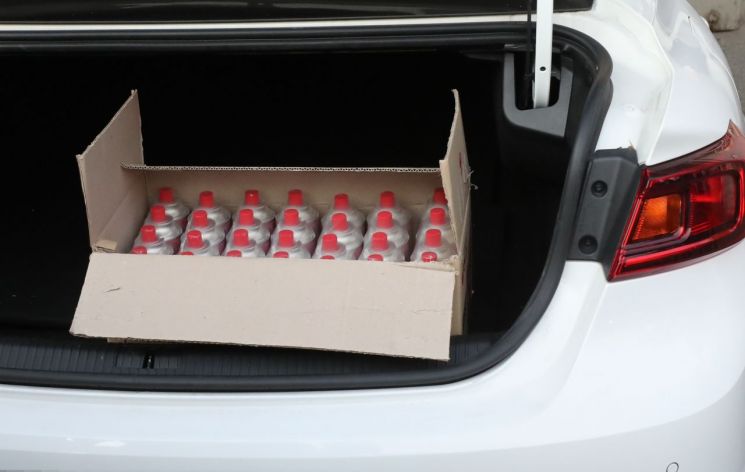
According to the Fire Agency on the 21st, last year there were 223 ambulance dispatches due to butane gas use. Of these, 80 cases (36%) occurred during the winter season. This increase is attributed to the rise in camping stove usage.
Seventy percent of all accidents happened during the use of butane gas. Incidents occurring ‘after use’ accounted for 44 cases, or 19.8%.
Accident types before use included ▲19 cases (8.5%) of explosions caused by placing the canister near heat sources such as stoves or wood boilers, or submerging it in hot water ▲4 cases (1.8%) of injuries while attaching the canister to portable gas stoves.
Accidents during use were recorded as ▲56 cases (25.1%) of explosions while using portable gas stoves ▲17 cases (7.6%) of poisoning due to gas leaks while using butane gas for heating devices ▲15 cases (6.7%) of explosions and fires while connected to torches ▲and 68 other cases (30.5%).
Post-use accidents included ▲24 cases (10.8%) of explosions or poisoning caused by puncturing canisters with remaining gas inside ▲and 20 cases (9%) of explosions during waste incineration.
The total number of casualties from butane gas accidents was 223, including 3 cardiac arrests and 220 injuries. Among the injuries, burns accounted for more than half with 139 cases (62.3%). Facial burns caused by explosions, which can singe eyebrows and nasal hair, may lead to airway burns and, in severe cases, respiratory distress, so caution is necessary.
The Fire Agency emphasized the importance of "completely using up the gas before disposal." If any gas remains, it must be released outdoors in a well-ventilated area by pressing the gas nozzle without fully covering it to let the remaining gas escape.
Puncturing butane gas canisters with scissors or knives, a method previously thought to be correct, is extremely dangerous. The canister may explode and cause serious injury. Once all residual gas is released, the canister can be disposed of at designated locations such as recycling collection points.
Proper butane gas usage guidelines include ▲not using cookware larger than the portable gas stove ▲not placing butane gas canisters near hot objects (stoves, boilers, furnaces, grills, etc.), even if the canister is empty ▲using the gas in well-ventilated areas ▲and if ignition fails multiple times, ventilating sufficiently before attempting ignition again.
Kim Young-seok, Director of the Fire Agency’s Life Safety Division, stated, "Since the incidence of butane gas accidents is high during winter, special caution is required. We will actively work to correct misconceptions about safety through various promotional methods. Detailed statistics and accurate information are available on the Fire Agency’s website, so please refer to it."
© The Asia Business Daily(www.asiae.co.kr). All rights reserved.

















