Average Income by Education Level
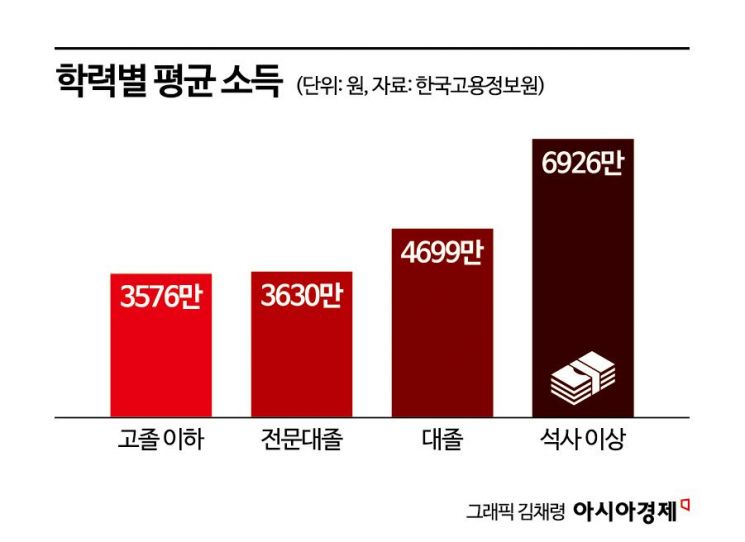
University Graduates 46.99 Million KRW, High School Graduates or Below 35.76 Million KRW
South Korea boasts the highest rate of higher education attainment among OECD countries. Last year, out of 445,815 high school graduates, 326,986 enrolled in universities, marking a university enrollment rate of 73.3%. This is attributed to the persistence of a labor market characterized by academic elitism and a solid wage gap based on educational background. Although there are arguments that individuals who have only graduated from high school should be recognized for their abilities through accumulated experience and not face wage discrimination due to the absence of a university degree, recent social indicators show that there is still a long way to go.
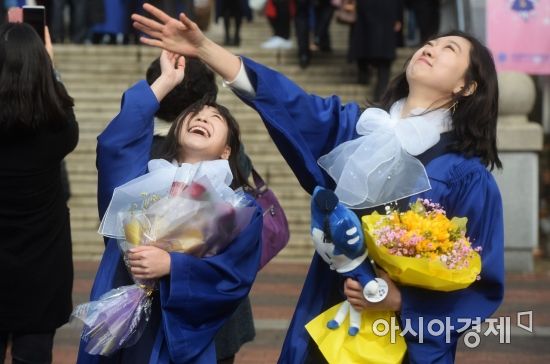 On the 23rd, graduates are throwing their graduation caps at the degree conferment ceremony held at Sookmyung Women's University in Yongsan-gu, Seoul. Photo by Honam Moon munonam@
Average Annual Salary Gap of 10 Million KRW Between High School and University Graduates
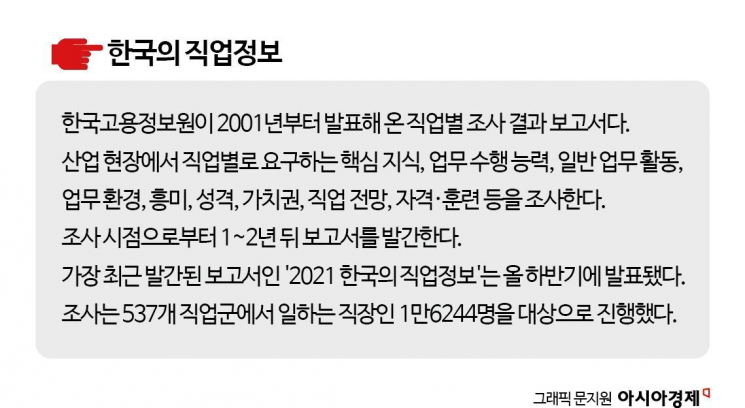
According to a survey result in the '2021 KNOW Research Report' by the Korea Employment Information Service on the 20th (covering 537 occupations and 16,162 respondents), it was found that higher educational attainment correlates with higher average income.
Specifically, individuals with a master's degree or higher had the highest average annual salary at 69.26 million KRW, followed by university graduates at 46.99 million KRW, junior college graduates at 36.3 million KRW, and high school graduates or below at 35.76 million KRW. The salary gap between those with a master's degree or higher and those with a high school diploma or less reached 33.5 million KRW, nearly double. The average salary of high school graduates or below was about 10 million KRW less than that of university graduates.
When income was analyzed by educational level across the top 25%, 50%, and 75% income brackets, the income gap among the top 25% was larger with higher education levels. The average annual salary of the top 25% earners among high school graduates or below was 40 million KRW. The top 25% of junior college graduates also earned an average of 40 million KRW. Looking at the bottom 25%, high school graduates or below earned 28 million KRW, while junior college graduates earned 29 million KRW. For the middle 50%, both groups earned 34 million KRW. This indicates that although junior college graduates earn about 1 million KRW more than high school graduates in the lower income bracket, there is little difference in the middle and upper income brackets.
However, the salary gap between high school/junior college graduates and university graduates is quite significant. The top 25% of university graduates earn 53 million KRW, showing a 13 million KRW difference compared to the top 25% of high school/junior college graduates.
Even the top 25% of university graduates appear somewhat modest when compared to those with a master's degree or higher. The top 25% of master's degree holders earn 80 million KRW, a 27 million KRW gap compared to the top 25% of university graduates.
Significant Gap in Starting Salaries by Education Level
Starting salaries also increase with higher educational attainment. Those with a high school diploma or less had an average starting salary of 24.5 million KRW. Junior college graduates earned 25.89 million KRW, university graduates 32.04 million KRW, and those with a master's degree or higher earned 41.72 million KRW.
The difference in starting salary between junior college graduates and those with a high school diploma or less was 1.39 million KRW. University graduates earned 7.54 million KRW more than those with a high school diploma or less, and master's degree holders earned 17.22 million KRW more than those with a high school diploma or less.
The gap between university and junior college graduates was 6.15 million KRW. Assuming a 4-year and 2-year program respectively, this difference is much larger than the 1.39 million KRW starting salary gap earned by junior college graduates compared to high school graduates. In other words, the efficiency of the time invested by university graduates is higher.
This educational wage gap results in what is called 'educational inflation.' In the 'Arts, Design, Broadcasting, and Sports' sector, about 39.6% required a university-level education, but 71.0% of actual employees held university degrees, showing a 31.4 percentage point difference from the required level. In the 'Management, Office, Finance, and Insurance' sector, only 54.1% required a university-level education, but 72.0% of employees actually held university degrees, an 18 percentage point difference. Simply put, the actual educational level of employees is higher than the educational requirements for each occupation.
Conversely, when comparing the required and actual educational levels in occupations with the highest proportion of high school graduates or below, in 'Beauty, Travel, Accommodation, Food Service, Security, and Cleaning' jobs, 71.8% required a high school diploma or less, but only 44.5% actually held that level. Similarly, in 'Installation and Maintenance' and 'Construction and Mining' jobs, the proportion of employees with a high school diploma or less was lower than the required level. This phenomenon appears to be due to university graduates taking jobs below their educational qualifications.
© The Asia Business Daily(www.asiae.co.kr). All rights reserved.
![Clutching a Stolen Dior Bag, Saying "I Hate Being Poor but Real"... The Grotesque Con of a "Human Knockoff" [Slate]](https://cwcontent.asiae.co.kr/asiaresize/183/2026021902243444107_1771435474.jpg)












