These days, the real estate market is essentially at a complete standstill. While there are various causes, the biggest reasons are sky-high interest rates, economic recession, and strengthened regulations on real estate PF loans.
Although an economic downturn is said to be a time when real estate can be purchased at lower prices, ironically, there do not seem to be many individuals brave enough to take advantage of this.
However, even if the real estate market is difficult due to the recession, niche markets always exist. Some large construction companies are turning their attention to regional housing cooperatives that do not require PF loans to avoid PF loan regulations in the real estate market.
A regional housing cooperative apartment is a system where non-homeowners who have lived in the area for more than six months or household heads owning small homes under 85m² establish a cooperative to secure their own homes. The cooperative members purchase land and build apartments. In short, it is a group purchase of apartments, with the tasks from purchase to completion entrusted to an agency.
The biggest advantage of this system is that a subscription savings account is not required, the project period is relatively shorter compared to other cooperative projects (redevelopment, reconstruction), and resale is possible.
For these reasons, this method is attracting interest from both those who intend to live in the property and those who seek investment.
Experts advise cautious approaches because there is also a risk of increased cost burdens due to project delays caused by late sales.
However, if one pays attention to transit-oriented areas in regional metropolitan cities that benefit from the recent economic downturn and various real estate regulations in the metropolitan area, profits can be secured. Regional housing cooperative apartments are said to provide project stability through short-term land acquisition, selection of trust companies capable of transparent fund management, and selection of agencies with successful experience.
Recently, there is a regional housing cooperative that is attracting attention for its efforts to enhance the stability of such cooperatives.
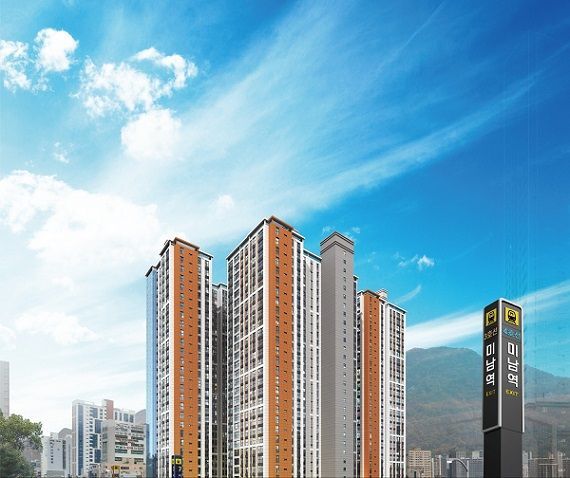
The ‘Dongnae Sambur Renaissance’ regional housing cooperative apartment, being built in the Dongnae-gu area of Busan Metropolitan City, is connected to Minam Station, a transfer station for Busan Subway Lines 3 and 4. It boasts a high-end residential environment with specialized design, has high investment value, and features ㈜Mugunghwa Trust as the trust company responsible for fund management. The agency also enables transparent fund management, earning high marks for project stability in regional housing cooperative apartment projects.
A representative of Dongnae Sambur Renaissance stated, “As the popularity of regional housing cooperative apartments increases, we are actively seeking ways to strengthen competitiveness and alleviate the concerns of demanders,” adding, “This will greatly contribute to eliminating the chronic anxieties associated with regional housing cooperatives, such as cost increases due to project delays and principal losses.”
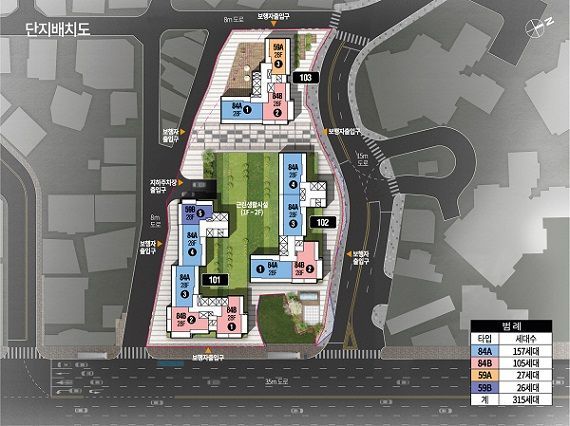
This Dongnae Sambur Renaissance project is said to be supplied with a total of 3 complexes in the Minam Station area of Busan, ranging from 1 to 28 floors above ground, with exclusive areas of 59㎡, 74㎡, and 84㎡, totaling about 315 households. It is possible to secure a home at around 11 million KRW per 3.3㎡, which is cheaper than the surrounding market prices. Currently, applications for cooperative membership are being accepted on a first-come, first-served basis, and the housing exhibition center is operating on Jungang-daero in Yeonje-gu, Busan.
© The Asia Business Daily(www.asiae.co.kr). All rights reserved.
!["The Woman Who Threw Herself into the Water Clutching a Stolen Dior Bag"...A Grotesque Success Story That Shakes the Korean Psyche [Slate]](https://cwcontent.asiae.co.kr/asiaresize/183/2026021902243444107_1771435474.jpg)

















