Recently, the number of patients infected with Mycoplasma pneumoniae has been increasing, especially among children.
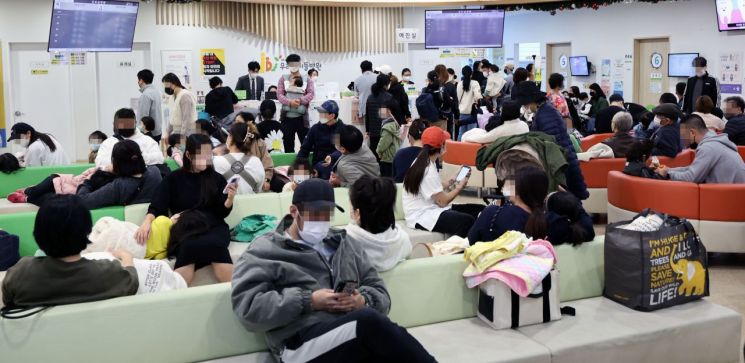
According to the Korea Disease Control and Prevention Agency on the 18th, the number of patients hospitalized due to Mycoplasma pneumoniae infection in the second week of this month (November 5?11) was 226, about twice the 102 patients recorded in the third week of last month (October 15?21). The total number of hospitalized patients due to Mycoplasma pneumoniae from October 15 to November 11 was 627, more than three times higher than the 196 patients during the same period last year.
Mycoplasma pneumoniae infection refers to an acute respiratory infection caused by Mycoplasma pneumoniae. Symptoms are similar to those of a common cold, including fever, headache, runny nose, and sore throat. However, while a cold typically resolves within a week, Mycoplasma pneumoniae infection lasts about three weeks. Furthermore, co-infections with influenza or other respiratory infections can lead to severe illness. Mycoplasma pneumoniae infections tend to occur in cycles every 3 to 4 years, and since this year is a peak cycle, caution is advised.
Most patients with Mycoplasma pneumoniae infection are children. As of the second week of this month, children aged 1 to 12 accounted for 180 cases, representing 79.6% of the total. Specifically, those aged 7 to 12 accounted for 111 cases (49.1%), ages 1 to 6 for 69 cases (30.5%), ages 19 to 49 for 17 cases (7.5%), ages 13 to 18 for 14 cases (6.2%), those 65 and older for 7 cases (3.1%), infants aged 0 for 4 cases (1.8%), and ages 50 to 62 for 4 cases (1.8%).
Influenza is also spreading widely. In the 45th week of this year (November 5?11), the number of patients showing influenza-like symptoms per 1,000 outpatients was 32.1. The epidemic threshold for the 2023?2024 flu season is 6.5, so this figure is about five times higher. Currently, free influenza vaccinations are being provided for children aged 6 months to 13 years, pregnant women, and seniors aged 65 and older.
These respiratory infectious diseases can be transmitted through patients’ coughs, runny noses, or direct contact with infected individuals. Since they easily spread in households where families live together or in group living facilities such as daycare centers and dormitories, it is recommended to refrain from attending school or daycare and to rest at home if respiratory symptoms are present.
© The Asia Business Daily(www.asiae.co.kr). All rights reserved.

















