Ministry of Economy and Finance November Recent Economic Trends Announcement
"Signs of Economic Recovery Slowly Emerging"
Price Increase After 2 Years and 3 Months... Semiconductor Exports Up
External Factors Like Oil Prices Also More Stable Than Expected
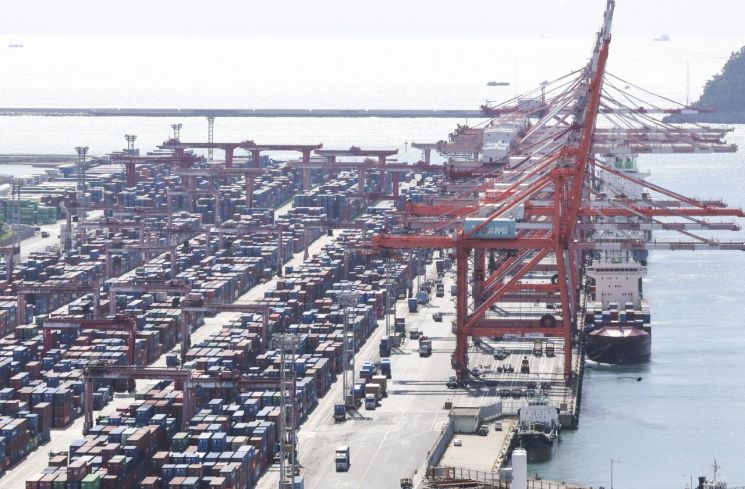
The government has diagnosed signs of recovery in the South Korean economy. This comes 1 year and 5 months after mentioning an economic slowdown. The improvement in production and exports centered on semiconductors, along with positive signals from external factors such as international oil prices, the Chinese economy, and U.S. inflation, contributed to this outlook.
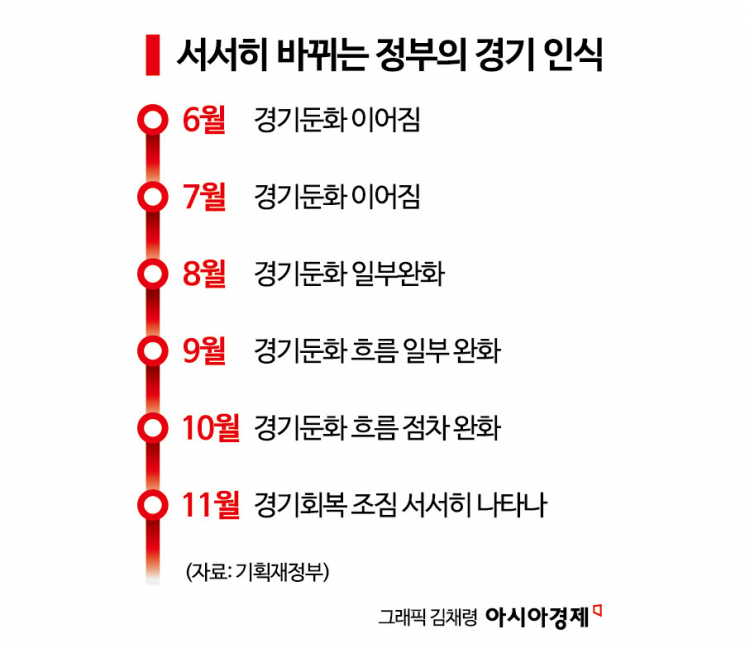
On the 17th, the Ministry of Economy and Finance evaluated in the ‘November Recent Economic Trends (Green Book)’ that “signs of economic recovery are gradually appearing due to the recovery of manufacturing production and exports such as semiconductors, and continued improvement in the service sector and employment.” Lee Seung-han, head of the Economic Analysis Division at the Ministry, explained, “It is not a certainty that the economic recovery trend has appeared,” but added, “From a real economic perspective, positive signs are emerging, indicating a gradual turning point in the economic cycle.”
Last June, the government diagnosed concerns about an economic slowdown due to worsening external conditions and sluggish investment. It maintained this assessment for seven months and then analyzed in February that the slowdown had become ‘visible.’ In August, the government stated that the slowdown had somewhat eased but still viewed the economy as being in a downward phase.
The background for starting to mention economic recovery is the semiconductor business cycle. Semiconductor production, which had recorded negative growth until the second quarter and hindered economic recovery, turned to an upward trend. As of last September, semiconductor production increased by 12.9% compared to the previous month and by 23.7% compared to the same month last year. Semiconductor shipments also rose by 65.7% month-on-month, while inventories decreased by 6.7% during the same period.
Semiconductor exports are also showing signs of rebound. According to the Korea Customs Service, export value from the 1st to the 10th of this month increased by 3.2% year-on-year to $18.237 billion. Semiconductor export value rose by 1.3%, marking the first increase in 14 months since last September. Notably, both the volume and unit price of semiconductor exports are rising. The fixed price of DRAM, a direct benchmark in semiconductor exports, stopped its 2-year and 3-month decline and rebounded last month. The spot prices monitored by the government are also showing an upward trend.
Overall exports have also started to increase. Last month’s export value was $55.08 billion, up 5.1% from the same month last year. Monthly export values had declined consecutively for 12 months from October last year to September this year but increased for the first time in 13 months. This was influenced by increased exports of automobiles (20%), ships (101%), and petroleum products (18%).
'Expected to Soar but Didn’t'... External Factors like Oil Prices Also Stable
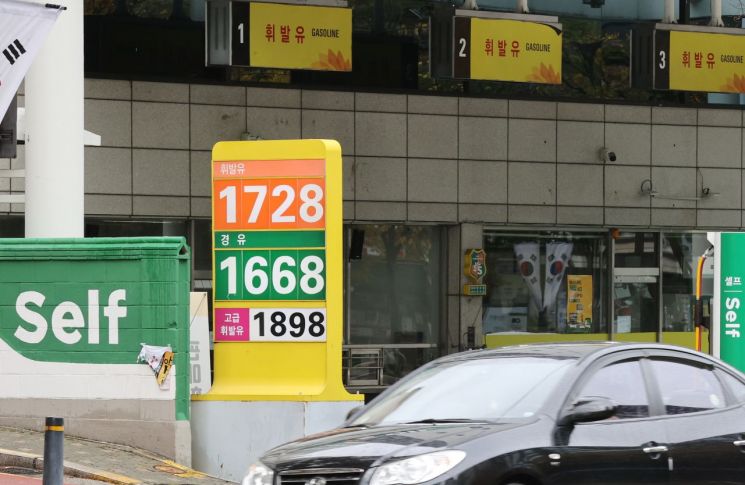
External factors, which were considered risks to economic recovery, did not deteriorate as much as feared. International oil prices are a representative example. The government had worried about a sharp rise in international oil prices due to the conflict between Israel and the Palestinian armed group Hamas on the 7th of last month, but prices have remained stable. On that day, the closing price of December West Texas Intermediate (WTI) crude oil futures on the New York Mercantile Exchange was $72.90 per barrel, the lowest since July.
The Chinese economy is also more positive than expected. In August, concerns were raised about the insolvency of real estate companies such as China Evergrande Group and Biguiyuan, but since then, real indicators have gradually rebounded. China’s GDP in the third quarter was 4.9%, exceeding market expectations, and industrial production (4.2%) and retail sales (4.2%) were also favorable. Although the recovery is not steep, the government believes a moderate recovery will be achieved.
The drop in U.S. consumer prices to 3.2% was also interpreted as a positive signal. If U.S. inflation is controlled, the Federal Reserve (Fed) is less likely to implement additional tightening measures. Lee said, “High interest rates are still expected to continue for a long time,” but added, “We judged that the possibility of additional tightening is limited.”
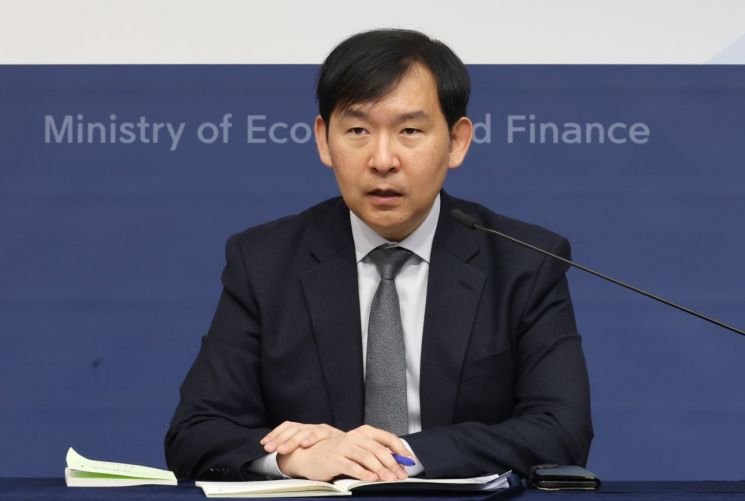 Lee Seunghan, Director of Economic Analysis at the Ministry of Economy and Finance, is briefing on the recent economic trends of November at the Government Complex Sejong on the 17th.
 [Image source=Yonhap News]
Meanwhile, employment indicators continued to show strength. The domestic employment rate for those aged 15 and over last month was 63.3%, up 0.6 percentage points from the same month last year. This is the highest for October since annual statistics began in July 1982. The employment rate for ages 15-64, based on OECD standards, was also the highest since related statistics began in 1989 at 69.7%. The unemployment rate was 2.1%, the lowest since the job search period change in June 1999.
Despite the recent expansion in inflation, the government described the trend as a mild slowdown. Consumer prices rose 3.8% year-on-year due to increases in petroleum and agricultural product prices, but the ‘core inflation index excluding food and energy,’ considered a key indicator, slightly decreased to 3.2%. The index excluding agricultural products and petroleum also fell to 3.6% from 3.8% in September.
The Ministry of Economy and Finance stated, “While prioritizing stability in prices and people’s livelihoods, we will accelerate efforts to boost domestic demand, investment, and export vitality,” and added, “We will simultaneously manage internal and external risks thoroughly and work on improving the economic structure.”
© The Asia Business Daily(www.asiae.co.kr). All rights reserved.
![Clutching a Stolen Dior Bag, Saying "I Hate Being Poor but Real"... The Grotesque Con of a "Human Knockoff" [Slate]](https://cwcontent.asiae.co.kr/asiaresize/183/2026021902243444107_1771435474.jpg)


















