Announcement on the 16th... "RCS Introduction by the End of Next Year"
Change Due to Pressure to Review EU Regulatory Targets
Blue-Green Message Distinction Likely to Be Maintained
Apple has made a significant change to its 'iMessage' policy, which previously allowed messaging only between iPhone devices, breaking down the barrier between iPhone and Android devices for text messaging. Apple had strategically maintained this barrier for years, but with the European Union (EU) beginning to consider regulating it, change became inevitable.
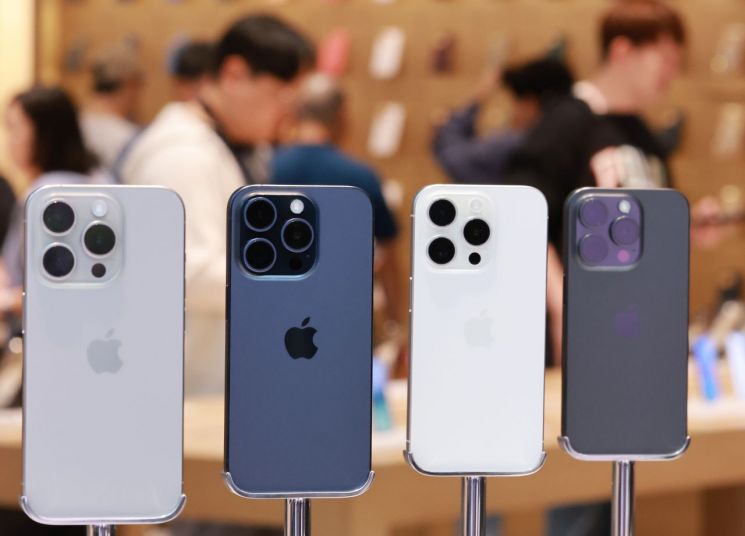
"RCS Support by End of Next Year... Video Sharing Over Wi-Fi"
According to Bloomberg and other sources on the 16th (local time), Apple stated in a press release, "By the end of next year, we plan to add support for the RCS (Rich Communication Suite) Universal Profile, a current messaging standard established by the GSM Association, the world's largest mobile telecommunications association," adding, "We believe the RCS Universal Profile will provide a better interoperability experience compared to SMS or MMS."
The next-generation messaging standard service, RCS, is a messaging protocol that can carry more diverse information than traditional SMS. It allows mobile messenger functions using data without consuming data allowances, featuring group chats, read receipts, gifting, money transfers, and large file transfers.
With Apple adopting RCS, communication between iPhone and Android devices is expected to become smoother. Previously, iPhone users had to rely on cellular networks to exchange text messages with Android users, but now communication will also be possible over Wi-Fi.
This will enable the transfer of large files such as videos and photos over Wi-Fi. Additionally, features like read receipts, typing indicators, and group chat support are expected to become more seamless. Foreign media reported that the existing iMessage service will likely be maintained as is.
Apple emphasized, "This will continue to provide Apple users with the best and most secure messaging experience alongside iMessage."
"Told Mom to Buy an iPhone" ... But Apple Moves Under EU Pressure
Apple had long maintained its iMessage policy and avoided adopting RCS. The GSM Association officially launched RCS as a project in 2008 and has since upgraded the standard. Samsung has supported RCS on its devices starting in Europe in 2012. Google has supported RCS on Android devices through its Android Messages SMS app.
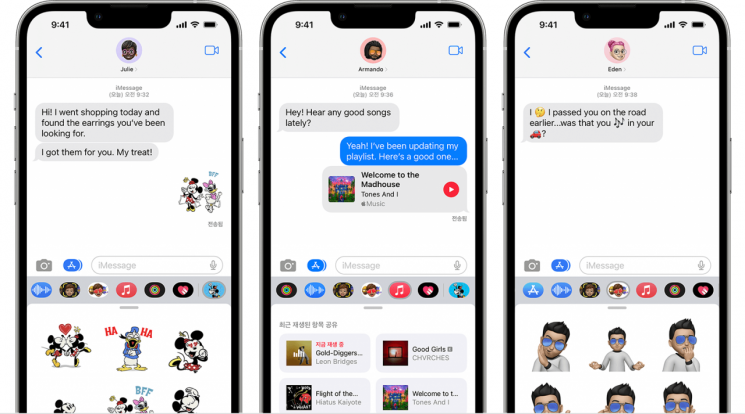
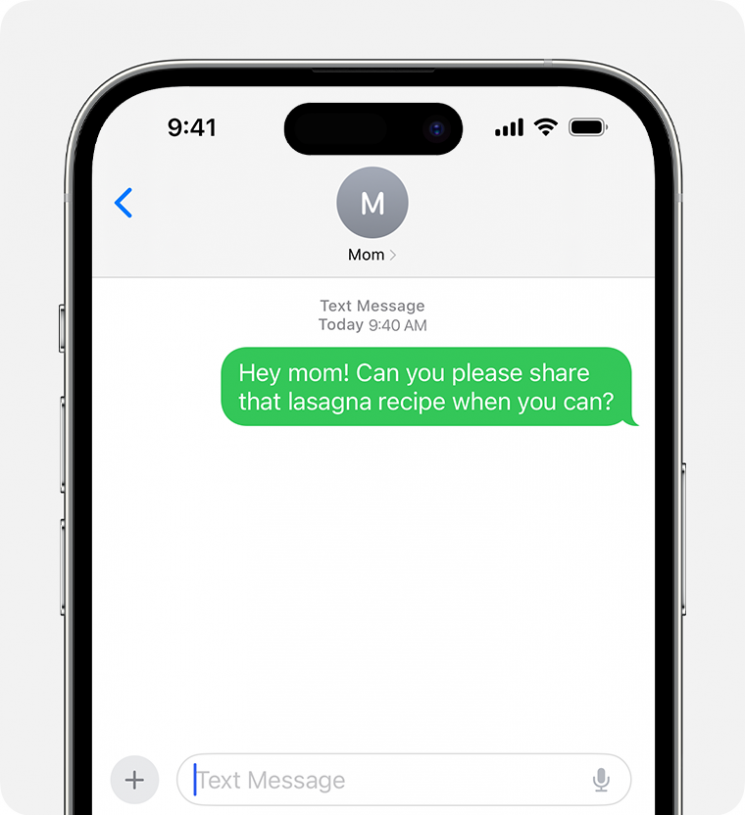
For over a decade, Apple consistently stated it did not see the need to adopt RCS. Apple's CEO Tim Cook, until last year, dismissed the possibility by saying, "We have not heard from users asking us to put a lot of energy into that (RCS adoption) at this time." When an audience member mentioned not being able to exchange videos with their mother who does not use an iPhone, Cook replied, "Tell your mother to buy an iPhone."
Apple's change in stance this year is due to the EU. The EU, aiming to curb antitrust behavior by big tech, designated iMessage as a core platform service reinforcing Apple's monopoly under the Digital Markets Act (DMA) in September and began regulatory review. Google, which operates RCS, argued to the EU earlier this month that Apple should be required to adopt RCS. Google emphasized, "Everyone deserves to communicate in a modern and secure way regardless of the phone they use."
Apple reportedly plans to object to the EU's review, arguing that iMessage is not a popular service in Europe to the extent that it must adopt the RCS standard and that iMessage does not pose issues under the DMA. However, it appears Apple chose to proactively adjust rather than be forced to change by local regulators.
Apple took a similar approach when adopting the USB-C universal charging system. In September, Apple announced the iPhone 15 would be the first to feature USB-C charging. This change became inevitable after the EU passed legislation last year mandating all mobile devices unify wired charging to USB-C by December next year.
Dipanjan Chatterjee, Vice President and Analyst at market research firm Forrester Research, told CNN, "Apple’s adoption of USB-C charging and RCS messaging support is a move ahead of the regulatory pressure from the EU in some form," adding, "It’s better for the company to introduce these (new services) themselves and market them advantageously."
'The Blue Speech Bubble Symbolizing iMessage Likely to Remain'
However, it remains uncertain whether Apple will remove the 'blue speech bubble (message window)' it uses to distinguish iMessage from regular text messages. Apple currently differentiates messages from iPhone users with blue bubbles and messages from Android users with green bubbles, a strategy that fosters a sense of community among iPhone users.
The Washington Post (WP) reported that among younger generations, where iPhone popularity is high, exchanging green bubbles instead of the iconic blue bubbles of iMessage carries a "social stigma."
Considering this phenomenon, the UK smartphone manufacturer Nothing recently announced it developed a separate app for its smartphones that allows sending iMessages with blue bubbles instead of green, attracting attention.
Chatterjee predicted, "The blue speech bubble is Apple 'group’s' ID and unique identity, so it will not disappear," adding, "Instead, with RCS support, iPhone users will be able to communicate more smoothly with users on other platforms, providing a better consumer experience. Apple will want this to be a win-win for everyone."
© The Asia Business Daily(www.asiae.co.kr). All rights reserved.



















