Evaluation by Local US Media
Following the summit between U.S. President Joe Biden and Chinese President Xi Jinping, held for the first time in about a year, U.S. media focused on the symbolic significance of 'stabilizing relations' while also noting that expectations were low from the outset. In particular, President Biden's repeated reference to President Xi as a "dictator" during the press conference was seen as a representative moment reflecting the still chilly bilateral relationship and reaffirming the substantial fundamental conflicts between the two countries.
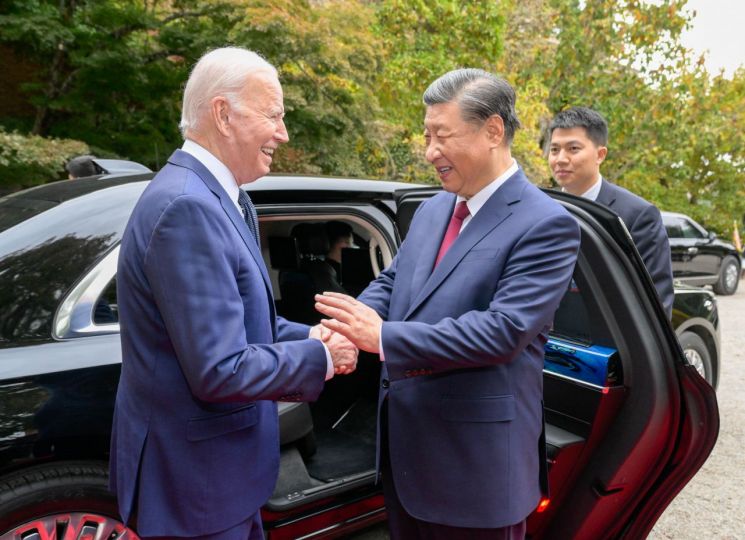
On the 16th (local time), CNN aired an analysis article titled "Implications of the U.S.-China Summit Meeting Low Expectations Met," reporting on the results of the summit held near San Francisco the previous day, stating that "the fundamentals of the relationship will not change." CNN described the summit as "successful because it was held," but also evaluated that "setting deliberately very low expectations and having strong incentives for both sides to declare the talks productive makes the upbeat atmosphere after four hours of dialogue hard to call an achievement."
The outlet pointed out that for President Biden, facing the U.S. presidential election in November next year, and for President Xi, who needs to show domestic supporters that he is controlling relations with the U.S. amid difficult economic conditions, easing tensions between the two countries through this summit was inevitable. It further emphasized the symbolic meaning of stabilizing relations by noting that "just lowering the threat of miscalculations and misunderstandings through the resumption of military dialogues can justify President Biden's decision to meet President Xi." However, it stressed that "these important but incremental advances will do little to alleviate the fundamental factors driving the U.S. and China toward more dangerous competition," calling it "a rupture that cannot be fixed by a single summit."
The political news outlet Politico assessed that two moments during President Biden's post-summit press conference revealed the ongoing chill in U.S.-China relations. After finishing the scheduled questions, as Biden was leaving the press room, he was asked if he still considered President Xi a dictator, to which he replied, "Yes." When asked if he trusted him, Biden responded with the old saying, "Trust, but verify," revealing lingering distrust. The outlet reported that "Biden's candid assessment reflected the increasingly frosty bilateral relationship," and "beneath the surface pleasantries between the two leaders, deep divisions were revealed."
It also noted that "Biden's biggest hoped-for victory was resetting the relationship, that is, lowering the temperature between the two," briefly mentioning the summit outcomes such as ▲resumption of military dialogues ▲strengthened cooperation on fentanyl response ▲restarting new talks on climate change. Like CNN, it indirectly pointed out the low expectations ahead of the summit and the uncertainty about when the results might be reversed. The two leaders had agreed on the so-called Five Nos (不) at their meeting in Bali, Indonesia, a year ago, including not pursuing a new Cold War or regime change in China, but relations subsequently worsened due to U.S. export controls on China and the Chinese spy balloon incident.
Bloomberg News also evaluated that "expectations were low due to deep-rooted disagreements over trade, Taiwan, human rights, and other issues," and that "the modest achievements of the summit were hard-won." The news agency reported that President Xi met with Apple CEO Tim Cook and others at a dinner on the day of the summit, where he stated, "China will never bet against the U.S. or interfere in its internal affairs," calling it a sign of how much work remains to be done. It also highlighted Biden's continued labeling of Xi as a dictator, warning that "this could overshadow the summit's results."
The Hill, a congressional news outlet, also focused on Biden's repeated reference to his counterpart as a dictator, calling it "an action that could unsettle already fragile relations between the two great powers," and noting that "this is the second time this year that President Biden has called President Xi a dictator." The New York Times (NYT) diagnosed that although the summit agreed to curb fentanyl and resume military communications, there were significant disagreements between the two sides on fundamental issues such as how to define their relationship. The NYT reported that "President Xi criticized U.S. efforts to contain China as futile but also acknowledged that U.S. technology restrictions have dealt a heavy blow," adding that "his message reflects dual and sometimes contradictory priorities."
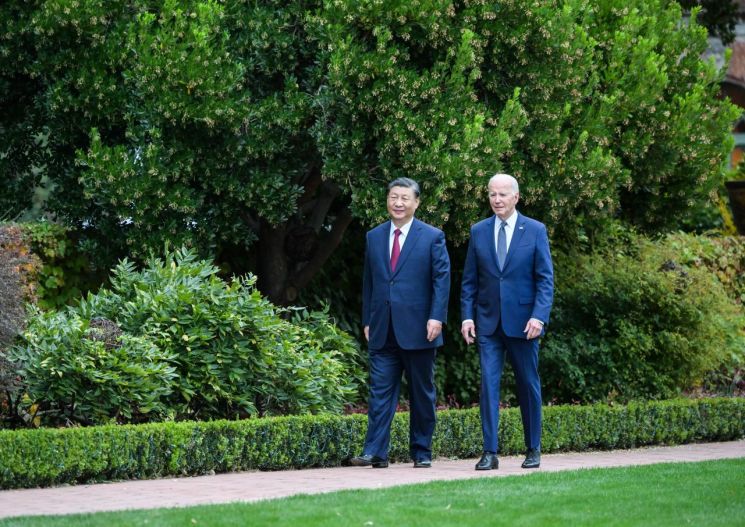
There were also positive evaluations of the symbolism of the summit itself and some of its achievements. The Associated Press (AP) reported that "the two leaders failed to resolve any major geopolitical issues on which their countries are at odds but adopted a conciliatory tone that reassured other countries, especially China's neighbors," adding, "Sometimes, just shaking hands and sitting down together may be enough." The Washington Post (WP) noted that "the two leaders agreed to resume military dialogues, seeking to ease tensions in bilateral relations during a time of global turmoil," and evaluated that "although limited in scope, these two agreements represent rare cooperation between the world's two greatest powers, which have clashed over trade, cyber and maritime security, human rights, and other urgent issues."
Additionally, The Wall Street Journal (WSJ) highlighted that President Xi, at the dinner with U.S. business leaders the previous day, said, "China is ready to be a partner and friend of the United States," but did not mention trade or investment measures. According to major foreign media reports, about 300 people attended the dinner, with 44 sitting at the table with President Xi, including CEO Tim Cook, BlackRock CEO Larry Fink, and Bridgewater Associates CEO Ray Dalio.
Meanwhile, John Kirby, Coordinator for Strategic Communications at the White House National Security Council (NSC), said during an online briefing with reporters that day, "President Biden was very pleased with the progress made during the four-hour summit yesterday," adding, "We were able to make very important progress." However, he did not specifically respond to questions regarding President Biden's labeling of President Xi as a dictator immediately after the summit.
© The Asia Business Daily(www.asiae.co.kr). All rights reserved.


















