"No Calls for Hezbollah Military Intervention"
Concerns Over Direct Confrontation with the US if Military Intervention is Premature
Iran's Supreme Leader Ayatollah Seyyed Ali Khamenei is reported to have refused the request for military intervention from the Palestinian armed faction Hamas, drawing attention to the background of this decision. As the conflict between Israel and Hamas extends beyond 40 days, it is interpreted that Iran is concerned about the possibility of a direct confrontation with the United States if it hastily intervenes in the war. Expectations are rising that the previously raised concerns about escalation will significantly subside.
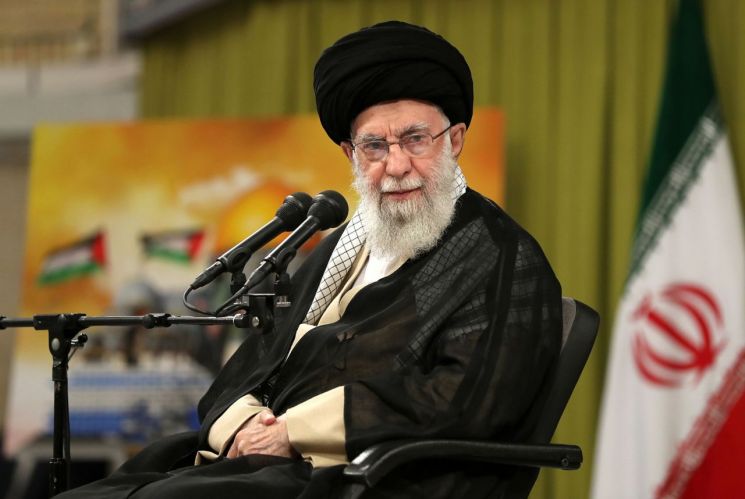
On the 15th (local time), major foreign media outlets cited senior sources from Iran and Hamas, reporting that "Earlier this month, Hamas leader Ismail Haniyeh visited Supreme Leader Khamenei to request Iran's military intervention, but the request was rejected," and that "Khamenei stated that since Hamas's attack on Israel on October 7 was not pre-notified to Iran, Iran would not militarily intervene on behalf of Hamas."
It is also reported that during this meeting, Khamenei pointed out that Hamas should not involve the Lebanese armed faction Hezbollah in the war. Sources conveyed that "Khamenei pressured Haniyeh to silence the voices of Palestinian groups demanding Hezbollah's participation in the battle against Israel."
From Iran's perspective, the refusal to intervene is understood as a measure to avoid the high risks, including the possibility of direct conflict with the United States, if it were to hastily engage in the war initiated by Hamas against Israel. The U.S. government, wary of movements by Iran and Iran-backed armed groups in the Middle East, has strengthened deterrence in the region by rapidly dispatching two aircraft carriers to the Eastern Mediterranean.
With Iran declaring it will not engage militarily, Hamas is left to fight the conflict with Israel alone. It is already reported that most of Gaza City, the central city of the Gaza Strip, and much of the northern Gaza Strip have been occupied by Israeli forces, making it difficult for Hamas to endure long-term without external support.
Earlier, the Israeli military announced that it had taken control of most of Gaza City and subsequently made a sudden entry into Al-Shifa Hospital, the largest hospital in the Gaza Strip and known as Hamas's operational command and control center. The hospital houses patients and numerous refugees, raising concerns about large-scale civilian casualties.
© The Asia Business Daily(www.asiae.co.kr). All rights reserved.

















