Rapid Increase in Jelly and Hwan Demand Among Young Consumers
Chong Kun Dang and Chong Kun Dang Health Launch Trend-Aligned New Products
Samyang's 'Sangkwaehwan' Rapid Growth Through Hwan and Jelly
HK Innoen's 'Condition' Also Strives to Maintain Market Share
Prepared for Human Application Tests in 2025
The market that experiences a boom as the year-end approaches is none other than hangover remedies. As year-end gatherings and meetings increase, heavy drinking becomes more frequent, naturally leading to a rise in demand for hangover remedies to prevent and alleviate hangovers. While major pharmaceutical companies lead the market, the popularity of jelly stick-type or pill-form hangover remedies tailored to younger consumers, rather than traditional liquid beverage-type remedies, is expanding the market.
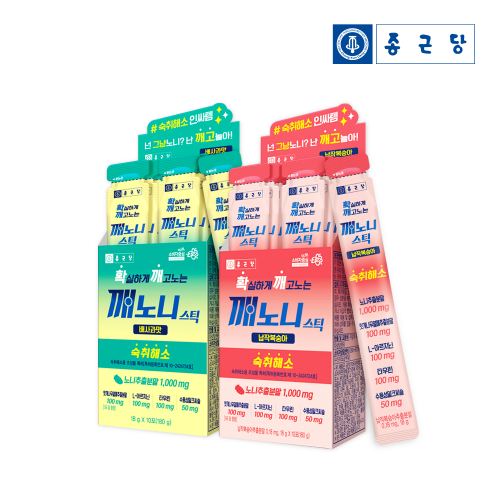
Jongkundang and Jongkundang Health recently launched the jelly stick-type hangover remedy 'Kkaenoni Stick' and the pill-form 'Threeminute QHS-30,' respectively. This move is interpreted as a strategy to accelerate market penetration by expanding their product lines beyond Jongkundang’s existing hangover drink 'Hutgae Thank You Gold' to include non-beverage hangover remedies like jelly sticks and pills, which are the recent growth trend in the hangover remedy market.
According to a Nielsen Korea survey, the hangover remedy market grew by 40% year-on-year to 312.7 billion KRW last year, with targeting younger consumers identified as the key to increasing market share. A survey conducted by Lotte Members in July among 2,000 adult men and women regarding drinking and hangover relief showed that younger consumers tend to use hangover remedies more frequently and prefer non-beverage types such as pills and jelly. Conversely, liquid hangover remedies are more favored by older age groups. Among people in their 20s, 56.4% preferred pills or jelly, while 77.1% of those aged 50 and above overwhelmingly favored liquid hangover remedies.
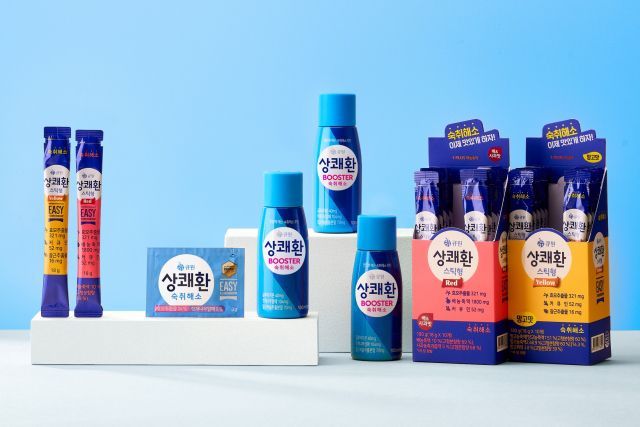
The trend has been led by Samyang’s 'Sangkwaehwan.' First introduced in 2013 as a pill-type product, Sangkwaehwan sparked a pill hangover remedy craze. In 2019, it launched the industry’s first stick-type jelly hangover remedy, successfully capturing both the younger demographic and market share. The pill form achieved cumulative sales of 150 million packets last year, and the stick-type product has also solidified its position, together holding the number one market share in the non-beverage hangover remedy sector, rapidly transforming the market. Furthermore, in February, they introduced the beverage-type hangover remedy 'Sangkwaehwan Booster,' aiming to target the entire industry.
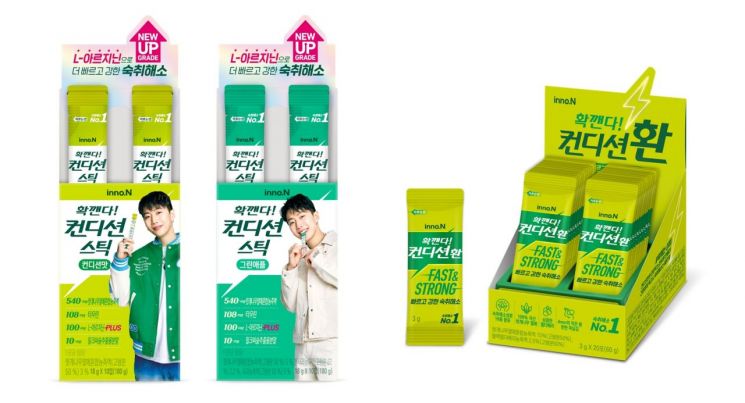
Meanwhile, HK Innoen, which has maintained an unshakable number one market share in the overall hangover remedy market through its iconic 'Condition' brand, is also responding swiftly to the non-beverage hangover remedy market. In fact, HK Innoen launched Korea’s first hangover pill, 'Condition Pill EX,' in 2012, ahead of Sangkwaehwan. However, due to the strong demand for the existing liquid Condition product, attention to non-beverage types was relatively low. But as the non-beverage hangover remedy market has become a mega trend, HK Innoen has renewed and relaunched Condition Pills and introduced Condition Sticks last year, striving to defend its market share. As a result, Condition’s market share in the non-beverage hangover remedy sector has risen to the 40% range.
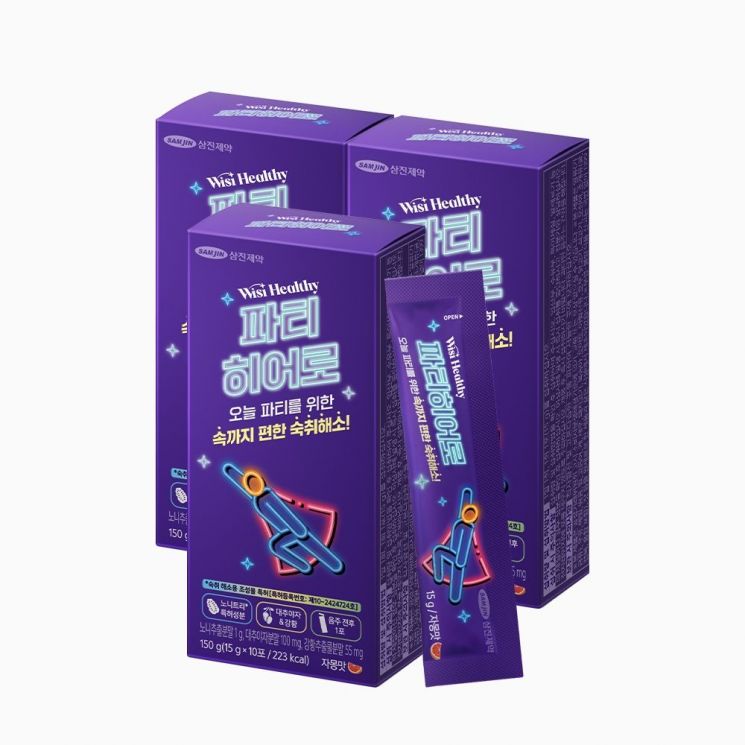
Additionally, various pharmaceutical companies such as Samjin Pharmaceutical with 'Party Hero' and Handok with 'ReadyQ' are competing with their stick-type jelly hangover remedies, while beverage-type remedies like Dong-A Pharmaceutical’s 'Morning Care' are also gaining popularity.
As the hangover remedy market trends rapidly change, a key variable expected to determine the future market landscape is the 'human application test.' The Ministry of Food and Drug Safety has issued guidelines requiring that from 2025, the hangover relief effect of raw materials or finished products must be proven through human application tests or literature reviews to be labeled and advertised as having hangover relief functionality. Only products that demonstrate significant improvement in relevant indicators such as Alcohol Hangover Severity Scale (AHSS), Acute Hangover Scale (AHS), blood alcohol concentration, and blood acetaldehyde concentration with concrete data can carry the 'hangover remedy' title.
An industry insider explained, "This could be a financial and time burden for relatively small companies and may act as a barrier to formulation development," but added, "We are observing ongoing efforts within the industry to respond to this, and since only products with confirmed efficacy can be called hangover remedies, this will serve as a criterion to distinguish the wheat from the chaff."
Accordingly, leading developers in the market are all preparing human application tests promptly. An HK Innoen representative stated, "'Condition Hutgae' originally confirmed its efficacy through human application tests," adding, "We are preparing additional tests for various products and formulations." Samyang also confirmed, "We are currently conducting human application tests in accordance with the Ministry of Food and Drug Safety’s guidelines."
New product manufacturers are completing human application tests even before launching their products. Both Kkaenoni Stick and Threeminute have conducted human application tests in compliance with the Ministry of Food and Drug Safety standards and have proven their efficacy. In the case of Threeminute, it confirmed a 28% reduction in blood acetaldehyde concentration and a 7% reduction in blood alcohol concentration within 30 minutes after drinking compared to the control group.
© The Asia Business Daily(www.asiae.co.kr). All rights reserved.



















