The MZ Generation, More Comfortable with Videos than Text,
Struggles with Serious Literacy Decline
There has been ongoing criticism that literacy skills have significantly declined in the internet era. Literacy refers to the ability to read and comprehend written texts. In response, the Seoul Metropolitan Office of Education plans to assess students' basic competencies through literacy and numeracy diagnostic tests.
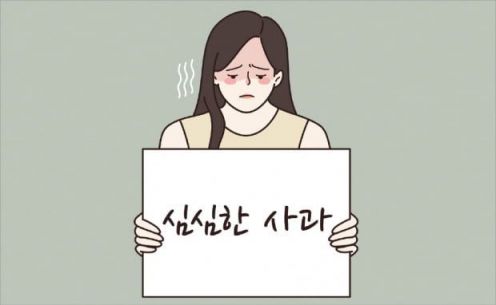
On November 15, the Seoul Metropolitan Office of Education announced that it would conduct the "Seoul Student Literacy and Numeracy Diagnostic Test" from November 20 to 24.
Approximately 45,000 students in Seoul-including 4th and 6th graders in elementary school, 2nd graders in middle school, and 1st graders in high school-from 210 schools (both sample schools and those that volunteered for the test) will take the assessment between November 20 and 24.
The test items are designed to measure literacy and numeracy in both everyday life and academic contexts. The test is divided into four sections: Literacy I, Literacy II, Numeracy III, and Numeracy IV, with each section containing 19 to 23 questions. The questions include interdisciplinary items, such as interpreting passages and charts related to social issues, as well as real-life problem-solving questions. The test duration is 40 minutes per section for elementary students, 45 minutes for middle school students, and 50 minutes for high school students.
The test results will be communicated to students and parents at the end of December. The results report will include the student's scores for literacy and numeracy, their proficiency level, and achievement in each sub-domain of literacy and numeracy. The scores will also provide trends by grade level, allowing for an understanding of each student's growth throughout their school years.
The Seoul Student Literacy and Numeracy Diagnostic Test is a tool developed by the city’s education office, with support from the Seoul Metropolitan Council, to ensure basic academic skills.
Schools are already using various tools to assess basic academic skills, such as the "Basic Academic Skills Diagnosis and Correction System," "Customized Academic Achievement Self-Assessment," and "School-Developed Tools." The key difference with this new test is that it was developed as a cross-curricular diagnostic tool to assess the literacy and numeracy skills that form the foundation for learning across multiple subjects.
Other countries already conduct nationwide diagnostic tests to assess problem-solving skills and basic competencies, including literacy and numeracy. Notable examples include the Programme for International Student Assessment (PISA), the Foundation Skills Assessment (FSA) in British Columbia, Canada, and the National Assessment Program - Literacy and Numeracy (NAPLAN) in Australia.
The Seoul Metropolitan Office of Education also plans to conduct the diagnostic test for interested schools in the second half of next year.
The MZ Generation, More Familiar with Video than Text, Faces Serious Literacy Decline
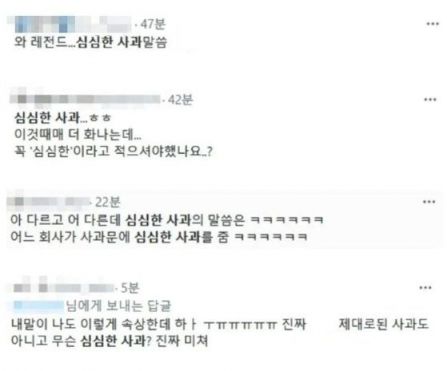 X (formerly Twitter) users criticizing the apology statement posted by the cafe that wrote the phrase "Sincere Apology."
 [Photo by X Archive]
Recently, the phrase "Sincere Apology" became a topic of debate on social media due to issues surrounding literacy.
When a cafe posted an apology for a reservation system error using the phrase "We offer our sincere apology," some users left critical comments such as, "Sincere apology? I don't feel bored at all," misunderstanding the word "sincere" as "bored" or "dull."
The word "sincere" used by the cafe in its apology actually means "deep and heartfelt," but users interpreted it as "bored" or "uninterested." As a result, the cafe had to revise its apology, replacing "sincere apology" with "We sincerely apologize" and posting a second statement.
There are also frequent cases of misunderstanding other words: interpreting "saheul" (which means three days) as four days, "geumil" (which means today) as Friday, "gojisik" (which means inflexible) as someone with a high level of knowledge, "jiguryuk" (which means stamina) as "the power of the Earth," and "muryo" (which means bored) as "free of charge."
Cho Hee-yeon, Superintendent of the Seoul Metropolitan Office of Education, stated, "Through the collaboration between the Seoul Metropolitan Office of Education and the Seoul Metropolitan Council, both of which are highly invested in ensuring basic academic skills, a new diagnostic tool has been created. What matters most is the support provided after the diagnosis," adding, "We will continue to provide education that strengthens students’ basic competencies and fosters future skills to help them adapt to various changes."
© The Asia Business Daily(www.asiae.co.kr). All rights reserved.


















