The Korea Disease Control and Prevention Agency (KDCA) announced on the 15th that the density index of chigger mites, the vector of Tsutsugamushi disease, has surged more than threefold over the past four weeks (weeks 41 to 44). The number of patients in week 44 was recorded at 784, more than five times higher compared to week 41. The KDCA urged the public to adhere to preventive measures to avoid Tsutsugamushi disease infection during outdoor activities.
Tsutsugamushi disease is a Class 3 legally designated infectious disease under the Infectious Disease Control and Prevention Act. It can occur after being bitten by chigger mite larvae carrying the Orientia tsutsugamushi bacteria.
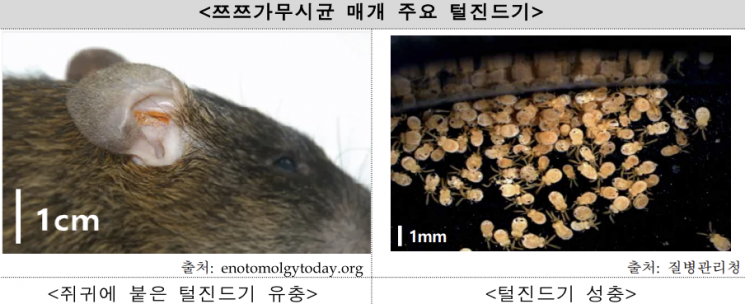
Symptoms of Tsutsugamushi disease appear within 10 days after being bitten by chigger mite larvae and include fever, chills, headache, muscle pain, and rash. A characteristic feature is the formation of an eschar (a black scab) at the bite site. Although the fatality rate in Korea is relatively low at about 0.1?0.3%, the severity of symptoms is known to be high.
The chigger mite larvae that transmit Tsutsugamushi disease are actively active from September to November, leading to an increase in their population. Consequently, more than 50% of Tsutsugamushi disease cases occur in November.
Furthermore, Tsutsugamushi disease can be treated with antibiotics. If suspicious symptoms appear, it is important to visit a medical institution early in the infection, inform healthcare providers about any mite bites or outdoor activity history, and receive timely treatment if necessary.
Director Ji Young-mi stated, "Although Tsutsugamushi disease mainly occurs in the autumn season, it can be sufficiently prevented by following preventive measures." She emphasized once again, "During outdoor activities, it is important to strictly adhere to preventive measures such as using a mat when sitting on grass and not leaving clothes in grassy areas to avoid chigger mite bites."
© The Asia Business Daily(www.asiae.co.kr). All rights reserved.

















