Negotiations on Parallel Electoral System by Small Constituency Regions Between Ruling and Opposition Parties
Only Democratic Party's Decision on Electoral System Direction Remains
Itanhee and Others Firmly Oppose Return to Parallel System
As the political sphere accelerates the formation of new parties such as the ‘Lee Jun-seok New Party’ and the ‘Cho Kuk New Party,’ attention is turning to the electoral system to be applied in next year’s parliamentary general election. In politics, the current mixed-member proportional representation system is considered an essential condition for the success of new parties, but the two major parties, the People Power Party and the Democratic Party of Korea, seem to be leaning toward abolishing the mixed-member proportional representation system.
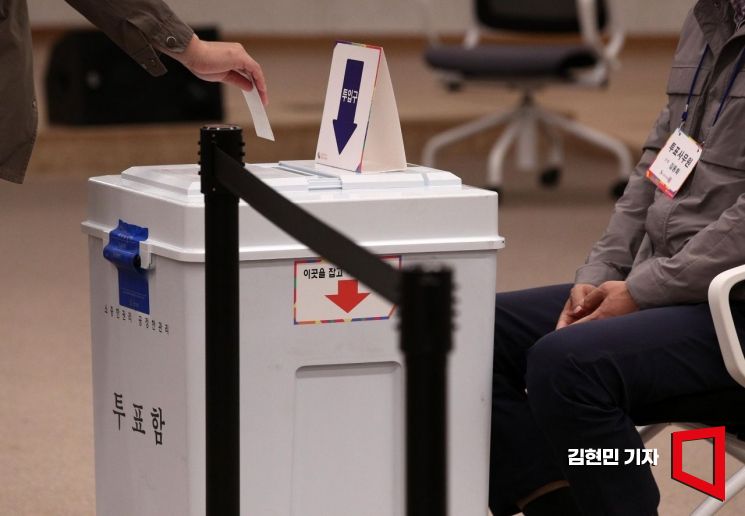
Kim Sang-hoon, the secretary of the People Power Party’s Special Committee on Political Reform, said in a phone interview on the 14th, “The secretaries of the political reform committees of the People Power Party and the Democratic Party have agreed on a single-member district system (where only the candidate with the most votes in the district is elected) combined with a parallel regional proportional representation system (where seats are allocated according to party vote shares by region).” He added, “We decided to submit this to each party’s caucus to gather opinions. The People Power Party has approved the plan, but while the Democratic Party has accepted the single-member district system, there is a majority opinion supporting the parallel regional system, but some members argue that the mixed-member proportional system should be maintained, so I understand that no consensus has been reached.”
In effect, the ruling and opposition parties have agreed to abolish the mixed-member proportional representation system and introduce a new regional proportional representation system. The mixed-member proportional representation system links party vote shares with district seats, allocating proportional seats if a party’s district seats are fewer than its vote share.
However, Kim stated that the recent moves to form new parties do not mean they intend to abolish the mixed-member proportional representation system. He said, “The political reform committee’s agreement was reached in September, before the new party discussions emerged, and the plan was submitted to the People Power Party caucus.” Regarding his opposition to the mixed-member proportional system, Kim emphasized, “Besides the satellite party issue, elections should allow voters to make clear choices, but the mixed-member proportional system involves complicated calculations and makes it unclear to voters how their votes translate into results. Do voters want an artificially guaranteed small multi-party system? I don’t think we should create small parties by distorting voters’ will.” The final direction of the electoral system depends solely on the Democratic Party, which holds a majority of seats.
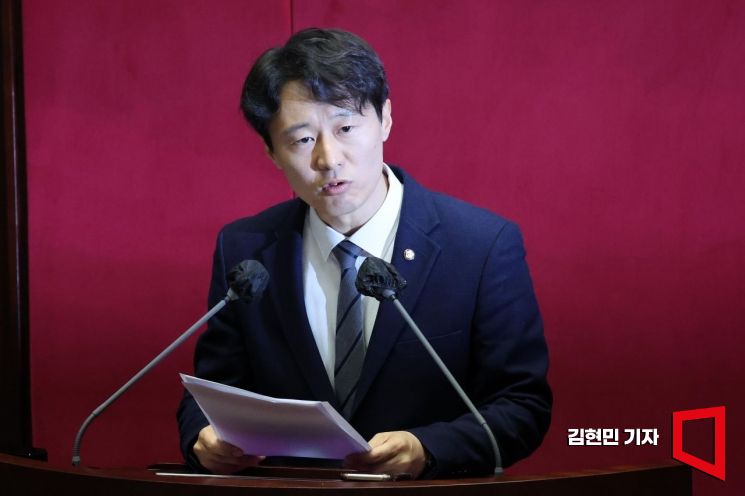 Lee Tan-hee, a member of the Democratic Party of Korea, is speaking at the plenary session of the Committee of the Whole held at the National Assembly main chamber in Yeouido, Seoul, on the 10th. Photo by Hyunmin Kim kimhyun81@
The Democratic Party’s stance remains ambiguous. So far, the party has repeatedly declared maintaining the mixed-member proportional representation system as its official position. However, recent internal discussions are shifting toward accepting the parallel system. Democratic Party lawmaker Lee Tan-hee has taken a resolute stance, even staking his seat, to maintain the mixed-member proportional system. He argued, “If we introduce this system, called the parallel system or the two-party cartel law, to block competitors, it would be a privatization of the legislative power granted by the people.” Nevertheless, there are concerns that insisting on the mixed-member proportional system could backfire on the Democratic Party. Choi Byung-chun, director of the New Growth Research Institute, warned, “The People Power Party has never supported the mixed-member proportional system, so even if they create satellite parties, they will not face criticism from their supporters. If, as Lee claims, the Democratic Party does not create satellite parties but only the People Power Party does, the People Power Party could secure a majority.”
© The Asia Business Daily(www.asiae.co.kr). All rights reserved.


















