The special law on reconstruction of the first-generation new towns (Special Act on the Maintenance and Support of Aging Planned Cities), a key pledge of the Yoon Suk-yeol administration, has been pending in the National Assembly for nine months, causing confusion among residents. Although major complexes in the first-generation new towns are accelerating efforts by raising the preliminary consent rate for integrated reconstruction to the 70% range, the passage of the bill remains uncertain.
According to the real estate industry on the 14th, Hansol Complexes 1, 2, and 3 in Jeongja-dong, Bundang-gu, Seongnam, Gyeonggi Province, plan to hold a residents' briefing session on integrated reconstruction on the 18th. The Integrated Reconstruction Promotion Preparation Committee will announce the reconstruction progress and future plans on that day, aiming to raise the current preliminary consent rate from the 70% range to 80%. Experts in urban maintenance such as Hyundai Construction, KB Real Estate Trust, and H1 Architecture are also scheduled to provide explanations. In particular, National Assembly member Kim Byung-wook of the Land, Infrastructure and Transport Committee will share the current status related to the first-generation new town special law.
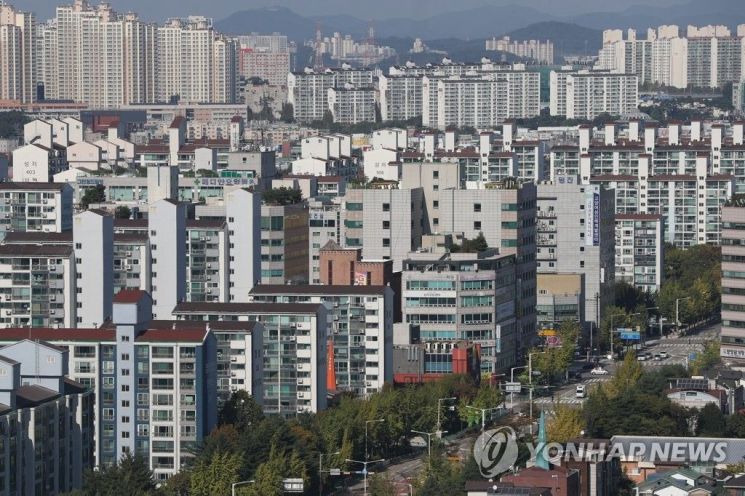
The first-generation new towns (Bundang, Ilsan, Jungdong, Pyeongchon, Sanbon), which began initial occupancy in 1991, have an average floor area ratio of 188%, making reconstruction economically challenging. In response, in March, the government and ruling party proposed a special law to ease reconstruction and redevelopment regulations when maintenance projects are pursued in land development sites over 1 million square meters that have been completed for more than 20 years, including the first-generation new towns. For the floor area ratio of the first-generation new towns, it can be increased from the current level of about 200% up to a maximum of 500%. Especially, if designated as a pilot district, rapid reconstruction as well as budgetary and administrative support will be provided.
A representative of the Hansol Complexes 1, 2, and 3 Integrated Reconstruction Promotion Preparation Committee said, "If the first-generation new town special law is enacted, exemptions from safety inspections and floor area ratio incentives can be received. In particular, a high consent rate is required to be designated as a pilot district, which is why we are holding the briefing session."
Besides Hansol Complexes 1, 2, and 3, integrated reconstruction complexes with preliminary consent rates exceeding 70% are emerging throughout the new towns. The Jeongja-illo integrated reconstruction, consisting of Jeongja-dong Imkwang Boseong, Geumgok-dong Halla, Fine Ucheon, Gyeryong, and Seogwang Yeongnam, received 75% approval. The integrated reconstruction of Geumgang Village Complexes 1 and 2 in Jungdong, Bucheon, gathered an even higher preliminary consent rate of 77%. They plan to raise it to 90% through household visits before the pilot district selection next year.
The problem is that it is uncertain whether the special law on reconstruction of the first-generation new towns will pass the National Assembly within this year. Recently, the Land, Infrastructure and Transport Committee's bill review subcommittee was held, but controversies over safety inspections and floor area ratio benefits, the need for traffic measures due to population increase, and relocation issues have hindered progress. There has not even been an agreement on how to define the scope of aging planned cities. With only a few bill subcommittee meetings left this year, concerns are rising that the special law may not pass within the year. Since a general election is scheduled for next year, if the bill does not pass this year, it is highly likely to be automatically discarded.
Therefore, the passage of the special law is an urgent issue for residents. A resident of Hansol Complexes 1, 2, and 3 said, "The integrated reconstruction briefing session is basically to increase the residents' consent rate, but if we show strong will through this, it will also pressure the political circles and accelerate the promotion of the special law," expressing hope.
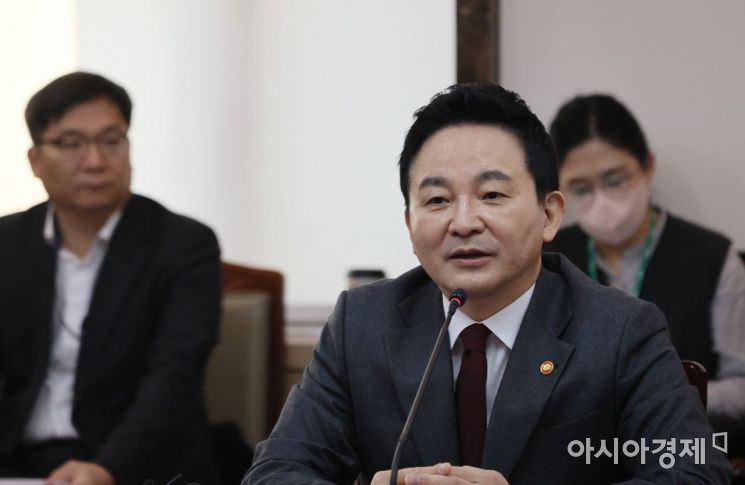 Won Hee-ryong, Minister of Land, Infrastructure and Transport, is delivering opening remarks at the first phase new town local government heads meeting held at the Government Seoul Office on the 9th. Photo by Dongju Yoon doso7@
Amid residents' concerns, Minister Won also urged the National Assembly to actively cooperate in enacting the special law. He said, "To carry out the Yoon Suk-yeol government's pledges and national tasks without setbacks, and to keep promises such as establishing basic policies and plans concurrently and designating pilot districts next year, the passage of the special law within this year is very urgent and earnest," and requested, "Please make efforts for the prompt passage of the special law in the National Assembly."
Fortunately, the Democratic Party of Korea, which had been lukewarm citing reasons such as housing price stabilization, has officially expressed its position to pass the bill within this year, which is hopeful. On the 13th, Hong Ik-pyo, the floor leader of the Democratic Party, attended the party's Special Committee on Residential Environment Improvement meeting and said, "It is time to reorganize to improve the convenience and safety of life in the first-generation new towns and enhance the residential environment," adding, "We will take the lead in passing the special law on aging planned cities within this year."
© The Asia Business Daily(www.asiae.co.kr). All rights reserved.


















