Risk of Using Charcoal Fire in Enclosed Spaces
If Poisoned, Breathe in Areas with Plenty of Oxygen
Incidents of death due to carbon monoxide poisoning during winter are recurring. In particular, accidents continue to occur when people light fires inside camping tents for heating, leading to fatal outcomes. Experts emphasize avoiding heating methods that burn fuel indoors and stress the importance of ventilation if lighting a fire is unavoidable.
Earlier, on the 12th, three people?a grandfather, grandmother, and their 5-year-old grandson?were found dead inside a tent at a campsite in Yeongdong-gun, Chungbuk. It is reported that they came here from Seoul the day before for a trip and suffered the accident. Traces of charcoal fires were found inside the tent, and no signs of a suicide note or homicide were discovered. The police are investigating the exact cause, considering it a carbon monoxide poisoning accident.
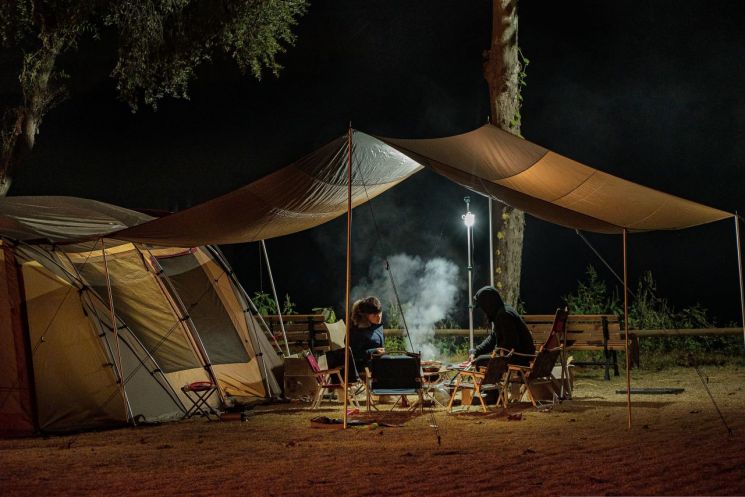
Carbon monoxide is odorless and colorless, earning it the nickname "the silent killer." It is difficult to detect its presence in the air, but due to its rapid diffusion, exposure in enclosed spaces like tents can lead to poisoning and even death.
Recently, there have been repeated cases of death from carbon monoxide poisoning after lighting charcoal fires for heating while camping and falling asleep. Professor Lee Young-joo of the Department of Fire Protection and Disaster Prevention at Kyungil University explained on YTN The News on the 13th, "Most of these poisoning incidents occur during sleep. During sleep, it is difficult to notice symptoms or signs, and as carbon monoxide accumulates in the body, poisoning happens unknowingly, leading to serious situations. These circumstances are dangerous factors."
Professor Lee emphasized that to prevent carbon monoxide poisoning, heating methods that burn fuel indoors should be avoided. He advised, "It is best not to burn anything inside, such as inside a car or a tent. However, if it is unavoidable to light a fire for heating, it is very important to always ventilate."
If exposed to carbon monoxide, the space should be ventilated to allow oxygen flow, and the patient should be moved to an area with abundant oxygen. Professor Lee said, "Basically, oxygen deficiency is the most dangerous situation. Quickly ventilating and moving the patient to an oxygen-rich outdoor space to allow sufficient breathing and oxygen intake is most important."
He continued, "If the patient is already severely poisoned and unconscious, it is crucial to tilt the head back and lift the chin to secure the airway and enable breathing. If there is no breathing, cardiopulmonary resuscitation (CPR) must be performed. During this process, promptly calling 119 (emergency services) to transport the patient quickly for hyperbaric oxygen therapy is essential for recovery without severe damage."
© The Asia Business Daily(www.asiae.co.kr). All rights reserved.
![Clutching a Stolen Dior Bag, Saying "I Hate Being Poor but Real"... The Grotesque Con of a "Human Knockoff" [Slate]](https://cwcontent.asiae.co.kr/asiaresize/183/2026021902243444107_1771435474.jpg)
















