Hyundai Motor Holds Groundbreaking Ceremony for Ulsan Electric Vehicle Plant
Mobility Production Hub for Electrification Era
Chairman Chung Euisun: "A Start Toward the Next 50 Years"
New Plant Focused on Future Smart, Human-Centered Design
Annual Capacity of 200,000 Units, Mass Production in Q1 2026
"The Ulsan electric vehicle (EV) dedicated factory marks another beginning toward the electrification era for the next 50 years."
This was a statement made by Chung Eui-sun, Chairman of Hyundai Motor Group, at the groundbreaking ceremony for the EV factory held on the 13th at Hyundai Motor’s Ulsan plant. The Hyundai Motor Ulsan plant began operations in 1968 and is now celebrating its 56th year. It is regarded as the cradle of not only Hyundai Motor but also South Korea’s automobile industry. The factory, which assembled foreign cars brought in half a century ago, has now grown into the world’s largest single-site complete vehicle plant. Chairman Chung’s declaration emphasized the important role the new factory must play in the upcoming future mobility era.
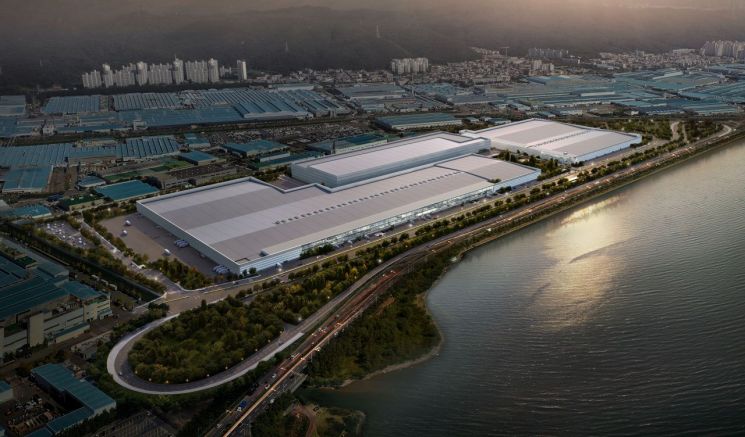 Hyundai Motor Ulsan Electric Vehicle Dedicated Factory Bird's-eye View [Photo by Hyundai Motor Group]
First New Factory in 29 Years... Largest EV-Dedicated Facility in Korea
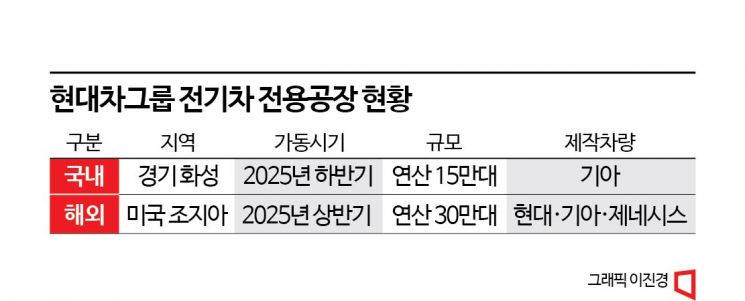
The Ulsan EV factory began construction this year and aims for completion in 2025, with mass production of electric vehicles targeted for the first quarter of the following year. The new factory, built on the site of the former comprehensive driving test center, will be constructed with an investment of 2 trillion KRW and have an annual production capacity of 200,000 units. It will be the largest EV-dedicated factory in Korea.
The first model is expected to be the ultra-large SUV GV90 (planned) from the premium Genesis brand. Hyundai Motor is building a new complete vehicle factory for the first time in 29 years since the Asan plant in 1996. Currently, electric vehicles are produced by converting existing internal combustion engine production lines.
The new factory is promoted as a ‘people-centered future-oriented’ plant. The company explained that it will apply the manufacturing innovation platform developed and demonstrated at the Singapore Global Innovation Center, which began operations earlier this year, to build the factory with consideration for employee safety, convenience, and efficient work processes.
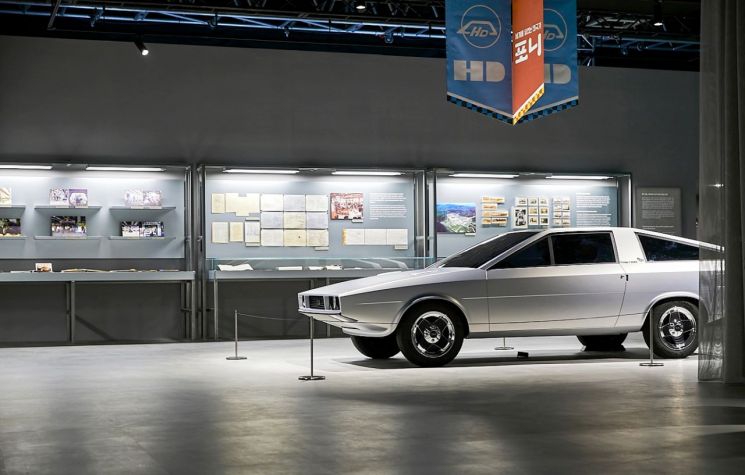 The restored 'Pony Coupe Concept' vehicle exhibited at the Heritage Exhibition held to celebrate the groundbreaking ceremony of the Ulsan EV-only factory
[Photo by Hyundai Motor Group]
It will be equipped with an AI-based intelligent control system focused on demand. A smart logistics system, including automated parts logistics, will be established to introduce a flexible production system capable of producing a wider variety of models than currently possible. Automation of assembly equipment will also be promoted to increase productivity. The final assembly stage of complete vehicle manufacturing still requires significant manual labor, and the factory aims to reduce this.
Robotics and AI technologies will be widely adopted to also enhance worker safety. Unlike a machine-centered, sterile factory, the new plant will feature eco-friendly design. Natural light will be brought inside the factory, and rest and office spaces will be designed as open areas to naturally encourage people to gather. Parks will be created between buildings. Solar power panels will be installed on the exterior walls at the building entrances, and upcycled concrete channels will be applied to minimize carbon emissions, pursuing a sustainable factory.
Jang Jae-hoon, President of Hyundai Motor, said, "Over the past half-century, the Hyundai Motor Ulsan plant has developed as production line technicians learned, created, and challenged new things. We will continue to strive to create innovative mobility for people, inheriting the legacy of the Ulsan plant that turned grand dreams into reality through human effort."
"The Dream of Making the Best Cars Continues with Innovative Mobility"
Ulsan is South Korea’s representative automobile production hub. Chung Ju-yung, the founder of Hyundai Group, described cars as "the running national flag." He foresaw that if cars were made entirely by Korean effort, it would become the cornerstone of the national economy and industrial development, and help promote Korea overseas. It also embodied the intention to realize better lives and the dream of mobility.
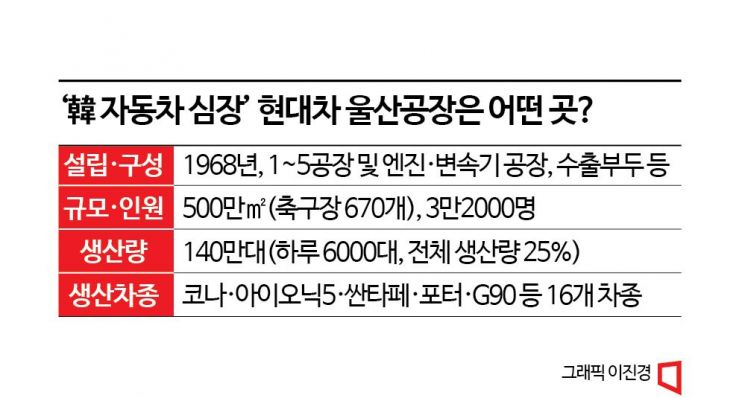
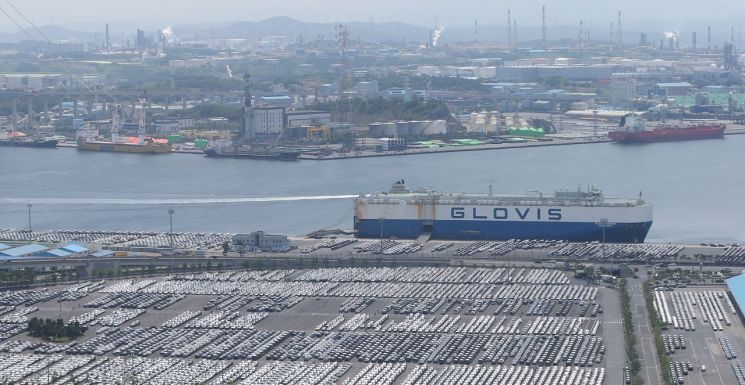
The Hyundai Motor Ulsan plant produces 1.4 million vehicles annually, making it the world’s largest single-site factory operated by a complete vehicle manufacturer. It has grown alongside South Korea’s automobile industry. Initially, it assembled Ford models and in 1975 launched the first independently developed model, the Pony. Despite inducements from the U.S. government and foreign automakers, it steadfastly refined its technology.
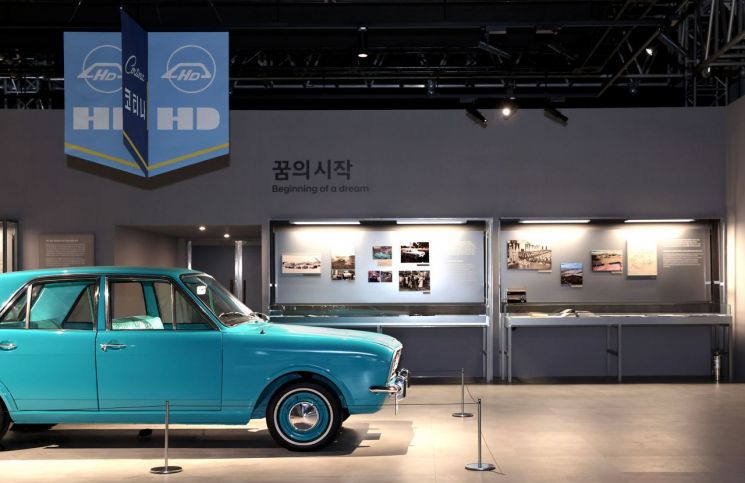 Restored Hyundai's first assembled model 'Cortina' displayed at the heritage exhibition held on the occasion of the groundbreaking ceremony of Ulsan EV dedicated factory
[Photo by Hyundai Motor Group]
Honorary Chairman Chung Mong-koo also laid the foundation for Korean cars to gain global recognition by emphasizing ‘quality management.’ Hyundai Precision Industry (now Hyundai Mobis) produced complete vehicles such as the Galloper and Santamo, and is now Hyundai Motor’s 5th plant. Chairman Chung Mong-koo served as the first president of Hyundai Precision Industry.
Chairman Chung Eui-sun said, "The dream of making the best cars in the past made Ulsan an automotive industrial city today. Starting with the EV-dedicated factory, we will work together to make Ulsan an innovative mobility city leading the electrification era."
© The Asia Business Daily(www.asiae.co.kr). All rights reserved.
![Clutching a Stolen Dior Bag, Saying "I Hate Being Poor but Real"... The Grotesque Con of a "Human Knockoff" [Slate]](https://cwcontent.asiae.co.kr/asiaresize/183/2026021902243444107_1771435474.jpg)


















