Elections Held from the US to Russia-Ukraine, Taiwan, and the EU
Expected to Shake Not Only Global Politics but Also the Economy
The year 2024, which is next year, is expected to be truly a 'year of elections.' Presidential and general elections will be held in 40 countries. Not only in South Korea, where the general election will be held next year, but also starting with Taiwan in January, Russia and Ukraine, which have been at war for nearly two years, India, the world's most populous democracy, and the United States in November, the outcomes of major leaders will be decided through a series of elections.
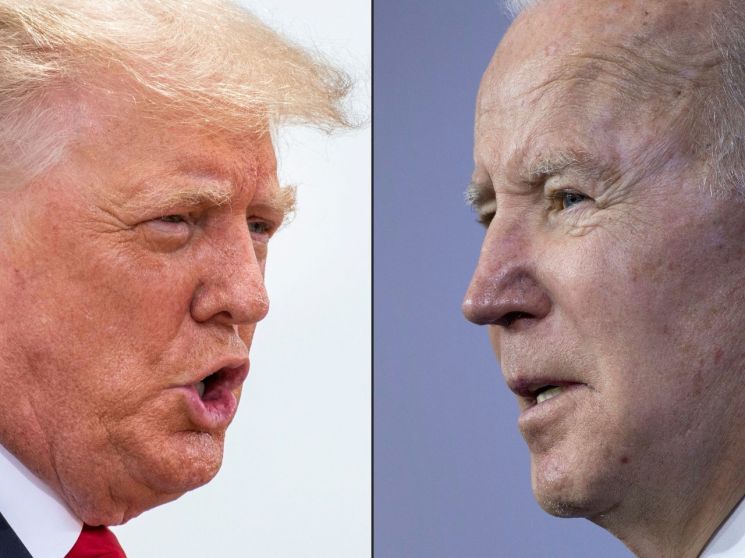 Former U.S. President Donald Trump (left in photo) and U.S. President Joe Biden
 [Image source=AFP Yonhap News]
As large-scale elections take place around the world, their results are expected to directly and indirectly affect the lives of 3.2 billion people, more than 40% of the global population. According to a recent estimate and report by Bloomberg News, $44 trillion (about 5,800 trillion won), which accounts for 42% of the world's Gross Domestic Product (GDP), is expected to be influenced by the election outcomes, making political, social, and economic changes inevitable.
On the 1st of this month (local time), Bloomberg reported on next year's election landscape, stating, "The global economy has encountered the next disruptive factor in 2024: a full schedule of elections amid two brutal wars, persistent inflation, and high borrowing costs that are hindering post-pandemic economic recovery." It warned, "Prepare for major policy changes and geopolitical conflicts occurring everywhere from the United States to Taiwan."
Focus on the US... Biden's Re-election vs. Trump's Comeback
The election that attracts the most global attention is the US presidential election. The presidential election scheduled for November 5 next year is expected to be a showdown between incumbent President Joe Biden and former President Donald Trump. Although public fatigue toward both candidates is high, there are no strong contenders within the Democratic and Republican parties, making a 'rematch' between the two likely, as in 2020.
Currently, one year before the election, if the two were to compete, forecasts suggest that former President Trump would defeat incumbent President Biden. Particularly, polls show Trump leading Biden in key battleground states, prompting calls within the Democratic Party for Biden to step aside and for alternatives like Michelle Obama to emerge.
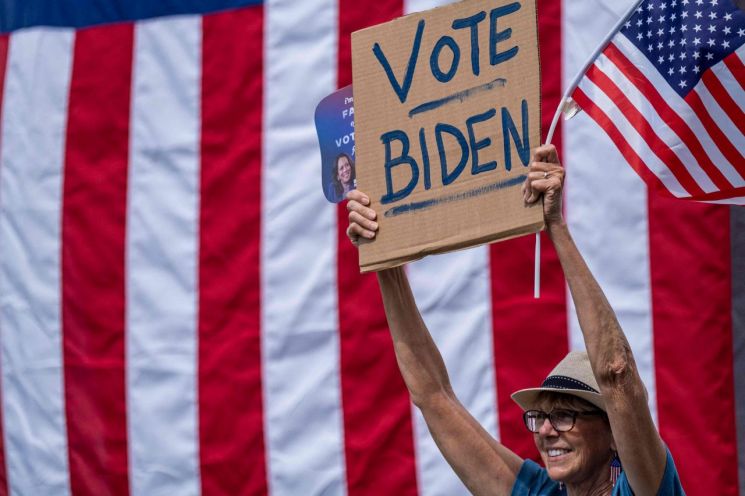
If former President Trump succeeds in his re-election bid, the world's strongest country, the United States, is expected to implement sweeping policy changes, which could lead to significant global turmoil. During his 2017-2021 tenure, Trump shook the world with aggressive remarks, flashy performances, and surprise announcements via Twitter, a social networking service.
This US presidential election is expected to be influenced by a complex mix of macro issues such as prolonged high inflation and interest rates, wars in Europe and the Middle East, as well as controversies over the candidates' ages and judicial risks.
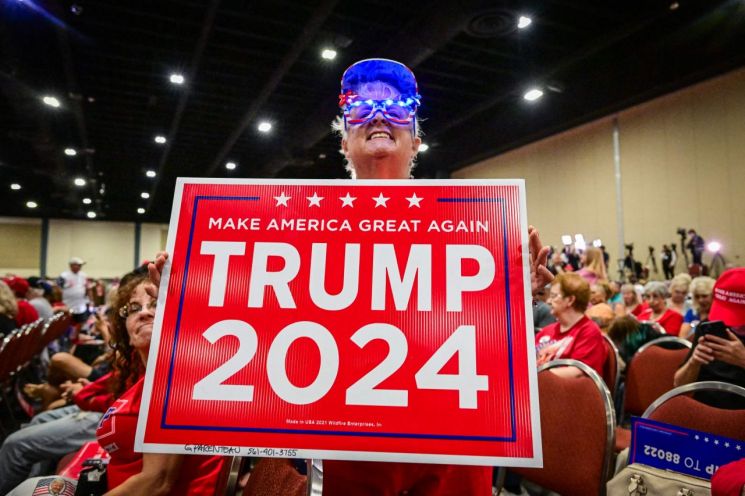
The key variable determining the outcome of the US presidential election is the economy. President Biden has been emphasizing the achievements of 'Bidenomics,' which he has pursued since the beginning of his term, to attract votes. However, this point has not garnered much public attention, and some evaluations even suggest that the economic policies of businessman Trump were better.
Unlike before, a significant factor likely to influence this election is former President Trump's judicial risks. He is the first former or incumbent US president to be criminally indicted and must face trials related to attempts to overturn the 2020 election results, leaking and illegal possession of classified documents, among others. Additionally, civil trials concerning asset inflation allegations and hush money related to sexual misconduct scandals are ongoing separately, making court appearances during the primaries next year a major headache for Trump.
Putin and Zelensky Facing Elections Amid War
The fact that the leaders of war-torn Ukraine and Russia must both end their terms and hold elections next year is also drawing significant attention. Both Russia and Ukraine are scheduled to hold elections in March next year. However, given the wartime conditions in both countries, it is uncertain whether the elections will proceed as planned.
It is reported that Russian President Vladimir Putin is preparing to run. If he wins this time, his term will be extended until 2030. Having assumed the presidency in 1999, President Putin is the longest-serving leader since the era of Joseph Stalin.
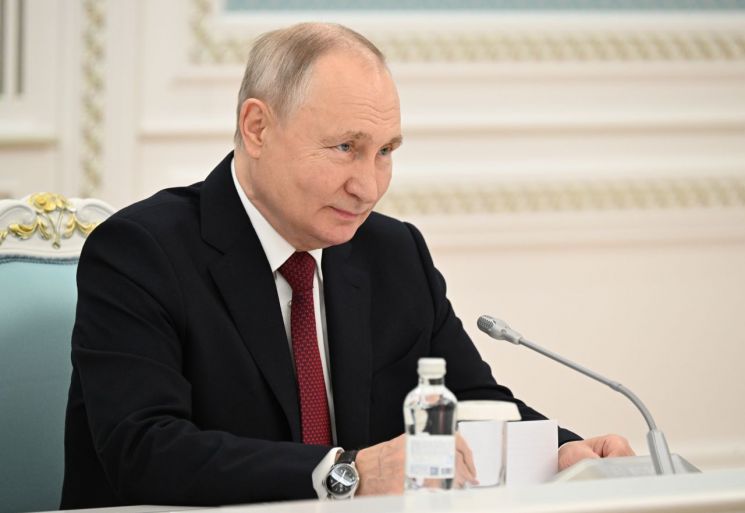
On the other hand, Ukrainian President Volodymyr Zelensky has expressed a position to postpone the election. In a video speech on the 6th, he said, "We all know that it is very irresponsible to recklessly publicize election issues during this wartime situation full of many challenges," and added, "I think now is not the right time for elections."
Since Russia's invasion in February last year, Ukraine has declared martial law, which has postponed all levels of elections. To hold elections, at least a temporary lifting of martial law is required for general elections, and legal amendments are needed for the presidential election.
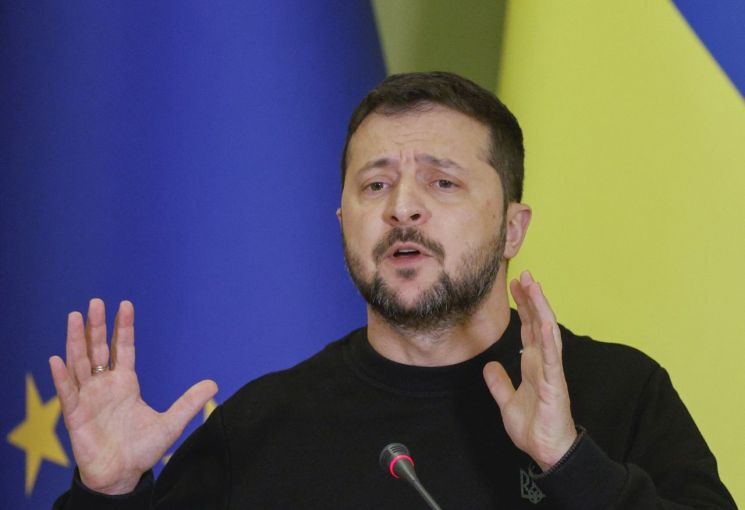
With civilian deaths nearing 10,000 due to the Ukraine war that began in February last year, there is keen interest in how the elections in these two countries will influence the course of the war.
Pro-China Opponent Likely for Taiwan Presidency... China's Response in Focus
The country marking the start of next year's global elections is Taiwan. The presidential election is scheduled for January 13 next year. Currently, Lai Ching-te, the incumbent Vice President from the ruling Democratic Progressive Party, is leading in the polls. Candidate Lai pursues 'unconditional dialogue' with China while maintaining the current government's policy of strengthening Taiwan's defense capabilities. A three-way race is expected among Lai, Hou Yu-ih of the main opposition Kuomintang (KMT), and Ko Wen-je of the Taiwan People's Party (TPP), but the entry of Foxconn founder Terry Gou as an independent candidate is expected to split the opposition vote.
The reason Taiwan's election results are important is China. If candidate Lai wins, it is analyzed that Chinese President Xi Jinping's 'warless pressure,' which has adhered to the One-China principle, could fail. Given expectations that China might attempt to seize Taiwan, if an anti-China figure is elected president next year, there is concern that tensions in the Taiwan Strait could escalate.
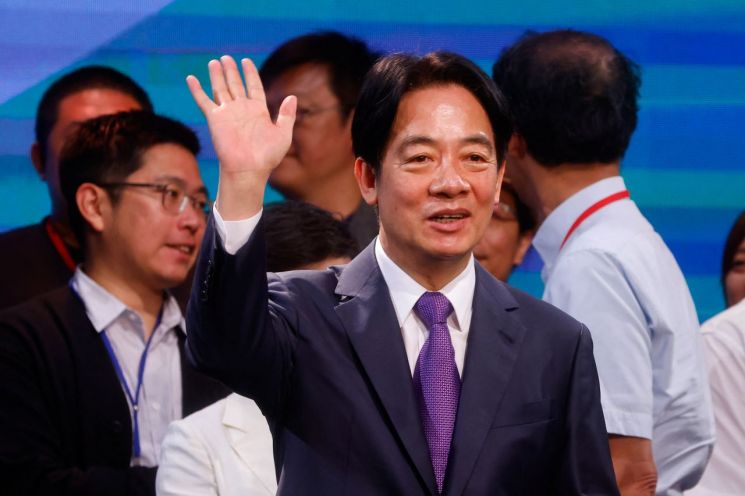
Hal Brands, a columnist and professor at Johns Hopkins University, predicted in a column on the 5th that China might attempt to seize Taiwan through five scenarios. These include military pressure, capturing some of Taiwan's islands, blockade, bombing, and invasion occupation.
Will Far-Right Influence Grow in Europe?... Modi's Decisive 10-Year Rule in India
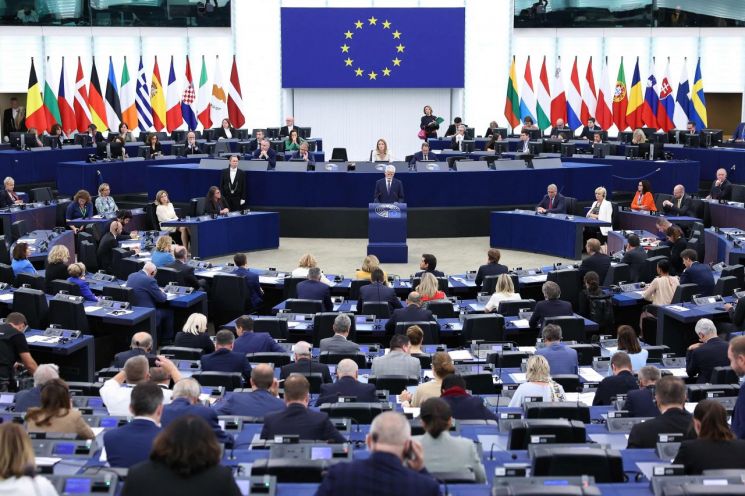
Important elections will also take place in Europe next year. The European Parliament election is scheduled for June next year. This will be the first European Parliament election since Brexit (the United Kingdom's withdrawal from the European Union) in January 2020.
In recent years, far-right parties have rapidly gained power in Europe, and how much control they will have over the European Parliament is expected to be a key issue. Depending on the composition of the parliament, support for Ukraine and adjustments to climate change goals may also be affected, potentially having a significant impact on international affairs.
In the UK, which left the EU and is pursuing an independent path, general and local elections will be held in April and May next year. Various polls show the opposition Labour Party surpassing the ruling Conservative Party led by Prime Minister Rishi Sunak, indicating a possibility of regime change.
Bloomberg reported, "Labour leader Keir Starmer will need to secure an overwhelming majority to address the UK's deep-rooted economic problems."
India, the world's largest democracy, will hold general elections in April-May next year. If Prime Minister Narendra Modi succeeds in the election, he will be guaranteed a term of 10 more years since taking office in 2014. Modi's approval rating is relatively high at around 50%, making his re-election prospects strong at present.
Markets Worry About 'Uncertainty' Amid Successive Elections... "Private Investment Shrinks"
With important elections taking place in many countries next year, markets are concerned about uncertainty. Large-scale wars continue in Ukraine and the Middle East, and US-China tensions persist. Additionally, political polarization is worsening in the US and Europe, amplifying the uncertainty that companies and investors most dread.
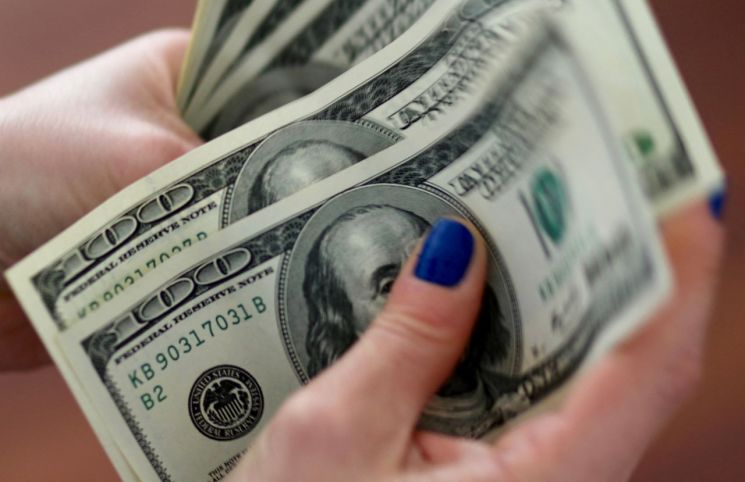
Amy Zegart, a professor at Stanford University, told Bloomberg, "Next year will be a very significant year," adding, "From a corporate perspective, the more uncertainty there is about the rules of the (economic) game, how interest rates or markets will move, and government regulations, the more difficulties there will be."
Jennifer Welch, senior analyst for geoeconomics at Bloomberg Economics, expects the world to experience the most turbulent year in a generation from a geopolitical perspective.
Some analysts say that if regimes change significantly, government policies could take a completely different direction. According to a survey by the Brookings Institution, a US think tank, of 22 institutional investors managing assets over $10 trillion, more than 90% of respondents believe threats to US democracy are increasing. At the same time, less than 30% believe that listed companies are prepared to respond to these risks.
Eswar Prasad, a trade expert and professor at Cornell University, told Bloomberg, "The elections to be held next year could exacerbate the uncertainty and volatility that have shaken the global economy," and "This could lead to a contraction in private investment worldwide."
© The Asia Business Daily(www.asiae.co.kr). All rights reserved.
![Clutching a Stolen Dior Bag, Saying "I Hate Being Poor but Real"... The Grotesque Con of a "Human Knockoff" [Slate]](https://cwcontent.asiae.co.kr/asiaresize/183/2026021902243444107_1771435474.jpg)


















