Japan's Seafood Exports to China Plunge 91%
Meanwhile, Exports to Hong Kong Double
Japan's Scallop Exports to the US Surge 10-Fold
In response to the discharge of contaminated water from the Fukushima Daiichi Nuclear Power Plant, China strengthened its restrictions on imports of Japanese seafood at the end of August. As a result, the volume of Japanese seafood exported to mainland China sharply declined, while exports to Hong Kong and the United States significantly increased.
According to Kyodo News on the 8th, Japan's Ministry of Agriculture, Forestry and Fisheries announced that the total value of seafood exported to Hong Kong in September was 12.6 billion yen (approximately 109.9 billion KRW), an 86.9% increase compared to the same month last year.
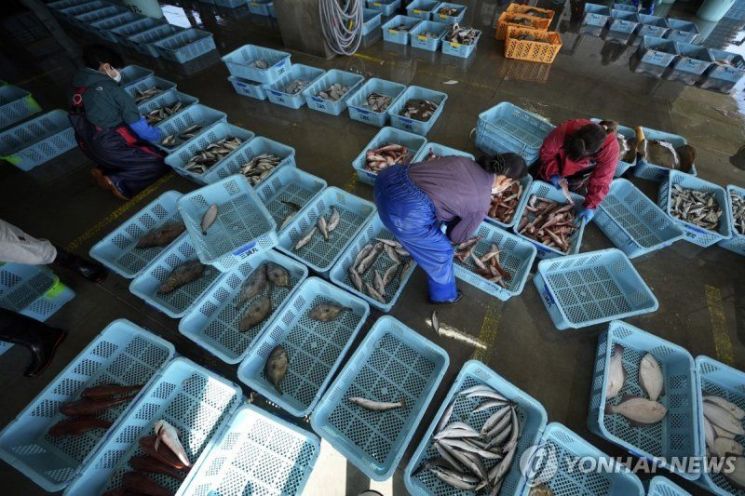
Unlike China, which has completely banned imports of Japanese seafood, Hong Kong limited its import ban to 10 out of the 47 prefectures nationwide. Therefore, seafood from regions not subject to the import ban, such as Hokkaido, can still be imported.
Japan exported scallops, which faced some market restrictions due to China's import suspension, to Hong Kong in September, increasing by 48.8% year-on-year to 1.7 billion yen (approximately 14.8 billion KRW).
Despite the embargo, the total export value of Japanese seafood, including scallops, to Hong Kong showed an increasing trend for two consecutive months. In August, it rose 15.5% year-on-year to 6.9 billion yen (approximately 60.2 billion KRW), and last month's export value reached 12.6 billion yen (approximately 109.9 billion KRW), an 86.9% increase compared to the same period last year.
The value of Japanese seafood exported to the United States last month was 5.8 billion yen (approximately 50.4 billion KRW), a 101.5% increase year-on-year. In particular, scallop exports to the U.S. surged tenfold to 2 billion yen (approximately 17.3 billion KRW).
Recently, the U.S. Forces Japan have expressed intentions to purchase Japanese seafood such as scallops, and the United States has declared it will increase purchases of Japanese seafood in joint response to China's embargo.
On the other hand, the export value of Japanese seafood to China in September was virtually zero. Seafood such as scallops and sea cucumbers, which China imported heavily before the contaminated water discharge, were not traded.
Japan's seafood exports to China in September dropped sharply by 90.8% year-on-year to 800 million yen (approximately 6.9 billion KRW). Hokkaido scallops were particularly affected.
In September last year, the value of scallops exported from Japan to China reached 5.3 billion yen (approximately 46 billion KRW). Chinese seafood businesses had factories in China where they imported Japanese scallops, processed them, and then exported them to the U.S. and other regions. However, after the Chinese government imposed a complete ban on imports of Japanese seafood on August 24 in response to the Tokyo Electric Power Company's Fukushima Daiichi Nuclear Power Plant contaminated water discharge (referred to in Japan as treated water), scallop exports in September this year recorded '0'.
Most of the 800 million yen (approximately 7 billion KRW) worth of seafood exported to China were non-edible items such as pearls, coral, and ornamental koi fish.
© The Asia Business Daily(www.asiae.co.kr). All rights reserved.
![Clutching a Stolen Dior Bag, Saying "I Hate Being Poor but Real"... The Grotesque Con of a "Human Knockoff" [Slate]](https://cwcontent.asiae.co.kr/asiaresize/183/2026021902243444107_1771435474.jpg)
















