"House of Representatives Dissolution Deferred... Focus on Economic Policy"
Lowest Approval Rating... Tax Cut Plan Also Criticized as 'Populism'
Japanese Prime Minister Fumio Kishida is reportedly considering halting his original plan to dissolve the House of Representatives within this year, according to Japanese media. This decision appears to be influenced by the fact that the approval ratings, which have fallen to the lowest level since the Kishida administration began, show no signs of rebounding, making it difficult to proceed with the dissolution. As Kishida's re-election within the year becomes uncertain, there are also forecasts that competition among factions within the Liberal Democratic Party (LDP) may intensify further.
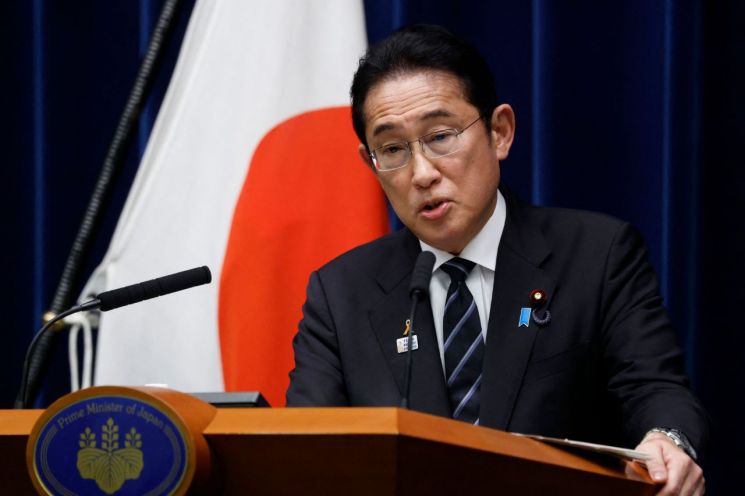
On the 9th, Asahi Shimbun cited senior LDP officials saying that Prime Minister Kishida seems to have firmly decided to postpone the dissolution of the House of Representatives within this year. According to Asahi Shimbun, Kishida originally planned to dissolve the House of Representatives this month, but as the Cabinet's approval rating dropped to its lowest level since the administration began, making it difficult to confidently win the general election, he decided to focus on economic measures to raise approval ratings. Consequently, Asahi Shimbun reported that the timing of the House of Representatives dissolution is expected to be postponed until early next year or later.
In Japan, the timing of the dissolution of the House of Representatives is a very important political schedule directly linked to the general election that determines the prime minister's re-election. The prime minister holds the authority to dissolve the House of Representatives and, if the approval ratings are judged favorable for re-election, dissolves the House and holds an early general election. Under Japan's cabinet system, if the ruling party wins the general election again, the incumbent prime minister can be re-elected as the party leader and reappointed as prime minister, maintaining the political structure.
For now, Prime Minister Kishida has put preparations for an early general election on hold and instead plans to focus on passing a supplementary budget bill submitted to the extraordinary Diet session on the 20th, as well as comprehensive economic measures worth about 17 trillion yen (approximately 147 trillion won), including tax cuts and cash support for low-income households, Asahi reported.
Since tax discussions with the ruling party must continue from mid-year, it was also judged unrealistic to cause a political vacuum by dissolving the House of Representatives. Asahi reported, "(Kishida) intends to focus on escaping deflation with a series of measures and has communicated to those around him the policy to postpone dissolution for the time being."
The originally expected timing for the House of Representatives dissolution by the Kishida administration was the autumn extraordinary Diet session. To this end, in September, a cabinet reshuffle was conducted to renew the administration, and last month, a dissolution order was requested against the Family Federation for World Peace and Unification (formerly the Unification Church), focusing on erasing the connections between the LDP and the Unification Church that had surfaced since the Abe administration. Based on this, the administration was aiming for long-term governance.
However, amid Japan's struggling economy with high inflation, public opinion rapidly worsened as Prime Minister Kishida advocated for tax increases to expand defense spending. Kishida was even nicknamed the "Tax Increase Glasses" and was booed by citizens at by-election sites. Ultimately, the by-elections held at the end of last month resulted in one win and one loss for the LDP, conceding one seat to the opposition instead of a landslide victory.
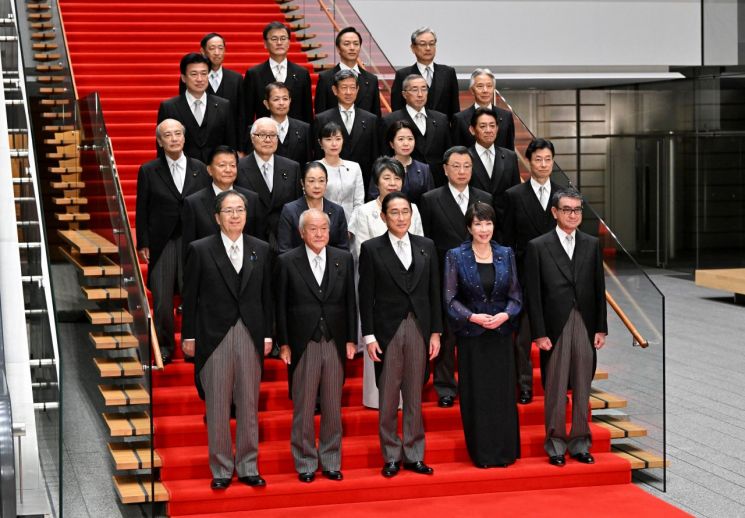
It is known that Prime Minister Kishida strongly dislikes the nickname "Tax Increase Glasses" attached to him. To dispel this public sentiment, Kishida included a tax cut plan worth 3 trillion yen, which uniformly reduces taxes by up to 40,000 yen (approximately 340,000 won) per person, in the current economic measures. However, major Japanese media outlets have uniformly criticized it as a "populist policy for the House of Representatives election."
The sharp decline in the Kishida Cabinet's approval ratings shows little sign of recovery. According to opinion polls by all Japanese media, the approval rating of the Kishida Cabinet, which was 45% at the time of inauguration, has dropped to about 20%. This is the lowest level since the LDP came to power in 2012. One Japanese online media even reported that the nickname "Tax Increase Glasses" has worsened to "Tax Cut Damn Glasses (Kuso Megane)."
There are even talks within the ruling party that "the prime minister's centripetal force has weakened." Even if the early dissolution of the House of Representatives is carried out and the general election is successful, other figures could emerge to replace Kishida in the party leadership election.
Meanwhile, Prime Minister Kishida is expected to continue considering ways to boost approval ratings until the last moment. In addition to economic measures, he plans to actively engage in summit diplomacy and other foreign affairs to leverage his strengths. Kishida's term runs until September next year, and he must dissolve the House of Representatives and win the LDP leadership election before then to begin a new term.
© The Asia Business Daily(www.asiae.co.kr). All rights reserved.


















