Declaration of Withdrawal 16 Years After Treaty Signing During the Cold War Period
On the 7th (local time), Russia officially announced its withdrawal from the Treaty on Conventional Armed Forces in Europe (CFE), blaming NATO's expansion policy for causing this situation.
The Russian Ministry of Foreign Affairs stated, "As of 0:00 today, Russia's withdrawal process from the CFE has been completed," adding, "Accordingly, the treaty, which was suspended in effect by our country in 2007, has finally become history for us."
The Ministry emphasized, "From today onwards, any arms control agreements between Russia and NATO member countries are impossible."
The CFE is a treaty signed in 1990 during the late Cold War by NATO and the Warsaw Pact, led by the Soviet Union, which was then opposing NATO. It limited the types and quantities of conventional weapons such as tanks, fighter jets, attack helicopters, armored vehicles, and artillery to maintain balance between the two sides.
Although the treaty was designed to prevent either NATO or the Warsaw Pact from rapidly increasing forces to launch an attack, it has also been evaluated as weakening the Soviet Union's conventional weapons superiority.
The CFE was revised in 1999 to reflect the post-Soviet Union situation. While Russia ratified the revised treaty, other member countries, including the United States, delayed ratification, arguing that Russian forces should withdraw from Moldova and Georgia.
In response, Russia declared a suspension of participation in the treaty in 2007, claiming that the treaty only restricted its military power while being used to facilitate NATO expansion. In 2015, Russia also withdrew from the CFE Joint Consultative Group.
In May, Russian President Vladimir Putin signed a decree to terminate the CFE, and although Russia has continuously distanced itself from the treaty, it legally remained a party to it.
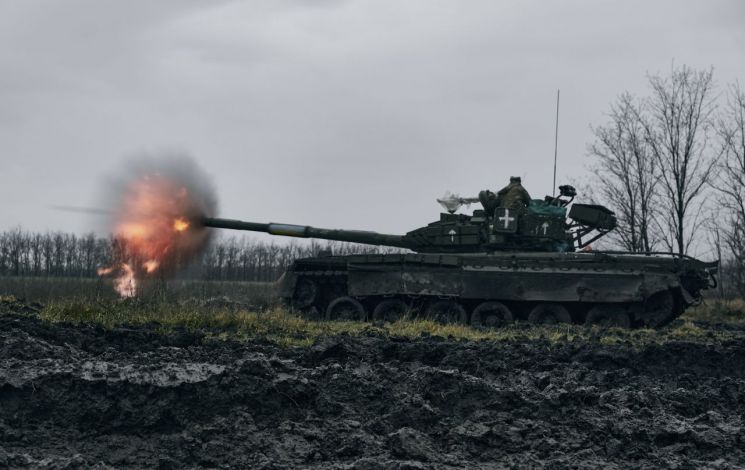
The Russian Ministry of Foreign Affairs criticized the United States for openly circumventing treaty restrictions by expanding NATO, stating that the treaty has become meaningless due to Finland's recent NATO membership and Sweden's application to join.
The Ministry pointed out, "Attempts to guarantee European military security without considering Russia's interests will bring no beneficial results to those leading such efforts."
It also argued, "Attempts to cling to an old agreement that does not fit the new situation are doomed to fail, and there is a risk of collapse in cooperation mechanisms in the field of arms control."
Earlier, on the 2nd, Russia also withdrew its ratification of the Comprehensive Nuclear-Test-Ban Treaty (CTBT), which bans all nuclear tests, opening the possibility of nuclear testing for the first time in over 30 years since the Soviet era in 1990.
Since the outbreak of the Ukraine crisis in February last year, tensions between Russia and the West have escalated to their worst since the Cold War. In June, NATO pointed out that "Russia has not complied with CFE obligations for years" and that Russia's 'special military operation' in Ukraine also violates the CFE.
© The Asia Business Daily(www.asiae.co.kr). All rights reserved.
![Clutching a Stolen Dior Bag, Saying "I Hate Being Poor but Real"... The Grotesque Con of a "Human Knockoff" [Slate]](https://cwcontent.asiae.co.kr/asiaresize/183/2026021902243444107_1771435474.jpg)
















