Japanese Tohoku University Research Team Announces Findings
3-Month Experiment Conducted on Seniors Aged 60 and Above
Research has shown that wasabi (Wasabia japonica) has effects on improving both long-term and short-term memory in the elderly. Wasabi is a plant native to East Asia, including Japan and Russia, and its root is ground to be used as a spicy condiment.
Recently, a study revealed that wasabi contains an anti-inflammatory compound called 6-methylsulfinyl hexyl isothiocyanate (hereafter 6-MSITC).
As this compound is known to have a calming effect on the brain and to help improve cognitive function, Professor Uchi Haruka and her research team from the Department of Cognitive Health Science at Tohoku University in Japan conducted an experiment to verify this. They studied 72 elderly participants aged 60 to 80 years.
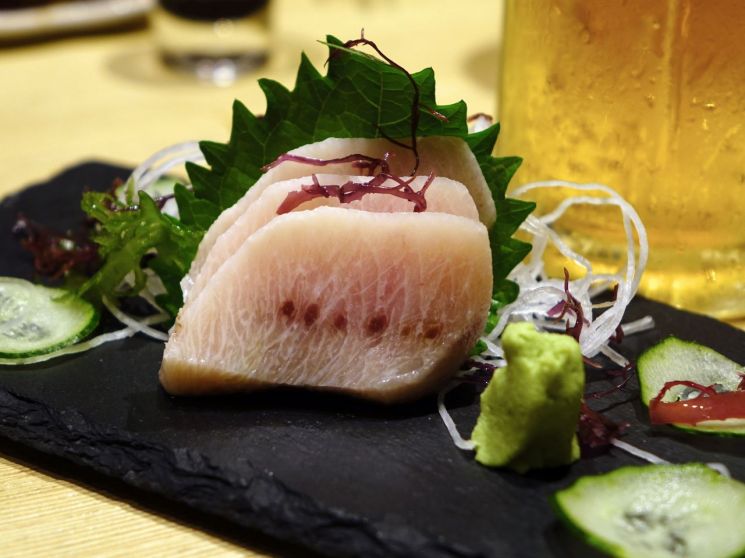 The research team analyzed that the anti-inflammatory and antioxidant effects of 6-MSITC in wasabi improved memory. 6-MSITC reduces oxidative stress and inflammation levels in the hippocampus, thereby decreasing brain damage and enhancing neural function.
 [Photo by Pixabay]
The research team observed the participants for three months. Before going to sleep, participants randomly took either wasabi tablets containing 0.8 mg of 6-MSITC or a placebo. Cognitive and memory tests were administered before and after the experiment.
Analysis showed that elderly individuals who took the wasabi tablets for three months experienced improvements in both long-term and short-term memory. Those who took the wasabi tablets scored higher on association tests, such as linking people's names to their faces, compared to those who took the placebo. However, no significant improvements were observed in other cognitive abilities beyond memory.
The research team analyzed that the anti-inflammatory and antioxidant effects of 6-MSITC in wasabi contributed to the memory enhancement. The mechanism involves 6-MSITC reducing oxidative stress and inflammation in the hippocampus, thereby decreasing brain damage and enhancing neural function. Previous studies also reported that 6-MSITC reduced brain fog symptoms in middle-aged patients suffering from chronic fatigue.
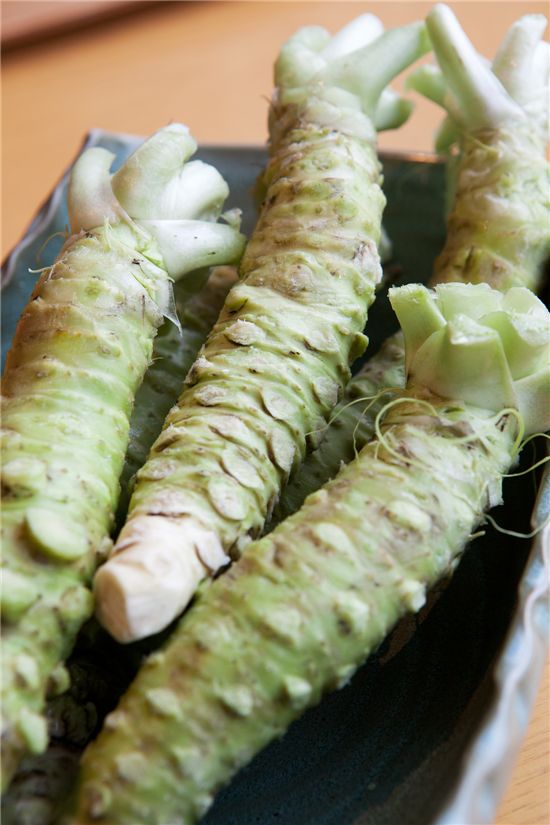 A recent study revealed that wasabi contains an anti-inflammatory compound called 6-methylsulfinyl hexyl isothiocyanate (6-MSITC).
 [Photo by Asia Economy DB]
The research team plans to conduct further studies to determine whether wasabi can improve memory in younger adults. These findings were published in the latest issue of Nutrients, an online nutrition journal by MDPI, the world's largest open-access academic publisher.
Meanwhile, in Japan, wasabi is marketed and sold as a health supplement due to its brain-calming effects.
© The Asia Business Daily(www.asiae.co.kr). All rights reserved.
![Clutching a Stolen Dior Bag, Saying "I Hate Being Poor but Real"... The Grotesque Con of a "Human Knockoff" [Slate]](https://cwcontent.asiae.co.kr/asiaresize/183/2026021902243444107_1771435474.jpg)
















