Only Two Pediatric Asthma Medications Containing Budesonide Available
"Necessary but Unavailable, Prescription and Dispensing Impossible"
Fever and Pain Relief Syrups Also in Short Supply Due to Respiratory Infectious Disease Outbreak
"As the season changes, even simple exchanges of 'Pulmikan' (pediatric asthma medicine) and 'compounded Tylenol suspension' (antipyretic analgesic syrup) among pharmacists have become difficult. In my 15 years as a pharmacist, this is the first time I've experienced this," said Jang, a pharmacist running a pharmacy in Songpa-gu, Seoul, on the 7th. "Because everyone is looking out for themselves, we have no choice but to stockpile medicines that are expected to be in short supply," he lamented. "Unless it's an urgent medicine, exchanging medicines is impossible. I'm already worried because once the weekend rain stops and the weather gets colder, demand for related medicines will surge."
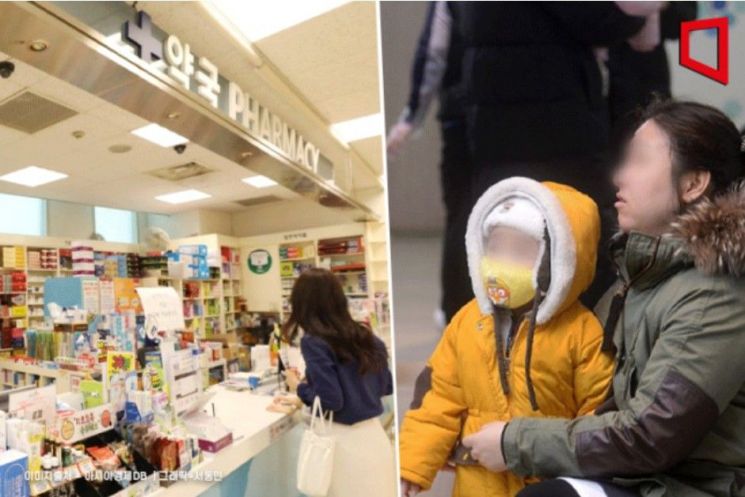
Amid ongoing instability in the supply of various medicines for over a year, a shortage crisis has continued this month, centered on asthma medicines and antipyretic analgesic syrups. The Seoul Pharmaceutical Association conducted a survey last month on medicines that are difficult to dispense due to supply issues, finding a total of 187 items with unstable supply. Among these, about 28 items have been out of stock for over a year, 71 items have intermittent supply instability, and 38 items are temporarily out of stock.
Han Yoon-sung, a pharmacy director of the Seoul Pharmaceutical Association who runs a pharmacy in Dongjak-gu, explained, "Among these, the supply of pediatric bronchial asthma medicines and antipyretic analgesic syrups is seriously insufficient."
There are only two domestic pharmaceutical companies supplying budesonide-based pediatric asthma medicines: Geonil Pharmaceutical (Pulmikan) and Korea AstraZeneca (Pulmicort). Daehan Pharmaceutical also produced a medicine with the same ingredient (Budecort), but it stopped sales in July after failing to submit bioequivalence re-evaluation data, and its product license was canceled two months later. Han said, "Until the first half of the year, the shortage gap was somewhat alleviated by alternating prescriptions among three pediatric asthma products, but since the options have been reduced to two, supply has become practically difficult. Recently, even doctors have stopped prescribing pediatric asthma medicines. They want to prescribe them, but can't because the medicines are unavailable."
The Ministry of Health and Welfare plans to submit a proposal to raise the drug prices for budesonide-based Pulmikan and Pulmicort at the 12th Drug Benefit Evaluation Committee meeting on the 9th. It is expected that raising prices will encourage pharmaceutical companies to increase production. However, since there are only two manufacturers producing these medicines, it is pointed out that supply will likely not meet demand for the time being. Currently, Ventolin (active ingredient albuterol), which is prescribed as an alternative to Pulmikan and Pulmicort, is also temporarily out of stock until the end of this month due to supply schedule delays from the manufacturer (GlaxoSmithKline Korea).
With an increase in flu and cold patients, especially among children, the shortage of prescription antipyretic analgesic syrups is also severe. Representative active ingredients include acetaminophen, ibuprofen, and dexibuprofen. Pharmacist Shin from Jung-gu, Seoul, reported, "Because antipyretic analgesic syrups are unavailable, some pharmacists are crushing tablets to dispense."
Jung Yoon-taek, director of the Pharmaceutical Industry Strategy Research Institute, stated, "The medicines currently facing supply difficulties are mostly older drugs whose patents have expired. While drug prices continue to decrease, the costs associated with periodic bioequivalence tests and other requirements lead pharmaceutical companies to reduce or cease production."
Acetaminophen tablets (650 mg), whose prices were temporarily raised until March next year, are repeatedly out of stock, especially among top-selling products. At the end of last year, the government temporarily increased the price of acetaminophen tablets from 50?51 won per tablet to 70?90 won to encourage production by pharmaceutical companies. A representative from the Korean Pharmaceutical Association said, "The original extended-release acetaminophen product, Tylenol, is in high demand and remains difficult to supply. The government should encourage more generic prescriptions."
© The Asia Business Daily(www.asiae.co.kr). All rights reserved.
![Clutching a Stolen Dior Bag, Saying "I Hate Being Poor but Real"... The Grotesque Con of a "Human Knockoff" [Slate]](https://cwcontent.asiae.co.kr/asiaresize/183/2026021902243444107_1771435474.jpg)
















