The perpetrator of the so-called ‘Busan Dolleochagi’ case, who was sentenced to 20 years in prison for indiscriminately assaulting, raping, and attempting to murder a woman in her 20s on her way home, has been additionally indicted for sending threatening letters to his ex-girlfriend from the detention center.
On the 6th, the Human Rights and Advanced Crime Division of the Western Branch of the Busan District Prosecutors' Office (Chief Prosecutor Lee Young-hwa) announced that they had formally indicted Lee Mo, the perpetrator of the Busan Dolleochagi case, on the same day for the charge of intimidation, for sending threatening letters three times to his ex-girlfriend A between June and July of last year.
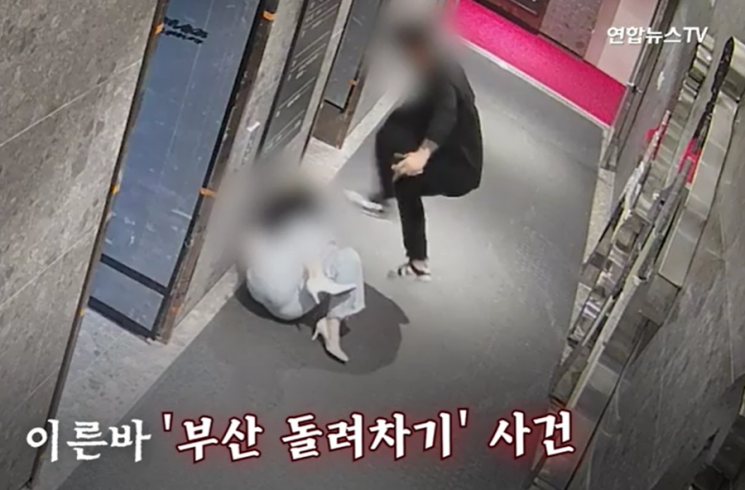
It is known that Lee sent the threatening letters out of resentment because A did not come to visit him at the detention center.
A representative from the Western Branch of the Busan District Prosecutors' Office stated, "We are also investigating other crimes committed by the perpetrator, including retaliatory intimidation against the victim B of the Busan Dolleochagi case," and added, "We will thoroughly investigate the case and ensure that prosecution is maintained so that appropriate punishment corresponding to the crime is carried out."
Lee was indicted for chasing victim B, who was on her way home, in Seomyeon, Busanjin-gu, around 5 a.m. on May 22 last year, and assaulting her at the shared entrance of an officetel with the intent to kill.
Initially, Lee was indicted on charges of attempted murder and was sentenced to 12 years in prison in the first trial. However, during the appeal process, the prosecution found additional evidence, including Lee’s DNA on the victim’s jeans at the time of the incident, and changed the indictment to attempted rape and murder.
The appellate court recognized Lee’s charges and sentenced him to 20 years in prison, along with orders for 10 years of information disclosure, a 10-year ban on employment at child and youth-related institutions, 20 years of electronic monitoring, and completion of 80 hours of sexual violence education.
Then, in September, the Supreme Court’s First Division (Presiding Justice Seo Kyung-hwan) upheld the appellate court’s sentence of 20 years in prison for Lee, who was charged with violating the Sexual Violence Punishment Act (rape and attempted murder).
At that time, the court stated, "There was no violation of the defendant’s right to defense in the process of permitting the change of indictment in the lower court," and "It cannot be said that the lower court’s sentence of 20 years in prison for the defendant was grossly unfair."
Lee was also indicted for trespassing and was fined 500,000 won in the appeal trial on the 27th of last month.
The Ministry of Justice has been managing Lee under special supervision by designating him as a subject for visits involving correctional officers and for mail censorship to prevent secondary damage such as retaliatory crimes.
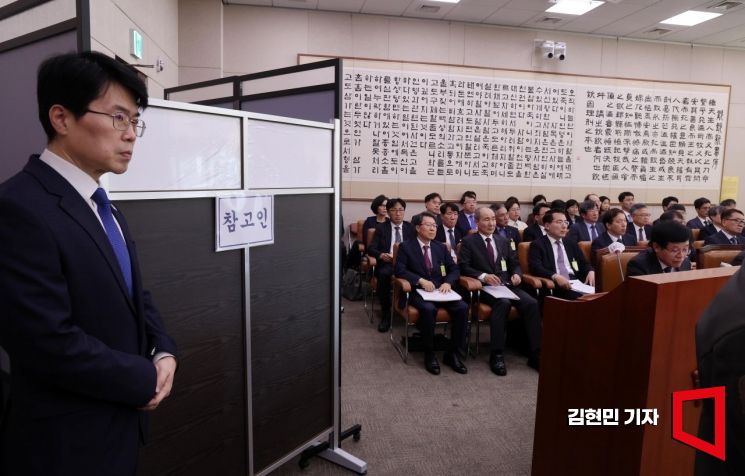 On the 20th of last month, during the National Assembly's Legislation and Judiciary Committee's audit of the Busan District Court and others, the victim of the "Busan Dolryeochagi" incident appeared as a witness. The committee kept the identity of the witness confidential that day. Photo by Hyunmin Kim kimhyun81@
Meanwhile, victim B of the Busan Dolleochagi case appeared as a witness at the National Assembly’s Legislation and Judiciary Committee’s audit of the Busan High Court and others on the 20th of last month, expressing her fear that continued after the incident and dissatisfaction with the perpetrator’s trial results.
In particular, B expressed dissatisfaction with the restriction on the victim’s access to trial records during the trial process, which hindered her ability to properly exercise her right to defense, and with the exposure of her name and address during the belated recognition of the sexual crime.
B said, "At the first trial, I heard that there was about a 7-minute blind spot in the timeline, and that was when I first began to suspect the possibility of a sexual crime. So, I thought I should look at the trial records, which I didn’t want to know about, but (the court) repeatedly rejected my requests to view the trial records, and the only thing I could barely get was the indictment," adding, "Since the victim is not a party to the trial, I was advised to file a civil lawsuit against the perpetrator to request document delivery. The defendant’s right to defense was asserted, but the victim’s right to defense was nowhere to be found."
She also said, "Because I received the materials after the first trial ended, there were clearly false statements about the sexual crime, but I couldn’t challenge them," and "Even after the second trial began and the sexual crime was recognized, I couldn’t receive a proper judgment on the sexual crime in the third trial because I couldn’t apply for sentence reduction."
At that time, she also expressed fear of the perpetrator’s retaliatory crimes. B said, "Because the victim (witness) kept participating and diligently attended every trial, the perpetrator said that his sentence was increased because of the victim," adding, "He expressed hatred toward me and told other inmates in the detention center that if he went out, he would find me and kill me. He memorized my current address and said he would definitely kill me next time."
She continued, "If I had borne this damage alone, it would have ended, but I felt suffocating fear because it seemed to be imposed on my family as well," showing signs of tears.
B also appealed, "What does remorse, admission, or unfortunate circumstances that have nothing to do with the crime have to do with this trial?" and "If the victim does not forgive, why does the judge forgive at will? The state is causing secondary harm to the victim."
© The Asia Business Daily(www.asiae.co.kr). All rights reserved.


















