1 in 2 People Watch Summaries
1.5x Speed Fast-Forwarding 'Trend'
Cinemas Take Direct Hit
Office worker Kim Mo (32) is a 'short-form' video enthusiast. This is because he can watch a lot of entertaining content within a limited time. Kim said, "I can't watch long and boring videos anymore," adding, "It's been a long time since I went to a movie theater, and I don't even remember when I last watched a drama."
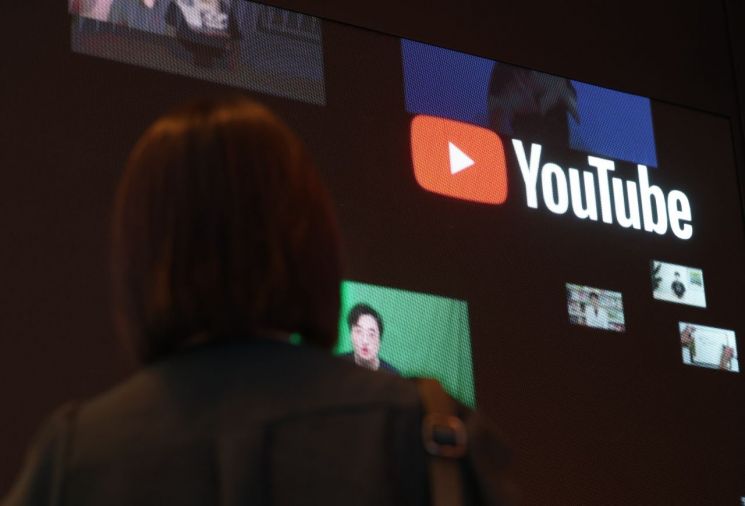 Visitors are touring the pre-exhibition commemorating YouTube's 15th anniversary.
 [Photo by Yonhap News]
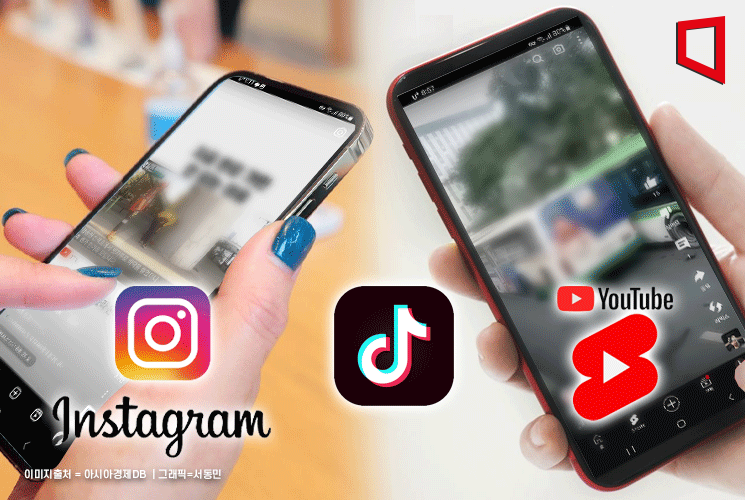
Recently, among the so-called 'MZ generation,' a culture of watching only short videos, known as short-form, is rapidly spreading. Short-form content usually refers to videos under one minute. It is provided on various social networking services (SNS) such as TikTok, YouTube Shorts, and Instagram Reels. Short-form content appears in various fields, ranging from short clips of variety show highlights or incidents to summarized versions of long movies and dramas. The range extends to summarized versions of lengthy movies and dramas.
In fact, a significant portion of the population watches summarized versions of movies and dramas. According to a survey conducted by Embrain Trend Monitor in July on 1,000 adults aged 19 to 59 nationwide, 49.7% of respondents said they frequently watch summary videos. This indicates an extreme pursuit of efficiency in video content consumption. The trend of watching videos at faster than normal playback speeds is also spreading.
Especially among younger people, faster video viewing was preferred. The percentage of those who found the original video speed frustrating was 31.6% in their 20s, 27.6% in their 30s, 25.2% in their 40s, and 18.4% in their 50s. People in their 20s and 30s felt that not fast-forwarding was a waste of time and believed they could concentrate better when the speed was increased. Speed-watching is also a way to consume as much video content as possible amid the flood of videos. Respondents mainly used the speed function because they wanted to know the conclusion quickly (41.6%, multiple answers allowed), felt that the time was too short compared to the many works they had to watch (36.5%), or had many other things to do but still had many videos to watch (31.9%). One of the places hit hard by this phenomenon is movie theaters. According to the Korean Film Council's 'Korean Film Industry Settlement Report,' the number of moviegoers in the domestic film market in the first half of this year was 58.39 million, which is only 57.8% of the average for the first half of 2017?2019 (100.99 million).
Experts analyze that the trend of seeking short and stimulating content is reflected in the short-form craze but also caution against excessive viewing focused solely on short-form content. Professor Kwak Geum-ju of the Department of Psychology at Seoul National University said, "Repeated viewing of short videos continuously stimulates dopamine secretion. As a result, people cannot endure long videos," adding, "This is not a good phenomenon. If children get used to short-form content from an early age, they may not be able to read long texts or watch long videos, which can also lower literacy skills." Professor Im Myung-ho of the Department of Psychology at Dankook University said, "It can be seen as a characteristic of the younger generation different from the older generation, but there are clear drawbacks to understanding and gaining satisfaction solely through short-form content," adding, "It also seems related to a kind of social anxiety where people find it difficult to think and exert effort over a long period."
© The Asia Business Daily(www.asiae.co.kr). All rights reserved.


















