Fine dust is forecasted to strike the Korean Peninsula in November. As fine dust originating from China flows in, there is a possibility that hazy skies will persist, especially in the central regions.
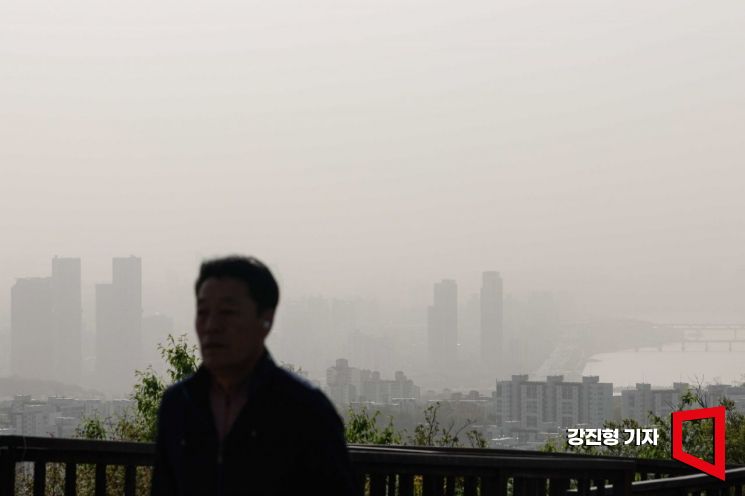
According to 'Air Korea,' an air quality information disclosure system operated by the Korea Environment Corporation, the fine dust concentration in Seoul, Incheon, and the Chungcheong area is expected to reach a 'bad' level from the afternoon on the 1st. Most central regions are expected to see increased concentrations as residual fine dust from the previous day accumulates due to stagnant air, combined with the influx of foreign fine dust. Additionally, Gyeonggi Province and Gangwon Yeongseo will experience 'bad' levels throughout the day, while other regions will range from 'good' to 'moderate.'
With the disappearance of COVID-19, fine dust from China is once again covering the Korean Peninsula. Looking at the air quality information for Seoul, the average fine dust concentration decreased for three consecutive years from 25㎍/㎥ in 2019 to 18㎍/㎥ last year but has worsened again this year. The average fine dust concentration from January to October (20.1㎍/㎥) is also more than 10% higher than the same period last year (18㎍/㎥).
The air quality is likely to deteriorate further this month. It has become a seasonal phenomenon that fine dust increases in late autumn, especially in November. In fact, over the past five years, the average fine dust levels in Seoul for October and November worsened from 25㎍/㎥ to 39㎍/㎥ in 2022, from 26㎍/㎥ to 45㎍/㎥ in 2021, from 33㎍/㎥ to 42㎍/㎥ in 2020, and from 31㎍/㎥ to 40㎍/㎥ in 2019. During the same period, the average ultrafine dust levels also rose from 14㎍/㎥ to 22㎍/㎥ in 2022, from 13㎍/㎥ to 26㎍/㎥ in 2021, from 17㎍/㎥ to 24㎍/㎥ in 2020, and from 15㎍/㎥ to 20㎍/㎥ in 2019. This is due to changes in wind direction to northwesterly or westerly winds, which bring air pollutants from China to the Korean Peninsula. Additionally, as temperatures drop, the mixing height of air pollutants and air lowers, causing the incoming fine dust to be less diluted.
Increased air pollution levels within China also contribute to this situation. The European Space Agency (ESA) analyzed nitrogen dioxide concentrations in China using the Copernicus Sentinel satellite and found that the average concentration over the past two weeks has significantly surged compared to a month ago. Nitrogen dioxide is one of the main culprits causing fine dust and is a deadly air pollutant. Air Korea advised, “Avoid prolonged or strenuous outdoor activities, and especially refrain from outdoor activities if you experience eye irritation.”
© The Asia Business Daily(www.asiae.co.kr). All rights reserved.

















