The '2023 Naju Festival, Yeongsangang is Alive,' held as the first integrated festival in Naju City, Jeollanam-do, successfully concluded its ten-day grand journey.
From October 20 to 29, the festival showcased high-quality cultural and artistic performances reminiscent of a grand arts center every day, attracting a cumulative total of 270,000 visitors over ten days, marking a new chapter in the history of the Naju Festival.
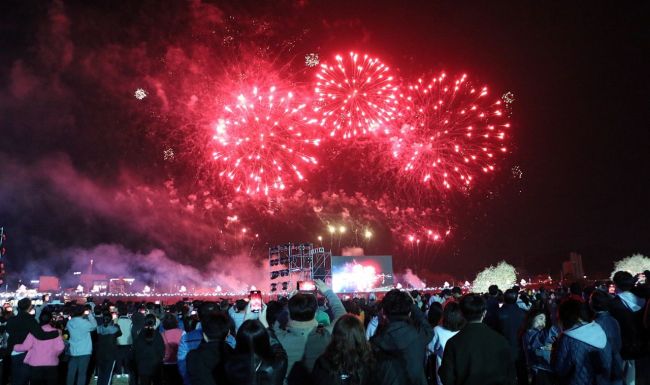
Naju City (Mayor Yoon Byung-tae) announced on the 30th that the integrated festival ended on the 29th at 6:30 PM with a closing performance by the Naju City Choir and Gugak (traditional Korean music) troupe and a fireworks show at the main stage in Yeongsangang Riverside Sports Park.
This festival, under the subtitle "Ten Days Spent at the Beautiful Yeongsangang," richly presented the unique sights, experiences, and food of Naju, a city with a 2,000-year-long historical and cultural heritage spanning the Mahan, Goryeo, Joseon, and modern eras.
In particular, Naju creatively portrayed its most prosperous scenes from different eras through various performances and acts, offering citizens and tourists the opportunity to enjoy high-quality cultural performances every day without pause during the festival.
The opening performance featuring 54 traditional cargo boats (jounseon) powerfully cutting through the Yeongsangang River and the three spectacular fireworks shows lighting up the autumn night sky were the festival's main attractions, leaving a deep impression on visitors.
The jounseon performance, which recreated the scene of boats laden with local specialties crossing the river to celebrate a bountiful catch, heralded the revival of Yeongsanpo, once the logistics hub of the southwest region, and a new renaissance of the Yeongsangang River that led Naju's prosperity as a living river and gateway to the sea.
Various stage performances, including the original musical 'Wang Geon and Queen Janghwa,' depicting the first meeting of Wang Geon and Beodeul Nangja, 'Mahan Sodoeje,' media art 'Yeongsangang Arirang,' 'Natural Dye Fashion Show,' 'Wang Geon-Gyeon Hwon's Grudge Ritual,' 'Hong-eo Merchant Moon Soon-duk's Drift Story,' traditional dance and performance 'Naju Mokgwanbu Dance,' modern dance 'Naju City Dance Hall,' and 'Naju Student Anti-Japanese Movement Modern Dance,' demonstrated the potential to develop into representative cultural, artistic, and performance content for Naju in the future.
Starting with the pre-festival K-POP dance congratulatory performance, invited and celebratory performances such as the Gugak Choir K-Pan, Jeonbuk Provincial Gugak Institute 'Jingyeong,' National Namdo Gugak Institute, Opera Gala ('Naju, Victory to You'), Czech Severacek Youth Choir, Seoul Family Mokbi (Yeongsangang Hymn), and singer Byun Jin-sub continuously moved the audience deeply.
The festival was further enriched as a harmonious event enjoyed by citizens participating, including the Mahan parade by residents of Bannam-myeon at the opening ceremony, the Naju Citizen Arts Group, Bitgaram Children's Violin and Ocarina Ensemble, and the Citizen Orchestra performing daily on the main stage during the daytime.
Alongside consistently high-quality and sincere performances, audience responses to the open festival main stage without walls were overwhelmingly positive.
The festival stage broke away from the conventional fixed format, offering visitors a natural space to enjoy the magnificent Yeongsangang sunset scenery every evening and the romantic autumn night sky, providing a healing experience.
One of the festival's most significant features was that it was Naju's first 'integrated festival,' combining previously separate and sporadic small festivals and events into one.
The integrated festival included the Mahan Cultural Festival, Millennium Naju Mok Eupseong Cultural Festival, Naju Agricultural Festa, Yeongsangang International Installation Art Festival, Yeongsangang National Cooking Contest, and Citizens' Day Ceremony, either integrated or linked together.
Among these, the Naju Agricultural Festa evolved into a win-win agricultural festival by operating booths selling agricultural and livestock products linked with the integrated festival, directly connecting agricultural producers and tourism consumers, unlike its previous format where local farmers were the main participants.
The pear tasting corner, where visitors could enjoy the signature Naju specialty, the Singo pear, to their heart's content, the livestock product tasting booths by the Naju Livestock Association, and the agricultural culture experience zone where visitors could understand and experience Naju agriculture, were bustling with visitors lining up every day.
The chrysanthemum bonsai school, the chrysanthemum bonsai exhibition by students of Honam Horticultural High School, and exhibition works by the Naju Wildflower Club added even more attractions.
The 'Yeongsangang Cafeteria' food booths, featuring 11 local dining establishments, created a new festival dining culture by thoroughly managing hygiene, eliminating overcharging, serving delicious food, and providing restaurant utensils instead of disposable plates and cutlery to protect health and the environment.
The cumulative sales of the Naju Agricultural Festa Zone and Yeongsangang Cafeteria booths over the ten days amounted to 470 million KRW.
Mayor Yoon Byung-tae said, "The high-quality performances presented through the integrated festival will become sustainable cultural assets of Naju and cultural enjoyment content for citizens. I sincerely thank the tourists from across the country who visited Naju's first integrated festival, held over ten days against the beautiful backdrop of the Yeongsangang River, as well as the volunteers and citizens who worked hard to ensure a pleasant and safe festival."
Naju = Asia Economy Honam Reporting Headquarters Reporter Kim Yuk-bong baekok@asiae.co.kr
© The Asia Business Daily(www.asiae.co.kr). All rights reserved.
![Clutching a Stolen Dior Bag, Saying "I Hate Being Poor but Real"... The Grotesque Con of a "Human Knockoff" [Slate]](https://cwcontent.asiae.co.kr/asiaresize/183/2026021902243444107_1771435474.jpg)











