Applied Signal Optimization to Congestion, Traffic Speed Improved by 8.3%
Traffic Accident Deaths Reduced by 27% with Smart CCTV Installation
As a result of establishing an Intelligent Transportation System (ITS) in April this year, Incheon City has shown improvements such as increased compliance with the golden time (7 minutes) for emergency fire response and a reduction in traffic accident fatalities.
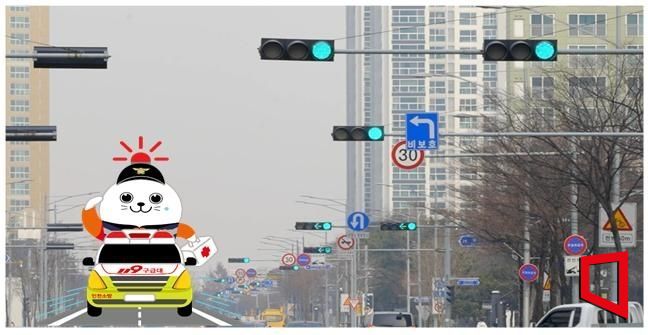
According to Incheon City on the 30th, after operating the emergency vehicle priority signal service, a core ITS service, the compliance rate for the golden time of fire dispatch vehicles increased from 79.4% to 94%. This service turns traffic signals green from in front of the fire station until the emergency vehicle arrives at the fire scene. No traffic accidents occurred during the priority signal dispatch process, ensuring the safety of firefighters.
The city plans to purchase an additional 100 fire vehicle terminals within this year to provide the priority signal service, distributing them to 52 fire stations, and expand the service to the remaining fire stations next year.
The intelligent incident management system has also proven effective in preventing traffic accidents. The city installed incident detectors that automatically notify of accidents at 19 locations with high risks of serious traffic accidents, such as underpasses, tunnels, and overpasses, and at 175 intersections. In cooperation with the police, there were 35 cases of responding to incidents, including dispatching to sites with secondary accident risks, safely relocating pedestrians wandering on the roads, and apprehending arsonists.
Additionally, smart CCTVs installed at major intersections enable identification even at night, helping to prevent speeding and encourage compliance with traffic laws. As a result, the number of traffic accident fatalities decreased by about 27%, from 76 last year to 55 this year, according to the city.
The ITS implementation also improved travel speeds in congested areas. By applying signal optimization derived through artificial intelligence (AI) reinforcement learning to congested roads, travel speed increased by 8.3%, from 21.8 km/h to 23.6 km/h, and delay time was reduced by 8.7%, from 1 minute 40 seconds per kilometer to 1 minute 31 seconds per kilometer. According to the economic benefit calculation by the Incheon branch of the Korea Road Traffic Authority, this corresponds to an annual economic effect of approximately 714 million KRW.
The signal operation optimization was achieved through collaboration among Incheon City, the Incheon Police Agency, and the Korea Road Traffic Authority, selecting pilot sections, verifying data, and applying it to actual sites. If continuously expanded to 44 major congested routes in the region, it is expected to generate an annual economic benefit of about 12.8 billion KRW.
An official from Incheon City stated, "After operating ITS for six months, it has been confirmed to be effective for citizen safety and traffic convenience," and added, "We will continue to improve transportation services, such as optimizing bus routes using traffic big data."
© The Asia Business Daily(www.asiae.co.kr). All rights reserved.
![Clutching a Stolen Dior Bag, Saying "I Hate Being Poor but Real"... The Grotesque Con of a "Human Knockoff" [Slate]](https://cwcontent.asiae.co.kr/asiaresize/183/2026021902243444107_1771435474.jpg)
















