Samsung Seoul Hospital Professors An Myung-joo and Park Se-hoon Team
Prove Efficacy of Combination Immunotherapy
"Expanding Indications for Immuno-oncology Treatment... Paving a New Path"
A new treatment using immune checkpoint inhibitors has demonstrated clinical efficacy in mutation-positive lung cancer, according to recent research findings.
Samsung Medical Center announced on the 24th that a research team led by Professors Myung-Joo Ahn and Se-Hoon Park from the Department of Hematology and Oncology, along with researchers from 15 domestic institutions affiliated with the Korean Cancer Study Group (KCSG), have published the first phase 3 clinical trial results revealing the clinical effectiveness of an immune-chemotherapy combination therapy using immune checkpoint inhibitors in patients with non-small cell lung cancer (NSCLC) harboring epidermal growth factor receptor (EGFR) and anaplastic lymphoma kinase (ALK) mutations. The clinical results were published in the world-renowned oncology journal, Journal of Clinical Oncology.
Lung cancers with distinct genetic mutations are typically treated with targeted therapies. In South Korea, tyrosine kinase inhibitors (TKIs) are commonly used as first-line treatments for many patients positive for EGFR and ALK mutations. However, even when patients initially respond, resistance to TKI inhibitors inevitably develops. Although immune checkpoint inhibitors have been considered as alternative treatments, their limited clinical efficacy compared to NSCLC patients without genetic mutations has remained a challenge.
The research team found a clue in combining immune checkpoint inhibitors with anti-angiogenic agents and chemotherapy. They hypothesized that adding immune checkpoint inhibitors and anti-angiogenic agents to the commonly used platinum-based chemotherapy after targeted therapy could enhance treatment efficacy.
The team randomly assigned a total of 228 patients, including 215 with EGFR mutations and 13 with ALK mutations, recruited from 16 medical institutions across South Korea, into two groups with different treatment strategies.
One group received the immune checkpoint inhibitor atezolizumab, the angiogenesis inhibitor bevacizumab, and the platinum-based chemotherapy agents paclitaxel and carboplatin. The other group was treated with the standard post-targeted therapy regimen of pemetrexed combined with carboplatin or cisplatin. The prognosis of the two groups was then compared and analyzed.
According to the research team, the objective response rate was 69.5% in the immune checkpoint inhibitor combination group, significantly higher than the 41.9% observed in the standard treatment group. Additionally, progression-free survival was longer in the immune checkpoint inhibitor group at 8.48 months compared to 5.62 months in the standard treatment group, with the risk of disease progression reduced by approximately 38%.
This trend correlated with increased expression levels of PD-L1, a biomarker used to gauge the effectiveness of immune checkpoint inhibitors. Furthermore, similar effects were observed in cases with high tumor-infiltrating lymphocyte density, as confirmed by Lunit’s artificial intelligence (AI) biomarker 'Lunit Scope.' The research team explained that this could help more accurately identify patients likely to respond to treatment.
The study was selected as a 'Late-breaking Abstract' at the recent European Society for Medical Oncology (ESMO) Congress and garnered significant attention from the academic community. It was simultaneously published in real-time in the Journal of Clinical Oncology, the official journal of the American Society of Clinical Oncology (ASCO). The hospital noted that the potential for this treatment to become a 'new therapeutic option' for mutation-positive lung cancer patients has greatly increased.
Professor Se-Hoon Park, first author of the paper and a hematology and oncology specialist at Samsung Medical Center, stated, "Patients who have battled lung cancer and experienced resistance are desperate to find new treatments. Although the path is challenging, this research offers hope that there are still treatment options to fight cancer."
Professor Myung-Joo Ahn, who led the study, added, "It is encouraging that the new treatment strategy has proven effective, potentially providing opportunities to more patients. However, as the increased use of drugs may raise concerns about side effects, even if not severe, we will continue to focus on research to select patients more safely and precisely for treatment."
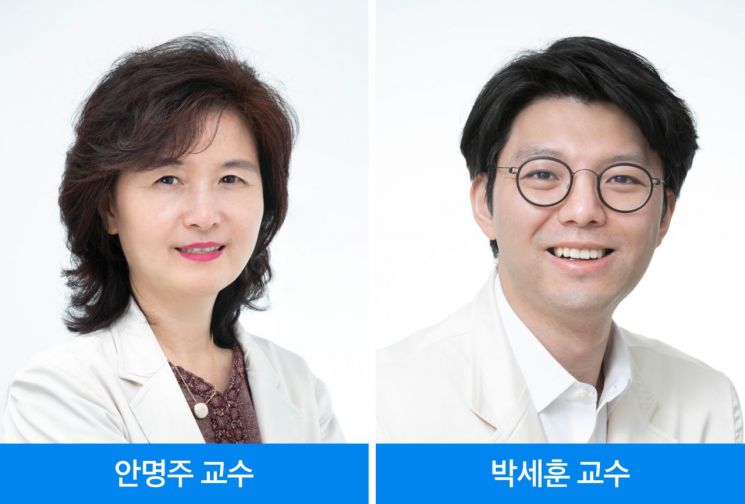 Department of Hematology and Oncology, Samsung Medical Center, Professors An Myeong-ju (left) and Park Se-hoon team. [Photo by Samsung Medical Center]
© The Asia Business Daily(www.asiae.co.kr). All rights reserved.

















